
CONTACT US
SEARCH WHAT YOU WANT
In the era of Smart Manufacturing, or Industry 4.0, every component of the production floor is evaluated for its impact on Overall Equipment Effectiveness (OEE). While much focus is placed on robotic arms and automated guided vehicles (AGVs), the maintenance of the environment itself has undergone a structural shift. The integration of a smart manufacturing cleaning robot is no longer a peripheral janitorial upgrade; it is a fundamental requirement for maintaining the high-precision, data-driven ecosystems of modern factories.
Smart manufacturing relies on the seamless interaction of the Industrial Internet of Things (IIoT), big data, and autonomous systems. Traditional manual cleaning methods—characterized by inconsistent schedules and lack of verifiable data—create a "logic gap" in an otherwise automated facility. Autonomous mobile robots (AMRs) designed for industrial cleaning bridge this gap by providing a scalable, traceable, and highly efficient solution for floor hygiene.
The "intelligence" of a smart manufacturing cleaning robot is derived from its ability to perceive its environment and act upon real-time data. Unlike early automated scrubbers that required magnetic strips or beacons, modern AMRs utilize advanced navigation stacks to operate in dynamic manufacturing zones.
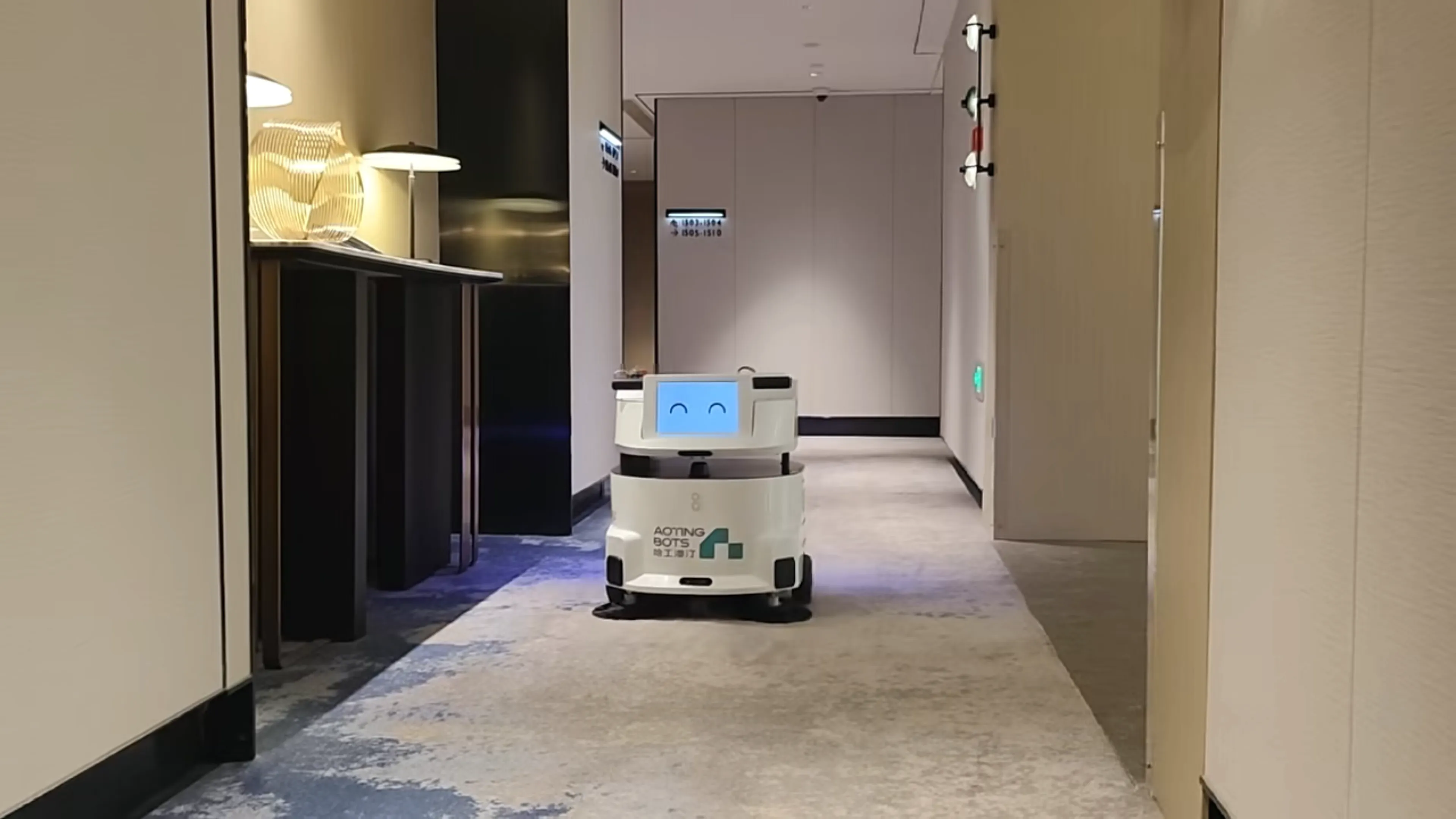
Simultaneous Localization and Mapping (SLAM) is the core technology enabling true autonomy. Utilizing LiDAR, 3D Time-of-Flight (ToF) cameras, and ultrasonic sensors, the robot builds a high-fidelity digital twin of the factory floor. This allows the unit to:
Navigate Dynamic Obstacles: Detect and avoid moving forklifts, personnel, and relocated pallets without pausing production.
Optimize Path Planning: Calculate the most efficient cleaning route to minimize energy consumption and water usage.
Precision Edge Cleaning: Navigate within millimeters of sensitive production machinery without risk of collision.
In a smart factory, if a task isn't tracked, it didn't happen. Industrial cleaning robots communicate via standardized protocols (such as APIs or 5G) to feed data into the facility’s Warehouse Management System (WMS) or Manufacturing Execution System (MES). This provides managers with "Proof of Clean" reports, detailing total area sanitized, water/chemical consumption, and timestamped logs of every mission.
Different manufacturing sectors impose varying stressors on the facility environment. A smart manufacturing cleaning robot must be adaptable to these specific industrial requirements to support high-yield production.
In automotive environments, for example, dust control is vital for paint-shop quality. Microscopic particulates can lead to surface defects in the finish, increasing the scrap rate. By scheduling autonomous robots to run "lights-out" shifts or low-traffic periods, factories maintain a consistent baseline of cleanliness that manual teams struggle to replicate.
Lean manufacturing principles emphasize the elimination of "Muda" (waste). Manual floor maintenance is often a source of hidden waste, involving high labor turnover, inconsistent results, and the risk of slip-and-fall injuries.
Labor Redistribution: Facilities do not necessarily eliminate cleaning staff; instead, they shift human labor toward higher-value tasks. While the robot handles the repetitive floor scrubbing, staff can focus on detailed sanitization of vertical surfaces or machinery maintenance.
Increased Uptime: Robots operate on a "24/7" availability model. With automatic docking stations for charging and water refilling, the downtime for maintenance becomes a predictable part of the machine's duty cycle.
Extended Floor Longevity: Consistent, sensor-adjusted brush pressure prevents the premature wear of expensive epoxy or polished concrete floors. This preserves the facility's physical infrastructure over a 10-year horizon.
When manufacturing consultants evaluate the ROI of a smart manufacturing cleaning robot, they look at the "Scalability Factor." A single unit might prove the concept, but the value is realized when a fleet is deployed across a 100,000-square-meter facility.
Modern smart cleaning solutions are designed with a platform-first approach. This means a project manager can manage 10 or 20 robots from a single cloud-based dashboard. These solutions offer:
Multi-floor Integration: Compatibility with smart elevators to move between different levels of a vertical factory.
Automatic Dosing: Precision chemical mixing systems that ensure zero chemical waste.
Water Recycling: Integrated filtration systems that allow the robot to reuse water during a mission, supporting ESG (Environmental, Social, and Governance) targets.
Safety is the highest priority in industrial automation. A professional robot must adhere to international safety standards, such as ISO 13482, which governs service robots.
Redundant Emergency Stops: Physical and software-based E-stops for immediate halting.
Audio-Visual Warnings: Utilizing voice prompts and signal lights to alert nearby workers of the robot's presence.
Collision Mitigation: Multi-sensor redundancy ensures that even if one sensor fails (e.g., due to glare or steam), the unit remains safe.
In large-volume production, these robots effectively act as "Cobots" (collaborative robots). They operate in the same physical space as humans without the need for safety cages or restricted zones, maximizing the utility of the available square footage.

How does a cleaning robot handle forklift traffic?
Industrial AMRs use LiDAR and 3D sensors to identify moving objects. The robot is programmed to yield the right-of-way to forklifts or AGVs, either slowing down, stopping, or calculating an alternative detour in real-time to avoid disrupting the logistics flow.
Can these robots clean uneven industrial floors?
Most industrial-grade cleaning robots are engineered with specialized suspension systems to handle standard facility ramps and minor floor transitions (typically up to 1-2cm). However, for extreme inclines, custom hardware configurations may be required.
How often does an autonomous cleaning robot require manual maintenance?
While the cleaning is autonomous, the robot typically requires "daily maintenance" taking less than 10 minutes. This includes rinsing the recovery tank, cleaning the brushes, and wiping the sensor lenses. Technical servicing of the internal drive components usually follows a bi-annual schedule.
What is the "Proof of Clean" report?
This is a digital document generated after every cleaning mission. It includes a map showing the exact path the robot took, areas that were inaccessible due to temporary obstacles, the total volume of water used, and the mission duration. It is an essential tool for ISO audits and hygiene compliance.
Is a smart manufacturing cleaning robot suitable for cleanrooms?
Yes, but they must be specifically rated (e.g., ISO Class 4 or 5). Cleanroom-rated robots feature specialized non-shedding wheels, vacuum-sealed enclosures, and high-efficiency particulate air (HEPA) filtration to ensure the robot itself does not become a source of contamination.
ISO 13482:2014: Robots and robotic devices — Safety requirements for personal care robots. ISO.org
ANSI/RIA R15.08: The American National Standard for Industrial Mobile Robots - Safety Requirements.
IEEE Robotics and Automation Society: Technical whitepapers on SLAM navigation and sensor fusion in high-traffic environments. IEEE.org
Manufacturing Leadership Council: Research on the impact of automation on Overall Equipment Effectiveness (OEE).
SGS/UL Testing: Certification standards for battery management and electrical safety in industrial mobile hardware.
Autonomous smart manufacturing cleaning robots support Industry 4.0 by integrating floor maintenance into the facility's data ecosystem. Through SLAM navigation and IIoT reporting, these robots ensure environmental standards are met while reducing the Total Cost of Ownership (TCO) for modern industrial facilities.
In the era of Smart Manufacturing, or Industry 4.0, every component of the production floor is evaluated for its impact on Overall Equipment Effectiveness (OEE). While much focus is placed on robotic arms and automated guided vehicles (AGVs), the maintenance of the environment itself has undergone a structural shift. The integration of a smart manufacturing cleaning robot is no longer a peripheral janitorial upgrade; it is a fundamental requirement for maintaining the high-precision, data-driven ecosystems of modern factories.
Smart manufacturing relies on the seamless interaction of the Industrial Internet of Things (IIoT), big data, and autonomous systems. Traditional manual cleaning methods—characterized by inconsistent schedules and lack of verifiable data—create a "logic gap" in an otherwise automated facility. Autonomous mobile robots (AMRs) designed for industrial cleaning bridge this gap by providing a scalable, traceable, and highly efficient solution for floor hygiene.
The "intelligence" of a smart manufacturing cleaning robot is derived from its ability to perceive its environment and act upon real-time data. Unlike early automated scrubbers that required magnetic strips or beacons, modern AMRs utilize advanced navigation stacks to operate in dynamic manufacturing zones.
Simultaneous Localization and Mapping (SLAM) is the core technology enabling true autonomy. Utilizing LiDAR, 3D Time-of-Flight (ToF) cameras, and ultrasonic sensors, the robot builds a high-fidelity digital twin of the factory floor. This allows the unit to:
Navigate Dynamic Obstacles: Detect and avoid moving forklifts, personnel, and relocated pallets without pausing production.
Optimize Path Planning: Calculate the most efficient cleaning route to minimize energy consumption and water usage.
Precision Edge Cleaning: Navigate within millimeters of sensitive production machinery without risk of collision.
In a smart factory, if a task isn't tracked, it didn't happen. Industrial cleaning robots communicate via standardized protocols (such as APIs or 5G) to feed data into the facility’s Warehouse Management System (WMS) or Manufacturing Execution System (MES). This provides managers with "Proof of Clean" reports, detailing total area sanitized, water/chemical consumption, and timestamped logs of every mission.
Different manufacturing sectors impose varying stressors on the facility environment. A smart manufacturing cleaning robot must be adaptable to these specific industrial requirements to support high-yield production.
In automotive environments, for example, dust control is vital for paint-shop quality. Microscopic particulates can lead to surface defects in the finish, increasing the scrap rate. By scheduling autonomous robots to run "lights-out" shifts or low-traffic periods, factories maintain a consistent baseline of cleanliness that manual teams struggle to replicate.
Lean manufacturing principles emphasize the elimination of "Muda" (waste). Manual floor maintenance is often a source of hidden waste, involving high labor turnover, inconsistent results, and the risk of slip-and-fall injuries.
Labor Redistribution: Facilities do not necessarily eliminate cleaning staff; instead, they shift human labor toward higher-value tasks. While the robot handles the repetitive floor scrubbing, staff can focus on detailed sanitization of vertical surfaces or machinery maintenance.
Increased Uptime: Robots operate on a "24/7" availability model. With automatic docking stations for charging and water refilling, the downtime for maintenance becomes a predictable part of the machine's duty cycle.
Extended Floor Longevity: Consistent, sensor-adjusted brush pressure prevents the premature wear of expensive epoxy or polished concrete floors. This preserves the facility's physical infrastructure over a 10-year horizon.
When manufacturing consultants evaluate the ROI of a smart manufacturing cleaning robot, they look at the "Scalability Factor." A single unit might prove the concept, but the value is realized when a fleet is deployed across a 100,000-square-meter facility.
Modern smart cleaning solutions are designed with a platform-first approach. This means a project manager can manage 10 or 20 robots from a single cloud-based dashboard. These solutions offer:
Multi-floor Integration: Compatibility with smart elevators to move between different levels of a vertical factory.
Automatic Dosing: Precision chemical mixing systems that ensure zero chemical waste.
Water Recycling: Integrated filtration systems that allow the robot to reuse water during a mission, supporting ESG (Environmental, Social, and Governance) targets.
Safety is the highest priority in industrial automation. A professional robot must adhere to international safety standards, such as ISO 13482, which governs service robots.
Redundant Emergency Stops: Physical and software-based E-stops for immediate halting.
Audio-Visual Warnings: Utilizing voice prompts and signal lights to alert nearby workers of the robot's presence.
Collision Mitigation: Multi-sensor redundancy ensures that even if one sensor fails (e.g., due to glare or steam), the unit remains safe.
In large-volume production, these robots effectively act as "Cobots" (collaborative robots). They operate in the same physical space as humans without the need for safety cages or restricted zones, maximizing the utility of the available square footage.
How does a cleaning robot handle forklift traffic?
Industrial AMRs use LiDAR and 3D sensors to identify moving objects. The robot is programmed to yield the right-of-way to forklifts or AGVs, either slowing down, stopping, or calculating an alternative detour in real-time to avoid disrupting the logistics flow.
Can these robots clean uneven industrial floors?
Most industrial-grade cleaning robots are engineered with specialized suspension systems to handle standard facility ramps and minor floor transitions (typically up to 1-2cm). However, for extreme inclines, custom hardware configurations may be required.
How often does an autonomous cleaning robot require manual maintenance?
While the cleaning is autonomous, the robot typically requires "daily maintenance" taking less than 10 minutes. This includes rinsing the recovery tank, cleaning the brushes, and wiping the sensor lenses. Technical servicing of the internal drive components usually follows a bi-annual schedule.
What is the "Proof of Clean" report?
This is a digital document generated after every cleaning mission. It includes a map showing the exact path the robot took, areas that were inaccessible due to temporary obstacles, the total volume of water used, and the mission duration. It is an essential tool for ISO audits and hygiene compliance.
Is a smart manufacturing cleaning robot suitable for cleanrooms?
Yes, but they must be specifically rated (e.g., ISO Class 4 or 5). Cleanroom-rated robots feature specialized non-shedding wheels, vacuum-sealed enclosures, and high-efficiency particulate air (HEPA) filtration to ensure the robot itself does not become a source of contamination.
ISO 13482:2014: Robots and robotic devices — Safety requirements for personal care robots. ISO.org
ANSI/RIA R15.08: The American National Standard for Industrial Mobile Robots - Safety Requirements.
IEEE Robotics and Automation Society: Technical whitepapers on SLAM navigation and sensor fusion in high-traffic environments. IEEE.org
Manufacturing Leadership Council: Research on the impact of automation on Overall Equipment Effectiveness (OEE).
SGS/UL Testing: Certification standards for battery management and electrical safety in industrial mobile hardware.
Autonomous smart manufacturing cleaning robots support Industry 4.0 by integrating floor maintenance into the facility's data ecosystem. Through SLAM navigation and IIoT reporting, these robots ensure environmental standards are met while reducing the Total Cost of Ownership (TCO) for modern industrial facilities.
CONTACT US
we aim to become a global leader in manufacturer space service robotics and artificial intelligence.


