
CONTACT US
SEARCH WHAT YOU WANT
For logistics directors and facility managers, the decision to automate floor maintenance is rarely driven by a love for technology. It is a financial calculation. As labor costs rise and warehouse footprints expand, the traditional manual sweeping model is hitting a breaking point.
A warehouse cleaning robot ROI calculation must look beyond the initial purchase price. To justify the expenditure to a CFO, one must analyze the Total Cost of Ownership (TCO). This includes labor displacement, increased consistency, and the reduction of secondary costs like slip-and-fall insurance claims.
When evaluating industrial automation, the goal is to shift from a high-variable-cost model (labor) to a stable-fixed-cost model (robotics). In large-volume logistics centers, this transition typically yields a break-even point much faster than many expect.
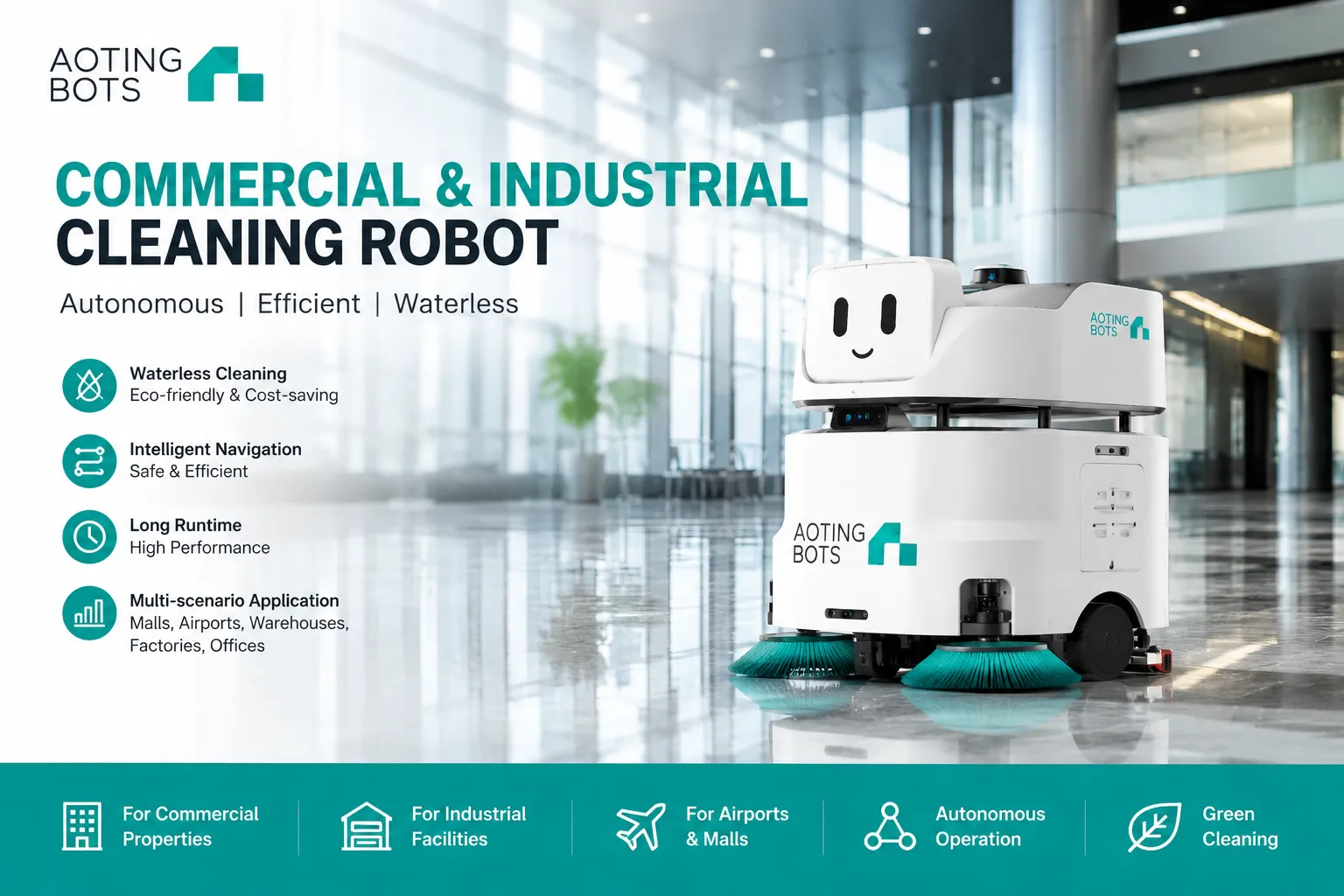
Determining the ROI of a warehouse cleaning robot requires a comparison of two distinct operational models: the Status Quo (Manual) and the Automated Future.
Labor remains the largest variable expense in facility maintenance. A manual scrubber requires an operator paid by the hour, including benefits, insurance, and the costs of high turnover.
Robots, such as those featured in Aotingbot’s warehouse solutions, operate without human supervision for extended shifts. To calculate savings, multiply the hourly fully-loaded labor rate by the total cleaning hours per year. Subtract the annual maintenance cost of the robot to find your net annual labor savings.
Manual cleaning is prone to overlap and missed zones. Autonomous robots utilize SLAM (Simultaneous Localization and Mapping) and LiDAR to ensure 100% floor coverage with minimal overlap.
Efficiency gains are measured in square meters per hour (sqm/h). A robot can maintain a consistent pace for 24 hours if needed, only stopping for water changes or charging. This "lights-out" cleaning capability allows maintenance to occur during low-traffic hours without disrupting forklift flow or order picking.
A realistic ROI model must account for both CAPEX (Capital Expenditure) and OPEX (Operating Expenditure). Many procurement teams overlook the "hidden" costs of manual equipment, such as frequent repairs due to operator negligence or the administrative burden of managing a cleaning crew.
Typical Cost Factors in ROI Models:
Initial Investment: Purchase price of the robot plus docking stations.
Deployment Costs: Mapping the facility and staff training.
Maintenance: Consumables like brushes, squeegees, and annual software subscriptions.
Utilities: Electricity for charging and water consumption.
By utilizing high-performance sensors, industrial robots reduce "collision damage" common in manual operation. This extends the lifespan of the machine and the facility's racking systems.
While the warehouse cleaning robot ROI calculation focuses on hard numbers, several qualitative factors influence long-term profitability.
Slip-and-fall accidents are a significant liability in logistics. Autonomous scrubbers utilize precision water-management systems and powerful vacuums to ensure floors are dry immediately after passes. This reduces the risk of accidents and lowers potential insurance premiums.
Many modern warehouses are moving toward green certifications (LEED). Robots are engineered for resource efficiency. They often use 30% less water and chemicals than manual sweepers by precisely metering flow based on travel speed. This contributes directly to a company’s environmental, social, and governance (ESG) goals.
The labor market is shifting. It is increasingly difficult to hire personnel for "dull, dirty, or dangerous" tasks like floor scrubbing. Implementing robotics allows you to upskill your current staff to "Robot Supervisors," increasing job satisfaction and reducing turnover.
Warehouse cleaning robots are becoming increasingly valuable across industries where large floor areas, frequent cleaning requirements, and operational efficiency are important. By automating repetitive cleaning tasks, businesses can improve cleaning consistency while reducing manual workload and optimizing long-term operating costs.
Logistics and distribution warehouses often require daily floor cleaning due to high traffic from workers, forklifts, and automated equipment. Warehouse cleaning robots help maintain a cleaner working environment while reducing the time employees spend on repetitive cleaning tasks.
Manufacturing plants require reliable cleaning solutions to maintain safe and efficient operations. Industrial cleaning robots can support routine floor maintenance in production areas, helping reduce dust, debris, and contamination risks while allowing workers to focus on core manufacturing activities.
Food processing facilities have strict hygiene requirements and need consistent cleaning performance. Automated cleaning robots can assist with regular floor cleaning operations, helping companies maintain sanitation standards and improve cleaning efficiency.
Large distribution centers often have extensive floor spaces that require frequent maintenance. Autonomous cleaning robots provide a scalable solution by supporting scheduled cleaning operations and maintaining consistent results across large facilities.
In the case studies provided by Aotingbot, it is clear that the scale of the facility dictates the speed of ROI. For a 50,000 sqm warehouse, a single robot can often replace two manual machines and three shifts of labor.
In these environments, the robot functions as a data-gathering tool. Managers receive daily reports on which zones were cleaned and the total volume of debris collected. This transparency allows for "management by exception," where human intervention is only required if the robot alerts the team to an obstacle it cannot navigate.

How long does it take to see a return on investment?
For most 24/7 logistics facilities, the break-even point occurs between 12 and 24 months. This depends on local labor rates and the total square footage being maintained.
Does a cleaning robot require a dedicated technician?
No. Modern robots are designed for "non-technical" operators. Daily maintenance involves emptying the recovery tank and cleaning the sensors, taking less than 10 minutes.
Can the robot handle different floor types?
Yes. Industrial cleaning robots are effective on polished concrete, epoxy coatings, and industrial tile. They automatically adjust brush pressure based on the friction detected on the surface.
What is the lifespan of an industrial cleaning robot?
With proper maintenance, a professional-grade robot has an operational lifespan of 5 to 7 years. Most ROI models use a 5-year depreciation schedule.
How does the robot navigate around moving forklifts?
Robots use a combination of 3D LiDAR, ultrasonic sensors, and RGB cameras. They detect moving obstacles in real-time and will either slow down, stop, or navigate around them according to safety protocols (ISO 13482).
ISO 13482:2014 – Robots and robotic devices: Safety requirements for personal care robots (applicable to mobile service robots).
ASTM F45 – Standard Guide for Performance of Autonomous Floor Cleaning Robots.
International Federation of Robotics (IFR) – Annual reports on service robot adoption in logistics.
OSHA Guidelines – Walking-Working Surfaces (Standard 1910.22) regarding floor cleanliness and safety.
SGS Technical Whitepapers – Efficiency metrics for autonomous industrial machinery.
For logistics directors and facility managers, the decision to automate floor maintenance is rarely driven by a love for technology. It is a financial calculation. As labor costs rise and warehouse footprints expand, the traditional manual sweeping model is hitting a breaking point.
A warehouse cleaning robot ROI calculation must look beyond the initial purchase price. To justify the expenditure to a CFO, one must analyze the Total Cost of Ownership (TCO). This includes labor displacement, increased consistency, and the reduction of secondary costs like slip-and-fall insurance claims.
When evaluating industrial automation, the goal is to shift from a high-variable-cost model (labor) to a stable-fixed-cost model (robotics). In large-volume logistics centers, this transition typically yields a break-even point much faster than many expect.
Determining the ROI of a warehouse cleaning robot requires a comparison of two distinct operational models: the Status Quo (Manual) and the Automated Future.
Labor remains the largest variable expense in facility maintenance. A manual scrubber requires an operator paid by the hour, including benefits, insurance, and the costs of high turnover.
Robots, such as those featured in Aotingbot’s warehouse solutions, operate without human supervision for extended shifts. To calculate savings, multiply the hourly fully-loaded labor rate by the total cleaning hours per year. Subtract the annual maintenance cost of the robot to find your net annual labor savings.
Manual cleaning is prone to overlap and missed zones. Autonomous robots utilize SLAM (Simultaneous Localization and Mapping) and LiDAR to ensure 100% floor coverage with minimal overlap.
Efficiency gains are measured in square meters per hour (sqm/h). A robot can maintain a consistent pace for 24 hours if needed, only stopping for water changes or charging. This "lights-out" cleaning capability allows maintenance to occur during low-traffic hours without disrupting forklift flow or order picking.
A realistic ROI model must account for both CAPEX (Capital Expenditure) and OPEX (Operating Expenditure). Many procurement teams overlook the "hidden" costs of manual equipment, such as frequent repairs due to operator negligence or the administrative burden of managing a cleaning crew.
Typical Cost Factors in ROI Models:
Initial Investment: Purchase price of the robot plus docking stations.
Deployment Costs: Mapping the facility and staff training.
Maintenance: Consumables like brushes, squeegees, and annual software subscriptions.
Utilities: Electricity for charging and water consumption.
By utilizing high-performance sensors, industrial robots reduce "collision damage" common in manual operation. This extends the lifespan of the machine and the facility's racking systems.
While the warehouse cleaning robot ROI calculation focuses on hard numbers, several qualitative factors influence long-term profitability.
Slip-and-fall accidents are a significant liability in logistics. Autonomous scrubbers utilize precision water-management systems and powerful vacuums to ensure floors are dry immediately after passes. This reduces the risk of accidents and lowers potential insurance premiums.
Many modern warehouses are moving toward green certifications (LEED). Robots are engineered for resource efficiency. They often use 30% less water and chemicals than manual sweepers by precisely metering flow based on travel speed. This contributes directly to a company’s environmental, social, and governance (ESG) goals.
The labor market is shifting. It is increasingly difficult to hire personnel for "dull, dirty, or dangerous" tasks like floor scrubbing. Implementing robotics allows you to upskill your current staff to "Robot Supervisors," increasing job satisfaction and reducing turnover.
Warehouse cleaning robots are becoming increasingly valuable across industries where large floor areas, frequent cleaning requirements, and operational efficiency are important. By automating repetitive cleaning tasks, businesses can improve cleaning consistency while reducing manual workload and optimizing long-term operating costs.
Logistics and distribution warehouses often require daily floor cleaning due to high traffic from workers, forklifts, and automated equipment. Warehouse cleaning robots help maintain a cleaner working environment while reducing the time employees spend on repetitive cleaning tasks.
Manufacturing plants require reliable cleaning solutions to maintain safe and efficient operations. Industrial cleaning robots can support routine floor maintenance in production areas, helping reduce dust, debris, and contamination risks while allowing workers to focus on core manufacturing activities.
Food processing facilities have strict hygiene requirements and need consistent cleaning performance. Automated cleaning robots can assist with regular floor cleaning operations, helping companies maintain sanitation standards and improve cleaning efficiency.
Large distribution centers often have extensive floor spaces that require frequent maintenance. Autonomous cleaning robots provide a scalable solution by supporting scheduled cleaning operations and maintaining consistent results across large facilities.
In the case studies provided by Aotingbot, it is clear that the scale of the facility dictates the speed of ROI. For a 50,000 sqm warehouse, a single robot can often replace two manual machines and three shifts of labor.
In these environments, the robot functions as a data-gathering tool. Managers receive daily reports on which zones were cleaned and the total volume of debris collected. This transparency allows for "management by exception," where human intervention is only required if the robot alerts the team to an obstacle it cannot navigate.
How long does it take to see a return on investment?
For most 24/7 logistics facilities, the break-even point occurs between 12 and 24 months. This depends on local labor rates and the total square footage being maintained.
Does a cleaning robot require a dedicated technician?
No. Modern robots are designed for "non-technical" operators. Daily maintenance involves emptying the recovery tank and cleaning the sensors, taking less than 10 minutes.
Can the robot handle different floor types?
Yes. Industrial cleaning robots are effective on polished concrete, epoxy coatings, and industrial tile. They automatically adjust brush pressure based on the friction detected on the surface.
What is the lifespan of an industrial cleaning robot?
With proper maintenance, a professional-grade robot has an operational lifespan of 5 to 7 years. Most ROI models use a 5-year depreciation schedule.
How does the robot navigate around moving forklifts?
Robots use a combination of 3D LiDAR, ultrasonic sensors, and RGB cameras. They detect moving obstacles in real-time and will either slow down, stop, or navigate around them according to safety protocols (ISO 13482).
ISO 13482:2014 – Robots and robotic devices: Safety requirements for personal care robots (applicable to mobile service robots).
ASTM F45 – Standard Guide for Performance of Autonomous Floor Cleaning Robots.
International Federation of Robotics (IFR) – Annual reports on service robot adoption in logistics.
OSHA Guidelines – Walking-Working Surfaces (Standard 1910.22) regarding floor cleanliness and safety.
SGS Technical Whitepapers – Efficiency metrics for autonomous industrial machinery.
CONTACT US
we aim to become a global leader in manufacturer space service robotics and artificial intelligence.


