
CONTACT US
SEARCH WHAT YOU WANT
The SW55 A and SW80 A both belong to AotingBots' waterless commercial cleaning range, but they are not simply two sizes of the same purchase. Their dimensions, working widths and intended environments differ. A buyer choosing between them should start with the floor plan and the cleaning schedule, then check whether the published specifications are appropriate for the site.
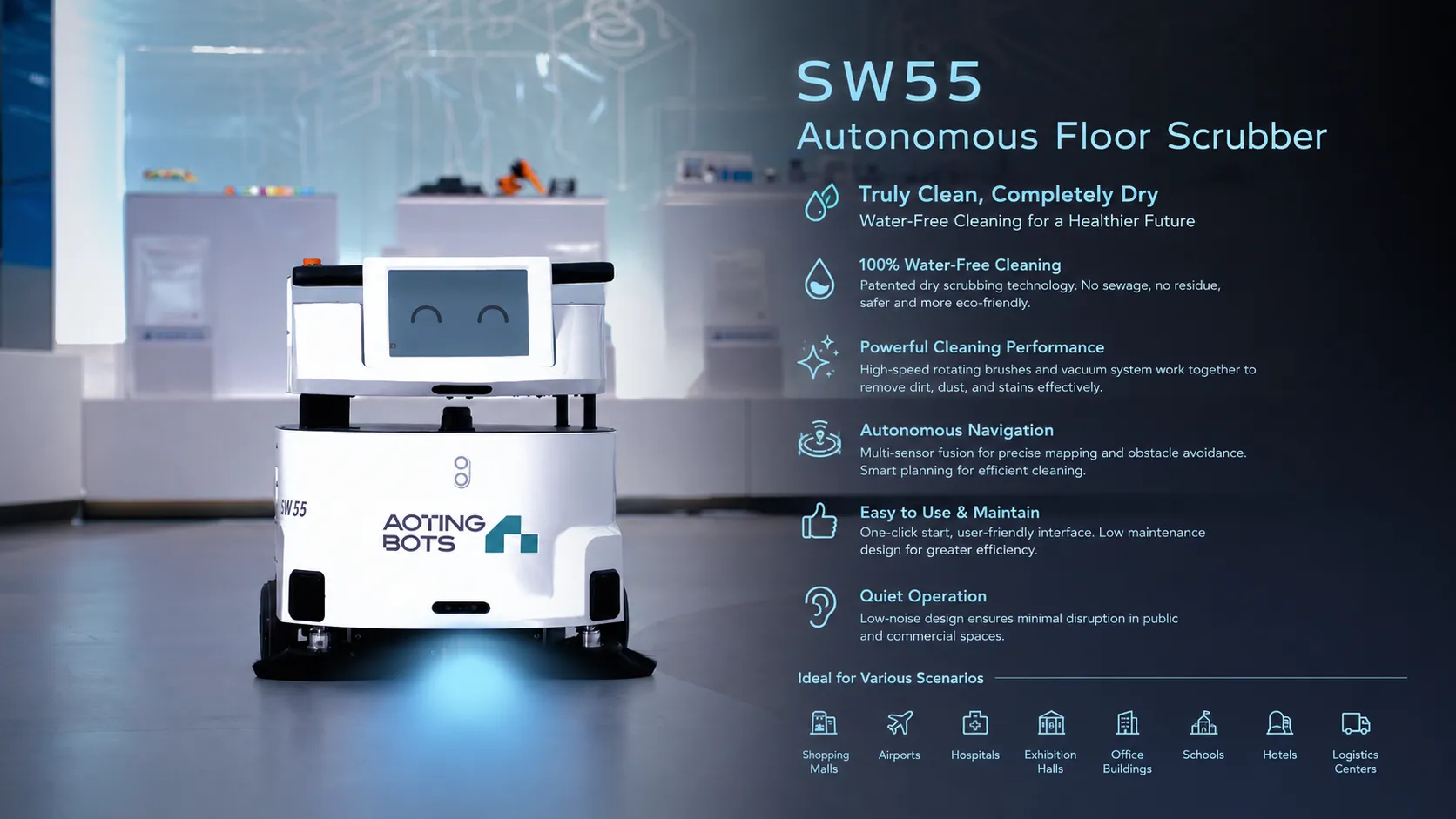
AotingBots lists the SW55 A at 615 × 585 × 650 mm and 91 kg, with a large-side-brush cleaning path of 705 mm and stated efficiency of 1,200 m²/h. Its product positioning covers hotels, offices, shopping malls and other small to medium commercial sites.
The SW80 A measures 1,025 × 850 × 975 mm and weighs 190 kg. It has an 850 mm cleaning path and stated efficiency of 1,600 m²/h, and is positioned for larger commercial and industrial settings such as factories and exhibition halls. Both are advertised for different common floor materials, including hard floors, carpet and wood, subject to surface compatibility.
In an office tower, hotel or mixed-use building, the limiting factor is often not theoretical cleaning speed. Narrow corridors, changes in flooring, doors, elevator lobbies and parked luggage carts can govern whether a robot completes the route. The SW55 A's smaller body makes it a logical model to test first in these settings.
Check that turning room remains available after furniture is in place. Measure door clearances and transitions between carpet and hard flooring. The SW55 A product page also mentions elevator and access-control integration; buyers should confirm interface compatibility for their specific building rather than assuming every system will work out of the box.
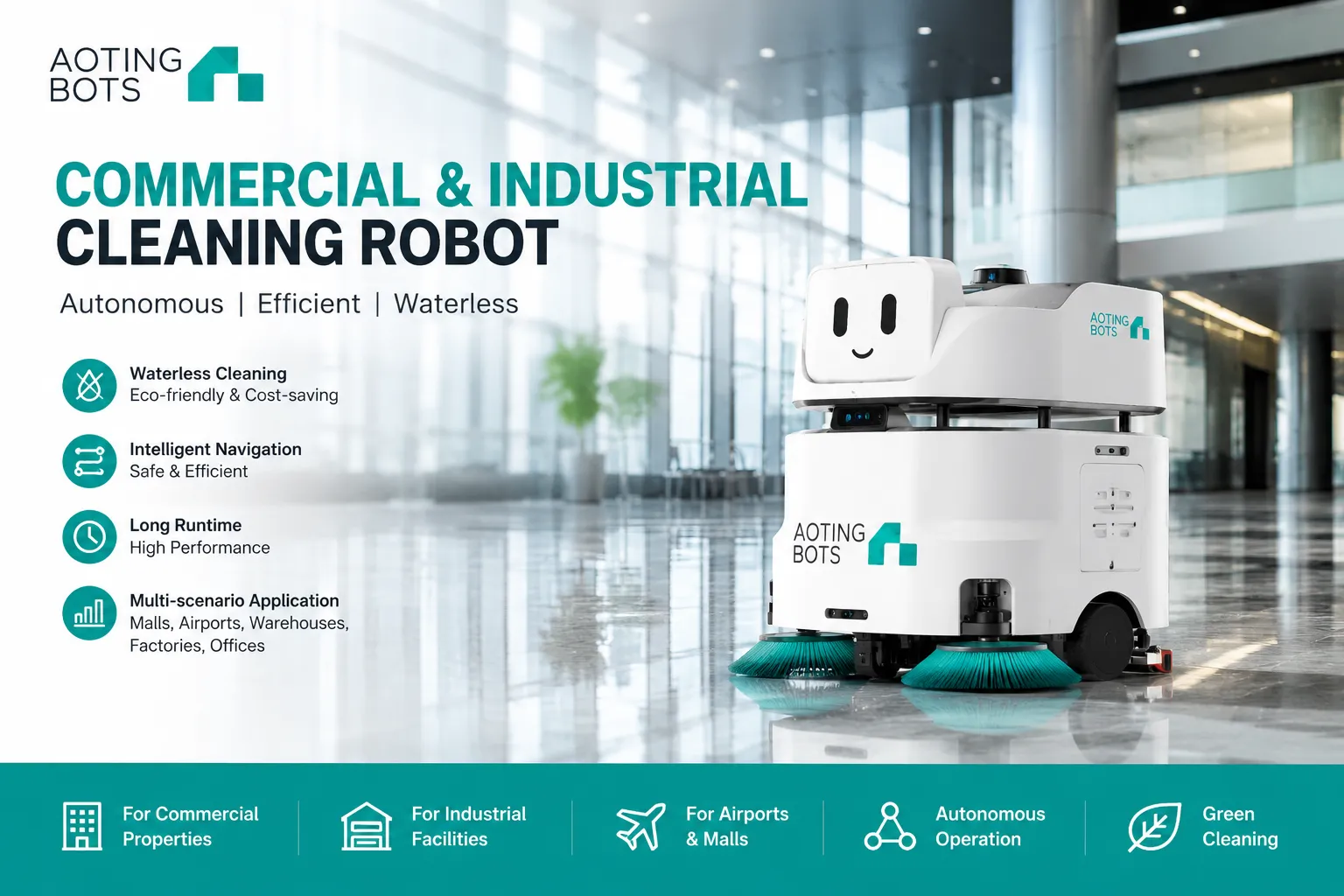
For a broad shopping mall corridor, factory circulation area or exhibition venue, the SW80 A's wider path may help complete longer uninterrupted runs. Its product page lists an 8-hour hard-floor endurance figure and 4-hour charging time under stated conditions. However, a larger machine still needs adequate turning space and a cleaning route that avoids unnecessary interactions with crowds or material handling equipment.
SW80 A's larger specification does not automatically make it the correct machine for every large building. Multi-floor access, frequent zone changes and narrow service corridors can favour a more compact unit or a mixed deployment.
The SW55 A page lists a hard-floor endurance figure of 12 hours, a 2-hour charge time and noise no greater than 62 dB(A). SW80 A lists 8 hours of hard-floor endurance, 4 hours of charging and noise no greater than 62 dB(A). Operating modes and conditions affect real results; ask for the test conditions and observe a normal shift.
Neither published efficiency rating should be multiplied by the full battery duration to promise daily coverage. The robot must turn, navigate around people, enter and exit zones, and sometimes stop for maintenance. Record the completed cleanable area during a pilot instead.
Test each shortlisted model on the same route where possible. Include the narrowest passage, a representative change of floor material and the busiest permitted cleaning time. Track finished area, missed edges, interventions, charge planning and the servicing time required afterwards.
OSHA's floor-condition requirements offer useful context for workplace cleaning responsibilities in US settings, but machine suitability and local safety requirements still need their own review.
Consider a property with a wide ground-floor retail passage but narrow upper-floor corridors. The SW80 A may be worth testing on the open ground floor, while the SW55 A might be the more practical trial candidate upstairs. That does not necessarily mean buying both models: the facility may find that one machine covers the most valuable repeated tasks and staff continue to handle the remainder. Map the cleanable zones separately, test the required charging arrangements and compare the time taken to service each machine. A mixed property is often a better test of real fit than a single headline area figure.
No. Site layout can make a smaller robot more practical. Consider open-floor area separately from corridors, doors and small cleaning zones.
They are marketed as waterless solutions for routine floor maintenance. Sticky spills, some stains and disinfection procedures may require other methods.
The right comparison is between actual tasks, not the largest number in a specification table. Buyers can use the AotingBots product catalogue to request configuration details for either model.
The SW55 A and SW80 A both belong to AotingBots' waterless commercial cleaning range, but they are not simply two sizes of the same purchase. Their dimensions, working widths and intended environments differ. A buyer choosing between them should start with the floor plan and the cleaning schedule, then check whether the published specifications are appropriate for the site.
AotingBots lists the SW55 A at 615 × 585 × 650 mm and 91 kg, with a large-side-brush cleaning path of 705 mm and stated efficiency of 1,200 m²/h. Its product positioning covers hotels, offices, shopping malls and other small to medium commercial sites.
The SW80 A measures 1,025 × 850 × 975 mm and weighs 190 kg. It has an 850 mm cleaning path and stated efficiency of 1,600 m²/h, and is positioned for larger commercial and industrial settings such as factories and exhibition halls. Both are advertised for different common floor materials, including hard floors, carpet and wood, subject to surface compatibility.
In an office tower, hotel or mixed-use building, the limiting factor is often not theoretical cleaning speed. Narrow corridors, changes in flooring, doors, elevator lobbies and parked luggage carts can govern whether a robot completes the route. The SW55 A's smaller body makes it a logical model to test first in these settings.
Check that turning room remains available after furniture is in place. Measure door clearances and transitions between carpet and hard flooring. The SW55 A product page also mentions elevator and access-control integration; buyers should confirm interface compatibility for their specific building rather than assuming every system will work out of the box.
For a broad shopping mall corridor, factory circulation area or exhibition venue, the SW80 A's wider path may help complete longer uninterrupted runs. Its product page lists an 8-hour hard-floor endurance figure and 4-hour charging time under stated conditions. However, a larger machine still needs adequate turning space and a cleaning route that avoids unnecessary interactions with crowds or material handling equipment.
SW80 A's larger specification does not automatically make it the correct machine for every large building. Multi-floor access, frequent zone changes and narrow service corridors can favour a more compact unit or a mixed deployment.
The SW55 A page lists a hard-floor endurance figure of 12 hours, a 2-hour charge time and noise no greater than 62 dB(A). SW80 A lists 8 hours of hard-floor endurance, 4 hours of charging and noise no greater than 62 dB(A). Operating modes and conditions affect real results; ask for the test conditions and observe a normal shift.
Neither published efficiency rating should be multiplied by the full battery duration to promise daily coverage. The robot must turn, navigate around people, enter and exit zones, and sometimes stop for maintenance. Record the completed cleanable area during a pilot instead.
Test each shortlisted model on the same route where possible. Include the narrowest passage, a representative change of floor material and the busiest permitted cleaning time. Track finished area, missed edges, interventions, charge planning and the servicing time required afterwards.
OSHA's floor-condition requirements offer useful context for workplace cleaning responsibilities in US settings, but machine suitability and local safety requirements still need their own review.
Consider a property with a wide ground-floor retail passage but narrow upper-floor corridors. The SW80 A may be worth testing on the open ground floor, while the SW55 A might be the more practical trial candidate upstairs. That does not necessarily mean buying both models: the facility may find that one machine covers the most valuable repeated tasks and staff continue to handle the remainder. Map the cleanable zones separately, test the required charging arrangements and compare the time taken to service each machine. A mixed property is often a better test of real fit than a single headline area figure.
No. Site layout can make a smaller robot more practical. Consider open-floor area separately from corridors, doors and small cleaning zones.
They are marketed as waterless solutions for routine floor maintenance. Sticky spills, some stains and disinfection procedures may require other methods.
The right comparison is between actual tasks, not the largest number in a specification table. Buyers can use the AotingBots product catalogue to request configuration details for either model.
CONTACT US
we aim to become a global leader in manufacturer space service robotics and artificial intelligence.


