An
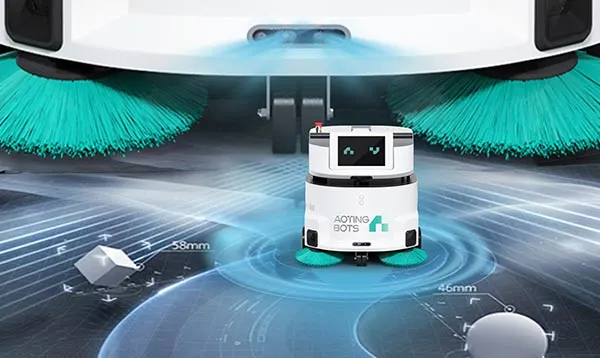
automatic floor scrubber is only as valuable as its fit with the venue it serves. For hotel managers, hospitality groups, and commercial facility directors, the real question is not which robot cleans the largest square footage per hour, but whether the machine can navigate guest-area corridors, handle marble lobbies and carpeted hallways, operate quietly during peak occupancy, and run without leaving water trails that put guests at risk of slips. AotingBots answers this need with its SW55 A—a waterless cleaning robot purpose-built for medium- and small-scale commercial scenarios, integrating scrubbing, sweeping, vacuuming, and dust mopping into one intelligent solution.
Why Hotel Environments Demand a Different Automatic Floor Scrubber
Most autonomous floor cleaning machines on the market are engineered for expansive industrial footprints—wide lobbies, warehouses, and airport terminals. Hotels are different. They combine narrow guest corridors, high-end flooring, mixed carpet and hard surfaces, dense daytime foot traffic, and a zero-tolerance policy for slip hazards.
The Association for Advancing Automation (A3) makes this point clear in its ANSI/A3 R15.08-2:2023 standard for industrial mobile robots: deploying an autonomous mobile robot requires adaptations specific to the application and the facility in which it will be used, including safety requirements when robots interact with workstations, charging stations, and other equipment. In a hotel, those "other equipment" are guests, housekeepers' carts, luggage trolleys, and reception desks. The standard explicitly calls for risk assessment per ANSI/ISO 12100 and demands that autonomous systems reduce risks to an acceptable level for the deployed operating environment.
This is precisely where a purpose-designed automatic floor scrubber for hospitality diverges from a retrofitted industrial scrubber. The SW55 A is engineered around the spatial and acoustic realities of hotels:
- Compact footprint: 615 × 585 × 650 mm and 91 kg—navigates narrow guest corridors and rides elevators via integrated elevator control
- Waterless operation: Integrates mopping, sweeping, vacuuming, and dust pushing without introducing moisture, eliminating slip hazards on marble and hardwood
- Surface versatility: Suitable for carpets (short and long-haired), hard floors, wooden flooring, marble, terrazzo, epoxy resin, sandstone, artificial stone, and plastic
- Quiet operation: ≤62 dB(A)—substantially quieter than industrial wet scrubbers, enabling daytime cleaning without guest disturbance
- 0 cm edge cleaning: Reaches right up to walls, room corners, and lobby fixtures
- Building integration: Supports elevator control, access gates, and access control system integration
The Engineering Profile That Matters in Hospitality
A credible automatic floor scrubber for hotels must balance cleaning performance with venue compatibility:
- Cleaning efficiency: 1200㎡/h with a large side brush cleaning path of 705 mm (small side brush: 615 mm)
- Endurance: 12 hours on hard flooring, extending to 16.5 hours in silent mode, with a 2-hour charging time and a 52AH battery
- Mapping capacity: Up to 40,000㎡ with dynamic and incremental map updating
- Positioning: 360-degree laser and multi-sensor fusion for centimeter-level accuracy
- Debris handling: 9 kPa maximum vacuum power, sweeping up to 40 mm of garbage
- Propel speed: Selectable at 1.0 m/s (high), 0.7 m/s (medium), or 0.5 m/s (low)—adapting to pedestrian density
- Maintenance: 4L trash bin and 7.5L dustbag, requiring maintenance only once per week
- Continuous operation: 7×24 hours uninterrupted with flexible switching between automatic and manual modes
These parameters position the SW55 A specifically for the hospitality sector. Its waterless cleaning technology protects high-end flooring such as tiles, marble, hardwood floors, and carpets while delivering a shinier floor with every use.
How SW55 A Compares with Commercial Alternatives
For procurement managers, hard-parameter comparison reveals where each machine fits. The following tables contrast SW55 A with the Avidbots Neo 2—a representative autonomous scrubber in the global market.
Fit for Hotel and Commercial Venues
|
Dimension
|
AotingBots SW55 A
|
Avidbots Neo 2
|
|
Device type
|
Waterless cleaning robot (walk-behind class)
|
Autonomous ride-on floor scrubber
|
|
Target space
|
Medium/small commercial: hotels, offices, malls, residential communities, conference centers
|
Large hard floor surfaces: airports, warehouses, malls
|
|
Cleaning method
|
Waterless: scrubbing, sweeping, vacuuming, dust mopping
|
Wet scrubbing with disc or cylindrical heads
|
|
Carpet capability
|
Suitable for short- and long-haired carpets
|
Should not be used in carpeted areas
|
|
Machine dimensions (L×W×H)
|
615 × 585 × 650 mm
|
1,516 × 760–935 × 1,374 mm
|
|
Robot weight
|
91 kg
|
283–291 kg empty
|
|
Noise level
|
≤62 dB(A)
|
72 dBA
|
|
Slip hazard risk
|
None—waterless operation
|
Requires wastewater management
|
The SW55 A occupies a distinct niche for hospitality. Where the Avidbots Neo 2 is a large-format wet scrubber built for expansive industrial footprints, the SW55 A is engineered for the spatial realities of hotels—navigating narrow guest corridors, riding elevators via integrated elevator control, and operating on both carpet and hard flooring without leaving water trails.
Operational Parameters
|
Metric
|
AotingBots SW55 A
|
Avidbots Neo 2
|
|
Cleaning efficiency
|
1200㎡/h
|
Up to 3,900㎡/h (theoretical max)
|
|
Runtime
|
12h hard floor, 16.5h silent
|
4–6 h typical
|
|
Charging time
|
2h
|
Battery swapping
|
|
Edge cleaning
|
0 cm
|
Not specified
|
|
Max. mapping area
|
40,000㎡
|
Facility-dependent
|
|
Waterless operation
|
Yes.
|
No (109 L solution, 135 L recovery tank)
|
|
Debris handling
|
Sweeps up to 40 mm of garbage, 9 kPa vacuum
|
Cylindrical or disc brushes, water-based
|
|
Maintenance interval
|
Weekly (4L bin, 7.5L dustbag)
|
Tank filling/emptying, brush and pad replacement
|
|
Building integration
|
Elevator control, access gates, access control
|
Autonomous route planning, command center reporting
|
The SW55 A's waterless architecture creates a structural advantage for hotels. Unlike wet scrubbers that require clean water tanks, recovery tanks, and wastewater disposal, the SW55 A sweeps, vacuums, mops, and pushes dust without introducing moisture. Its ≤62 dB(A) noise level is substantially quieter than the 72 dBA of the Neo 2, making it viable for daytime cleaning in guest-facing hotel lobbies, corridor floors, and around reception areas.
Specifying an Automatic Floor Scrubber for Hotels
A professional automatic floor scrubber must adapt to the hospitality deployment scenario:
Hotel Lobbies and Public Areas
Hotel lobbies feature moisture-sensitive surfaces, including marble, terrazzo, and hardwood. The SW55 A's waterless cleaning technology integrates mopping, sweeping, vacuuming, and dust pushing without introducing moisture, protecting high-end flooring. Its 0 cm edge cleaning distance ensures complete coverage along lobby fixtures and racking, while ≤62 dB(A) silent operation allows daytime cleaning without disturbing guests.
Guest Corridors and Room Floors
Hotel guest corridors are narrow and densely trafficked. The SW55 A's compact 91 kg footprint navigates these spaces and integrates with elevator control to move across floors. Its selectable propel speed (1.0/0.7/0.5 m/s) adapts to pedestrian density, and its 360-degree laser with multi-sensor fusion enables centimeter-level positioning for safe human-robot collaboration.
Carpeted Areas and Mixed Flooring
Hotels present mixed flooring—from marble lobbies to carpeted hallways to wooden guest room floors. The SW55 A is suitable for carpets (both short- and long-haired), hard floors, wooden flooring, marble, terrazzo, epoxy resin, sandstone, artificial stone, and plastic, making it a single solution across the property.
Optional Capabilities for Enhanced Value
Beyond cleaning, SW55 A can be configured with optional security monitoring, inspection capabilities, and fire spot detection—transforming the automatic floor scrubber into a multi-purpose facility intelligence node.
The Specification Conversation: What Your Robot Supplier Should Discuss
A credible automatic floor scrubber supplier begins every hotel project with operational questions:
- Property size and layout—total floor area, corridor width, and mapping requirements (SW55 A supports up to 40,000㎡)
- Flooring mix—carpet, hard, wooden, marble, terrazzo, or epoxy across lobbies, corridors, and guest rooms
- Operating hours—daytime guest-facing cleaning vs. nighttime deep cleaning changes noise and speed requirements
- Building integration—does the robot need elevator control, access gate integration, or access control system connectivity?
- Slip hazard tolerance—waterless vs. wet scrubbing changes liability exposure
- Optional capabilities—security monitoring, inspection, fire spot detection
- Reporting requirements—automatic cleaning reports, real-time task viewing, multi-user hierarchical permission management
- Maintenance cadence — SW55 A requires maintenance only once per week (4L trash bin, 7.5L dustbag)
- Compliance framework—ANSI/A3 R15.08-2:2023 for IMR safety, risk assessment per ANSI/ISO 12100 for the deployed operating environment
AotingBots' engineering team addresses each of these dimensions, leveraging the SW55 A's compact design, waterless cleaning technology, and building integration capabilities.
Why the Manufacturer's Total Capability Matters
When procurement teams select an automatic floor scrubber for hotels, several commercial risks must be mitigated:
- Space-fit risk—can the robot navigate narrow guest corridors and ride elevators? SW55 A's 615 × 585 × 650 mm footprint and 91 kg weight, plus elevator control integration, answer this directly
- Surface compatibility risk—can the machine handle mixed flooring, including carpet? SW55 A's waterless technology works across carpets, hard floors, wood, marble, and more
- Noise risk—can the robot operate during daytime guest hours? SW55 A's ≤62 dB(A) is substantially quieter than industrial wet scrubbers at 72 dBA
- Slip hazard risk—does the cleaning method introduce water? SW55 A's waterless operation eliminates slip hazards from residual water
- Integration risk—can the robot work within the building's existing infrastructure? SW55 A's elevator control, access gate, and access control integration provide the answer
- Endurance risk—can the robot operate 7×24? SW55 A's 12-hour hard floor / 16.5-hour silent mode endurance, plus 2-hour charging, provides sustained coverage
- Edge cleaning risk—can the robot reach corners and edges? SW55 A's 0 cm edge cleaning distance eliminates edge residue
ANSI/A3 R15.08-2:2023 reminds the industry that "with the rapid development of mobile robot capabilities, it's more important than ever for the safety of human workers to have common safety requirements and expectations for IMR systems and system integrations. " A supplier that designs to this principle—and equips the robot with the sensing, integration, and reporting capabilities to operate safely alongside hotel guests—becomes a true engineering partner rather than a hardware vendor.
Frequently Asked Questions
Q: What safety standards apply to an automatic floor scrubber deployed in hotels?
A: The ANSI/A3 R15.08-2:2023 standard provides the framework for deploying industrial mobile robots into a specific facility. It specifies requirements for integrating, configuring, and customizing an IMR or fleet of IMRs into a site and covers the adaptations necessary for the application and the facility in which the robots will be used. The standard describes safety requirements when IMRs interact with workstations, charging stations, and other equipment, and explains safety considerations regarding the deployed operating environment. For hotels, this means the automatic floor scrubber must be assessed for risk per ANSI/ISO 12100 and configured to reduce risks to an acceptable level for guest-facing areas.
Q: Why is a waterless automatic floor scrubber advantageous for hotels?
A: Hotels feature moisture-sensitive surfaces, including marble lobbies, hardwood flooring, and carpeted hallways, along with high foot traffic and a zero-tolerance policy for slip hazards. Waterless cleaning technology—as implemented in the SW55 A—integrates mopping, sweeping, vacuuming, and dust pushing without introducing moisture. This eliminates wastewater tank management, protects high-end flooring, and avoids slip hazards from residual water. Additionally, the SW55 A operates at ≤62 dB(A), substantially quieter than industrial wet scrubbers at 72 dBA, enabling daytime cleaning without guest disturbance.
Q: How does SW55 A handle dynamic hotel environments?
A: The SW55 A employs 360-degree laser and multi-sensor fusion positioning for centimeter-level accuracy, with dynamic map updating that recalculates routes in real-time. It supports elevator control, access gates, and access control system integration, allowing it to move across floors and through secured areas as part of the building's workflow. The robot's propel speed is selectable at 1.0 m/s (high), 0.7 m/s (medium), or 0.5 m/s (low), adapting to pedestrian density. This architecture directly addresses the facility adaptation and human-robot interaction principles defined in ANSI/A3 R15.08-2:2023.
Q: What coverage can the SW55 A deliver in a hotel?
A: The SW55 A delivers 1200㎡/h cleaning efficiency, maps up to 40,000㎡, operates 12 hours continuously on hard flooring (16.5 hours in silent mode), and achieves 0cm edge cleaning distance. Its 52AH battery charges in 2 hours, and the robot requires maintenance only once per week (4L trash bin, 7.5L dustbag). With optional security monitoring, inspection capabilities, and fire spot detection, the SW55 A extends beyond cleaning into facility intelligence—making it a purpose-built automatic floor scrubber for the hospitality sector.
Making the Right Automatic Floor Scrubber Decision for Your Hotel
Selecting an automatic floor scrubber for a hotel is a long-term operational decision. The wrong choice surfaces as water damage to marble and wood, slip-and-fall liability from residual water, noise complaints from guests, inability to navigate narrow corridors, and carpet incompatibility that forces a second machine purchase. The right choice becomes invisible: floors stay clean, surfaces remain protected, the robot moves through the building autonomously, and guests never notice the cleaning operation—only its results.
AotingBots' SW55 A combines waterless cleaning technology, compact 91 kg agility, 1200㎡/h efficiency, 40,000㎡ mapping capacity, 0cm edge cleaning, 12-hour endurance (16.5 hours silent), ≤62dB(A) silent operation, and building integration capabilities into a single platform engineered for hospitality realities. Designed around the safety and facility-adaptation principles of ANSI/A3 R1 5.08-2:2023, and validated for medium- and small-scale commercial scenarios from hotels to offices to malls to residential communities, the SW55 A represents a fundamental rethinking of what an automatic floor scrubber should deliver in guest-facing environments.
To discuss your hotel's cleaning requirements, request a demonstration, or obtain a customized deployment proposal for your property, visit aotingbot.com/product/sw55-a and contact the engineering team directly. A properly specified automatic floor scrubber is the foundation of every modern hotel's cleanliness strategy, and the evaluation process should begin today.
References
- AotingBots, SW55, a product specification. https://www.aotingbot.com/product/sw55-a
- Association for Advancing Automation (A3), ANSI/A3 R15.08-2:2023 American National Standard for Industrial Mobile Robots (IMRs) – Safety Requirements – Part 2: Requirements for IMR system(s) and IMR application(s). Published July 18, 2023. https://www.engineering.com/?p=51317
- Avidbots, Neo 2 autonomous commercial floor scrubber specifications. https://avidbots.com/robots/meet-neo/
An
automatic floor scrubber is only as valuable as its fit with the venue it serves. For hotel managers, hospitality groups, and commercial facility directors, the real question is not which robot cleans the largest square footage per hour, but whether the machine can navigate guest-area corridors, handle marble lobbies and carpeted hallways, operate quietly during peak occupancy, and run without leaving water trails that put guests at risk of slips. AotingBots answers this need with its SW55 A—a waterless cleaning robot purpose-built for medium- and small-scale commercial scenarios, integrating scrubbing, sweeping, vacuuming, and dust mopping into one intelligent solution.
Why Hotel Environments Demand a Different Automatic Floor Scrubber
Most autonomous floor cleaning machines on the market are engineered for expansive industrial footprints—wide lobbies, warehouses, and airport terminals. Hotels are different. They combine narrow guest corridors, high-end flooring, mixed carpet and hard surfaces, dense daytime foot traffic, and a zero-tolerance policy for slip hazards.
The Association for Advancing Automation (A3) makes this point clear in its ANSI/A3 R15.08-2:2023 standard for industrial mobile robots: deploying an autonomous mobile robot requires adaptations specific to the application and the facility in which it will be used, including safety requirements when robots interact with workstations, charging stations, and other equipment. In a hotel, those "other equipment" are guests, housekeepers' carts, luggage trolleys, and reception desks. The standard explicitly calls for risk assessment per ANSI/ISO 12100 and demands that autonomous systems reduce risks to an acceptable level for the deployed operating environment.
This is precisely where a purpose-designed automatic floor scrubber for hospitality diverges from a retrofitted industrial scrubber. The SW55 A is engineered around the spatial and acoustic realities of hotels:
- Compact footprint: 615 × 585 × 650 mm and 91 kg—navigates narrow guest corridors and rides elevators via integrated elevator control
- Waterless operation: Integrates mopping, sweeping, vacuuming, and dust pushing without introducing moisture, eliminating slip hazards on marble and hardwood
- Surface versatility: Suitable for carpets (short and long-haired), hard floors, wooden flooring, marble, terrazzo, epoxy resin, sandstone, artificial stone, and plastic
- Quiet operation: ≤62 dB(A)—substantially quieter than industrial wet scrubbers, enabling daytime cleaning without guest disturbance
- 0 cm edge cleaning: Reaches right up to walls, room corners, and lobby fixtures
- Building integration: Supports elevator control, access gates, and access control system integration
The Engineering Profile That Matters in Hospitality
A credible automatic floor scrubber for hotels must balance cleaning performance with venue compatibility:
- Cleaning efficiency: 1200㎡/h with a large side brush cleaning path of 705 mm (small side brush: 615 mm)
- Endurance: 12 hours on hard flooring, extending to 16.5 hours in silent mode, with a 2-hour charging time and a 52AH battery
- Mapping capacity: Up to 40,000㎡ with dynamic and incremental map updating
- Positioning: 360-degree laser and multi-sensor fusion for centimeter-level accuracy
- Debris handling: 9 kPa maximum vacuum power, sweeping up to 40 mm of garbage
- Propel speed: Selectable at 1.0 m/s (high), 0.7 m/s (medium), or 0.5 m/s (low)—adapting to pedestrian density
- Maintenance: 4L trash bin and 7.5L dustbag, requiring maintenance only once per week
- Continuous operation: 7×24 hours uninterrupted with flexible switching between automatic and manual modes
These parameters position the SW55 A specifically for the hospitality sector. Its waterless cleaning technology protects high-end flooring such as tiles, marble, hardwood floors, and carpets while delivering a shinier floor with every use.
How SW55 A Compares with Commercial Alternatives
For procurement managers, hard-parameter comparison reveals where each machine fits. The following tables contrast SW55 A with the Avidbots Neo 2—a representative autonomous scrubber in the global market.
Fit for Hotel and Commercial Venues
|
Dimension
|
AotingBots SW55 A
|
Avidbots Neo 2
|
|
Device type
|
Waterless cleaning robot (walk-behind class)
|
Autonomous ride-on floor scrubber
|
|
Target space
|
Medium/small commercial: hotels, offices, malls, residential communities, conference centers
|
Large hard floor surfaces: airports, warehouses, malls
|
|
Cleaning method
|
Waterless: scrubbing, sweeping, vacuuming, dust mopping
|
Wet scrubbing with disc or cylindrical heads
|
|
Carpet capability
|
Suitable for short- and long-haired carpets
|
Should not be used in carpeted areas
|
|
Machine dimensions (L×W×H)
|
615 × 585 × 650 mm
|
1,516 × 760–935 × 1,374 mm
|
|
Robot weight
|
91 kg
|
283–291 kg empty
|
|
Noise level
|
≤62 dB(A)
|
72 dBA
|
|
Slip hazard risk
|
None—waterless operation
|
Requires wastewater management
|
The SW55 A occupies a distinct niche for hospitality. Where the Avidbots Neo 2 is a large-format wet scrubber built for expansive industrial footprints, the SW55 A is engineered for the spatial realities of hotels—navigating narrow guest corridors, riding elevators via integrated elevator control, and operating on both carpet and hard flooring without leaving water trails.
Operational Parameters
|
Metric
|
AotingBots SW55 A
|
Avidbots Neo 2
|
|
Cleaning efficiency
|
1200㎡/h
|
Up to 3,900㎡/h (theoretical max)
|
|
Runtime
|
12h hard floor, 16.5h silent
|
4–6 h typical
|
|
Charging time
|
2h
|
Battery swapping
|
|
Edge cleaning
|
0 cm
|
Not specified
|
|
Max. mapping area
|
40,000㎡
|
Facility-dependent
|
|
Waterless operation
|
Yes.
|
No (109 L solution, 135 L recovery tank)
|
|
Debris handling
|
Sweeps up to 40 mm of garbage, 9 kPa vacuum
|
Cylindrical or disc brushes, water-based
|
|
Maintenance interval
|
Weekly (4L bin, 7.5L dustbag)
|
Tank filling/emptying, brush and pad replacement
|
|
Building integration
|
Elevator control, access gates, access control
|
Autonomous route planning, command center reporting
|
The SW55 A's waterless architecture creates a structural advantage for hotels. Unlike wet scrubbers that require clean water tanks, recovery tanks, and wastewater disposal, the SW55 A sweeps, vacuums, mops, and pushes dust without introducing moisture. Its ≤62 dB(A) noise level is substantially quieter than the 72 dBA of the Neo 2, making it viable for daytime cleaning in guest-facing hotel lobbies, corridor floors, and around reception areas.
Specifying an Automatic Floor Scrubber for Hotels
A professional automatic floor scrubber must adapt to the hospitality deployment scenario:
Hotel Lobbies and Public Areas
Hotel lobbies feature moisture-sensitive surfaces, including marble, terrazzo, and hardwood. The SW55 A's waterless cleaning technology integrates mopping, sweeping, vacuuming, and dust pushing without introducing moisture, protecting high-end flooring. Its 0 cm edge cleaning distance ensures complete coverage along lobby fixtures and racking, while ≤62 dB(A) silent operation allows daytime cleaning without disturbing guests.
Guest Corridors and Room Floors
Hotel guest corridors are narrow and densely trafficked. The SW55 A's compact 91 kg footprint navigates these spaces and integrates with elevator control to move across floors. Its selectable propel speed (1.0/0.7/0.5 m/s) adapts to pedestrian density, and its 360-degree laser with multi-sensor fusion enables centimeter-level positioning for safe human-robot collaboration.
Carpeted Areas and Mixed Flooring
Hotels present mixed flooring—from marble lobbies to carpeted hallways to wooden guest room floors. The SW55 A is suitable for carpets (both short- and long-haired), hard floors, wooden flooring, marble, terrazzo, epoxy resin, sandstone, artificial stone, and plastic, making it a single solution across the property.
Optional Capabilities for Enhanced Value
Beyond cleaning, SW55 A can be configured with optional security monitoring, inspection capabilities, and fire spot detection—transforming the automatic floor scrubber into a multi-purpose facility intelligence node.
The Specification Conversation: What Your Robot Supplier Should Discuss
A credible automatic floor scrubber supplier begins every hotel project with operational questions:
- Property size and layout—total floor area, corridor width, and mapping requirements (SW55 A supports up to 40,000㎡)
- Flooring mix—carpet, hard, wooden, marble, terrazzo, or epoxy across lobbies, corridors, and guest rooms
- Operating hours—daytime guest-facing cleaning vs. nighttime deep cleaning changes noise and speed requirements
- Building integration—does the robot need elevator control, access gate integration, or access control system connectivity?
- Slip hazard tolerance—waterless vs. wet scrubbing changes liability exposure
- Optional capabilities—security monitoring, inspection, fire spot detection
- Reporting requirements—automatic cleaning reports, real-time task viewing, multi-user hierarchical permission management
- Maintenance cadence — SW55 A requires maintenance only once per week (4L trash bin, 7.5L dustbag)
- Compliance framework—ANSI/A3 R15.08-2:2023 for IMR safety, risk assessment per ANSI/ISO 12100 for the deployed operating environment
AotingBots' engineering team addresses each of these dimensions, leveraging the SW55 A's compact design, waterless cleaning technology, and building integration capabilities.
Why the Manufacturer's Total Capability Matters
When procurement teams select an automatic floor scrubber for hotels, several commercial risks must be mitigated:
- Space-fit risk—can the robot navigate narrow guest corridors and ride elevators? SW55 A's 615 × 585 × 650 mm footprint and 91 kg weight, plus elevator control integration, answer this directly
- Surface compatibility risk—can the machine handle mixed flooring, including carpet? SW55 A's waterless technology works across carpets, hard floors, wood, marble, and more
- Noise risk—can the robot operate during daytime guest hours? SW55 A's ≤62 dB(A) is substantially quieter than industrial wet scrubbers at 72 dBA
- Slip hazard risk—does the cleaning method introduce water? SW55 A's waterless operation eliminates slip hazards from residual water
- Integration risk—can the robot work within the building's existing infrastructure? SW55 A's elevator control, access gate, and access control integration provide the answer
- Endurance risk—can the robot operate 7×24? SW55 A's 12-hour hard floor / 16.5-hour silent mode endurance, plus 2-hour charging, provides sustained coverage
- Edge cleaning risk—can the robot reach corners and edges? SW55 A's 0 cm edge cleaning distance eliminates edge residue
ANSI/A3 R15.08-2:2023 reminds the industry that "with the rapid development of mobile robot capabilities, it's more important than ever for the safety of human workers to have common safety requirements and expectations for IMR systems and system integrations. " A supplier that designs to this principle—and equips the robot with the sensing, integration, and reporting capabilities to operate safely alongside hotel guests—becomes a true engineering partner rather than a hardware vendor.
Frequently Asked Questions
Q: What safety standards apply to an automatic floor scrubber deployed in hotels?
A: The ANSI/A3 R15.08-2:2023 standard provides the framework for deploying industrial mobile robots into a specific facility. It specifies requirements for integrating, configuring, and customizing an IMR or fleet of IMRs into a site and covers the adaptations necessary for the application and the facility in which the robots will be used. The standard describes safety requirements when IMRs interact with workstations, charging stations, and other equipment, and explains safety considerations regarding the deployed operating environment. For hotels, this means the automatic floor scrubber must be assessed for risk per ANSI/ISO 12100 and configured to reduce risks to an acceptable level for guest-facing areas.
Q: Why is a waterless automatic floor scrubber advantageous for hotels?
A: Hotels feature moisture-sensitive surfaces, including marble lobbies, hardwood flooring, and carpeted hallways, along with high foot traffic and a zero-tolerance policy for slip hazards. Waterless cleaning technology—as implemented in the SW55 A—integrates mopping, sweeping, vacuuming, and dust pushing without introducing moisture. This eliminates wastewater tank management, protects high-end flooring, and avoids slip hazards from residual water. Additionally, the SW55 A operates at ≤62 dB(A), substantially quieter than industrial wet scrubbers at 72 dBA, enabling daytime cleaning without guest disturbance.
Q: How does SW55 A handle dynamic hotel environments?
A: The SW55 A employs 360-degree laser and multi-sensor fusion positioning for centimeter-level accuracy, with dynamic map updating that recalculates routes in real-time. It supports elevator control, access gates, and access control system integration, allowing it to move across floors and through secured areas as part of the building's workflow. The robot's propel speed is selectable at 1.0 m/s (high), 0.7 m/s (medium), or 0.5 m/s (low), adapting to pedestrian density. This architecture directly addresses the facility adaptation and human-robot interaction principles defined in ANSI/A3 R15.08-2:2023.
Q: What coverage can the SW55 A deliver in a hotel?
A: The SW55 A delivers 1200㎡/h cleaning efficiency, maps up to 40,000㎡, operates 12 hours continuously on hard flooring (16.5 hours in silent mode), and achieves 0cm edge cleaning distance. Its 52AH battery charges in 2 hours, and the robot requires maintenance only once per week (4L trash bin, 7.5L dustbag). With optional security monitoring, inspection capabilities, and fire spot detection, the SW55 A extends beyond cleaning into facility intelligence—making it a purpose-built automatic floor scrubber for the hospitality sector.
Making the Right Automatic Floor Scrubber Decision for Your Hotel
Selecting an automatic floor scrubber for a hotel is a long-term operational decision. The wrong choice surfaces as water damage to marble and wood, slip-and-fall liability from residual water, noise complaints from guests, inability to navigate narrow corridors, and carpet incompatibility that forces a second machine purchase. The right choice becomes invisible: floors stay clean, surfaces remain protected, the robot moves through the building autonomously, and guests never notice the cleaning operation—only its results.
AotingBots' SW55 A combines waterless cleaning technology, compact 91 kg agility, 1200㎡/h efficiency, 40,000㎡ mapping capacity, 0cm edge cleaning, 12-hour endurance (16.5 hours silent), ≤62dB(A) silent operation, and building integration capabilities into a single platform engineered for hospitality realities. Designed around the safety and facility-adaptation principles of ANSI/A3 R1 5.08-2:2023, and validated for medium- and small-scale commercial scenarios from hotels to offices to malls to residential communities, the SW55 A represents a fundamental rethinking of what an automatic floor scrubber should deliver in guest-facing environments.
To discuss your hotel's cleaning requirements, request a demonstration, or obtain a customized deployment proposal for your property, visit aotingbot.com/product/sw55-a and contact the engineering team directly. A properly specified automatic floor scrubber is the foundation of every modern hotel's cleanliness strategy, and the evaluation process should begin today.
References
- AotingBots, SW55, a product specification. https://www.aotingbot.com/product/sw55-a
- Association for Advancing Automation (A3), ANSI/A3 R15.08-2:2023 American National Standard for Industrial Mobile Robots (IMRs) – Safety Requirements – Part 2: Requirements for IMR system(s) and IMR application(s). Published July 18, 2023. https://www.engineering.com/?p=51317
- Avidbots, Neo 2 autonomous commercial floor scrubber specifications. https://avidbots.com/robots/meet-neo/