
CONTACT US
SEARCH WHAT YOU WANT
Choosing an autonomous cleaning robot for a commercial building involves more than comparing cleaning speed or battery capacity. Offices, hotels, shopping malls, healthcare facilities and other public spaces can have different floor surfaces, traffic patterns and operating schedules.
For facility managers and procurement teams, a practical approach is to compare the robot with the actual cleaning environment. Area coverage, floor compatibility, navigation, noise, runtime and integration requirements should all be considered before selecting a machine.
The first question is how much floor area the robot needs to clean during a normal operating cycle.
A machine with a higher rated cleaning efficiency may be useful for large open areas, but actual coverage can also depend on furniture, people, corridors, elevators and other obstacles.
When comparing an autonomous cleaning robot, check:
Rated cleaning efficiency in m²/h
Expected operating hours per day
Battery charging time
Maximum mapping area
Cleaning path width
Frequency of human intervention
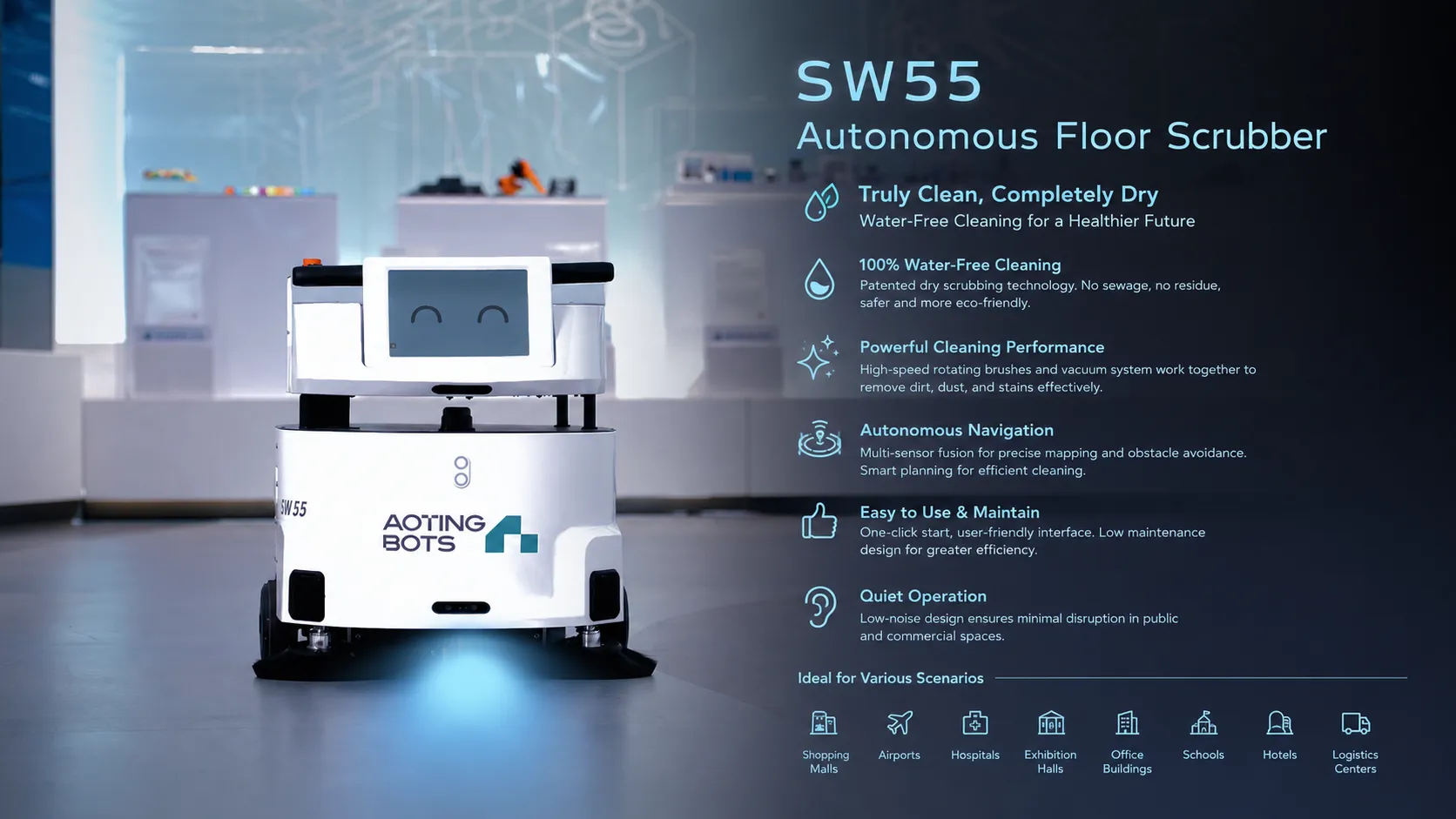
For example, the SW55 A lists a cleaning efficiency of up to 1,200 m²/h, with up to 12 hours of endurance on hard flooring and 16.5 hours in silent mode. AotingBots lists the model for environments including hotels, offices, shopping malls and conference centers.
For larger open areas, the SW80 A lists a cleaning efficiency of 1,600 m²/h and an 850 mm cleaning path. The model is presented for commercial and industrial environments such as malls, factories, conference centers and exhibition halls.
These figures should be treated as reference specifications rather than guaranteed real-world coverage. A site trial can provide a more useful estimate for a specific facility.
Floor type is another important selection factor.
Commercial buildings may combine hard flooring, carpet, wood, stone and other surfaces. A robot designed for one type of floor may not deliver the same results across every surface.
Before purchasing, confirm:
Supported floor materials
Cleaning method for each surface
Brush and suction configuration
Edge and corner cleaning capability
Performance when moving between different floor types
The SW55 A is listed for carpets, hard floors and wooden flooring. It combines scrubbing, sweeping, vacuuming and dust mopping in a waterless cleaning system.
The SW80 A is also listed for carpet, hard and wooden floors. Its specifications include maximum vacuum power of up to 17 kPa.
For facilities with several floor materials, testing the robot on representative sections of the building is preferable to relying only on specification sheets.
An autonomous cleaning robot needs to work within the actual layout of the building.
Large commercial facilities can include corridors, furniture, entrances, restricted areas, elevators and changing pedestrian traffic. Mapping and navigation therefore deserve the same attention as cleaning performance.
Important questions include:
How large an area can the robot map?
How does it handle obstacles?
Can cleaning routes be adjusted?
Can maps be updated when the layout changes?
Can the robot interact with elevators or access-control systems?
Can operators monitor cleaning tasks remotely?
The SW55 A, for example, is stated to support elevator control, access gates and access-control system integration. Its listed maximum mapping area is 40,000 m².
This can be useful for multi-floor office buildings, hotels and shopping facilities where cleaning cannot be limited to a single open floor.
Cleaning schedules can affect which commercial cleaning robot is appropriate for a facility.
An office may require cleaning while employees are present, while a hotel, mall or public facility may distribute cleaning activities across different periods of the day.
Noise should therefore be included in the selection criteria rather than treated as a secondary specification.
Both the SW55 A and SW80 A list a noise level of ≤62 dB(A). Their product information also includes silent-mode operating time.
Facility teams can still conduct an on-site test during normal occupancy because perceived noise and disruption may vary depending on the building layout and background sound.
For healthcare facilities, robot selection should also be considered alongside existing housekeeping and workplace safety procedures. For example, OSHA's housekeeping guidance emphasizes keeping floors clean and dry and maintaining clear walking surfaces in healthcare environments.
Battery capacity alone does not tell you whether a cleaning robot will fit a facility's workflow.
Instead, compare runtime with the actual cleaning schedule and required coverage.
| Selection Factor | SW55 A | SW80 A |
|---|---|---|
| Cleaning efficiency | 1,200 m²/h | 1,600 m²/h |
| Hard‑floor endurance | 12 h | 8 h |
| Silent‑mode endurance | 16.5 h | 12 h |
| Maximum mapping area | 40,000 m² | 40,000 m² |
| Maximum vacuum power | 9 kPa | 17 kPa |
| Noise level | ≤62 dB(A) | ≤62 dB(A) |
| Gradeability | — | 12% / 7° |
The specifications above are based on the product information provided by AotingBots.
The SW55 A may be worth considering where longer listed endurance, multifunction waterless cleaning and a compact commercial cleaning workflow are important.
The SW80 A may be more suitable where a wider cleaning path, higher listed vacuum power and gradeability are useful for larger or more demanding environments.
You can also review the full AotingBots commercial cleaning robot product range when comparing available models.
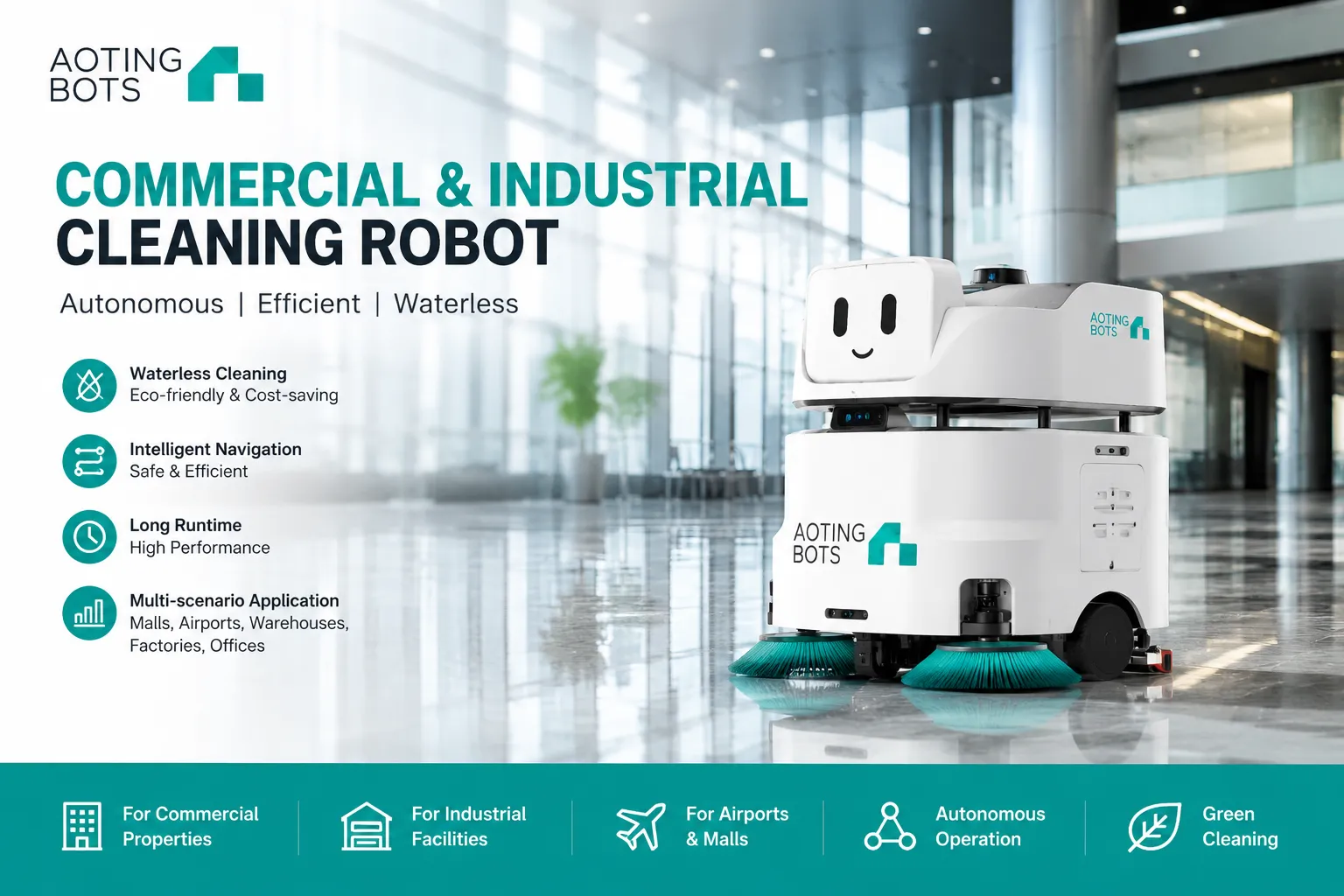
For a small facility, one robot may be relatively straightforward to manage. Larger buildings require more attention to deployment, supervision and system integration.
Ask the supplier about:
Elevator and access-control integration
Map creation and updates
Remote task monitoring
Cleaning reports
Scheduling functions
Manual override options
Charging arrangements
Maintenance and spare parts
The SW80 A product information describes real-time task monitoring, remote task management and multi-user permission management.
The SW55 A includes elevator, gate and access-control integration according to its product information.
These functions should still be evaluated against the building's existing systems before deployment.
A specification sheet can narrow down the options, but it cannot reproduce every condition inside a commercial building.
Before purchasing an autonomous cleaning robot, consider testing it in a representative area with:
Typical floor surfaces
Normal pedestrian traffic
Furniture and fixed obstacles
Corridors and narrow passages
Slopes or ramps
Elevators or controlled-access areas
Typical cleaning schedules
During the trial, track practical factors such as completed floor area, charging frequency, operator intervention and cleaning consistency.
This can help facility teams distinguish between a robot that appears suitable on paper and one that fits the actual cleaning workflow.
There is no single specification that determines suitability. Cleaning area, floor type, operating schedule, navigation requirements and site layout should be considered together.
They can be considered for offices and other commercial facilities where floor areas and cleaning routes are suitable. The SW55 A, for example, is listed for office buildings, hotels, shopping malls and conference centers.
It depends on the facility. The SW55 A emphasizes longer listed endurance and multifunction waterless cleaning, while the SW80 A offers a wider cleaning path, higher listed vacuum power and 12% gradeability. Comparing these specifications with the site's actual cleaning requirements can help narrow the choice.
For larger commercial projects, a site trial can be useful because actual coverage, obstacle handling, noise and operator requirements can differ from theoretical specifications.
Selecting an autonomous cleaning robot for commercial buildings should start with the building rather than the machine. Cleaning area, floor surfaces, operating hours, navigation requirements, noise and integration needs provide a practical framework for comparing different models.
The SW55 A and SW80 A provide examples of how commercial cleaning robots can be matched to different facility requirements.
Reviewing the AotingBots product range and conducting a site-specific evaluation can help facility teams identify a suitable configuration for their cleaning workflow.
Choosing an autonomous cleaning robot for a commercial building involves more than comparing cleaning speed or battery capacity. Offices, hotels, shopping malls, healthcare facilities and other public spaces can have different floor surfaces, traffic patterns and operating schedules.
For facility managers and procurement teams, a practical approach is to compare the robot with the actual cleaning environment. Area coverage, floor compatibility, navigation, noise, runtime and integration requirements should all be considered before selecting a machine.
The first question is how much floor area the robot needs to clean during a normal operating cycle.
A machine with a higher rated cleaning efficiency may be useful for large open areas, but actual coverage can also depend on furniture, people, corridors, elevators and other obstacles.
When comparing an autonomous cleaning robot, check:
Rated cleaning efficiency in m²/h
Expected operating hours per day
Battery charging time
Maximum mapping area
Cleaning path width
Frequency of human intervention
For example, the SW55 A lists a cleaning efficiency of up to 1,200 m²/h, with up to 12 hours of endurance on hard flooring and 16.5 hours in silent mode. AotingBots lists the model for environments including hotels, offices, shopping malls and conference centers.
For larger open areas, the SW80 A lists a cleaning efficiency of 1,600 m²/h and an 850 mm cleaning path. The model is presented for commercial and industrial environments such as malls, factories, conference centers and exhibition halls.
These figures should be treated as reference specifications rather than guaranteed real-world coverage. A site trial can provide a more useful estimate for a specific facility.
Floor type is another important selection factor.
Commercial buildings may combine hard flooring, carpet, wood, stone and other surfaces. A robot designed for one type of floor may not deliver the same results across every surface.
Before purchasing, confirm:
Supported floor materials
Cleaning method for each surface
Brush and suction configuration
Edge and corner cleaning capability
Performance when moving between different floor types
The SW55 A is listed for carpets, hard floors and wooden flooring. It combines scrubbing, sweeping, vacuuming and dust mopping in a waterless cleaning system.
The SW80 A is also listed for carpet, hard and wooden floors. Its specifications include maximum vacuum power of up to 17 kPa.
For facilities with several floor materials, testing the robot on representative sections of the building is preferable to relying only on specification sheets.
An autonomous cleaning robot needs to work within the actual layout of the building.
Large commercial facilities can include corridors, furniture, entrances, restricted areas, elevators and changing pedestrian traffic. Mapping and navigation therefore deserve the same attention as cleaning performance.
Important questions include:
How large an area can the robot map?
How does it handle obstacles?
Can cleaning routes be adjusted?
Can maps be updated when the layout changes?
Can the robot interact with elevators or access-control systems?
Can operators monitor cleaning tasks remotely?
The SW55 A, for example, is stated to support elevator control, access gates and access-control system integration. Its listed maximum mapping area is 40,000 m².
This can be useful for multi-floor office buildings, hotels and shopping facilities where cleaning cannot be limited to a single open floor.
Cleaning schedules can affect which commercial cleaning robot is appropriate for a facility.
An office may require cleaning while employees are present, while a hotel, mall or public facility may distribute cleaning activities across different periods of the day.
Noise should therefore be included in the selection criteria rather than treated as a secondary specification.
Both the SW55 A and SW80 A list a noise level of ≤62 dB(A). Their product information also includes silent-mode operating time.
Facility teams can still conduct an on-site test during normal occupancy because perceived noise and disruption may vary depending on the building layout and background sound.
For healthcare facilities, robot selection should also be considered alongside existing housekeeping and workplace safety procedures. For example, OSHA's housekeeping guidance emphasizes keeping floors clean and dry and maintaining clear walking surfaces in healthcare environments.
Battery capacity alone does not tell you whether a cleaning robot will fit a facility's workflow.
Instead, compare runtime with the actual cleaning schedule and required coverage.
| Selection Factor | SW55 A | SW80 A |
|---|---|---|
| Cleaning efficiency | 1,200 m²/h | 1,600 m²/h |
| Hard‑floor endurance | 12 h | 8 h |
| Silent‑mode endurance | 16.5 h | 12 h |
| Maximum mapping area | 40,000 m² | 40,000 m² |
| Maximum vacuum power | 9 kPa | 17 kPa |
| Noise level | ≤62 dB(A) | ≤62 dB(A) |
| Gradeability | — | 12% / 7° |
The specifications above are based on the product information provided by AotingBots.
The SW55 A may be worth considering where longer listed endurance, multifunction waterless cleaning and a compact commercial cleaning workflow are important.
The SW80 A may be more suitable where a wider cleaning path, higher listed vacuum power and gradeability are useful for larger or more demanding environments.
You can also review the full AotingBots commercial cleaning robot product range when comparing available models.
For a small facility, one robot may be relatively straightforward to manage. Larger buildings require more attention to deployment, supervision and system integration.
Ask the supplier about:
Elevator and access-control integration
Map creation and updates
Remote task monitoring
Cleaning reports
Scheduling functions
Manual override options
Charging arrangements
Maintenance and spare parts
The SW80 A product information describes real-time task monitoring, remote task management and multi-user permission management.
The SW55 A includes elevator, gate and access-control integration according to its product information.
These functions should still be evaluated against the building's existing systems before deployment.
A specification sheet can narrow down the options, but it cannot reproduce every condition inside a commercial building.
Before purchasing an autonomous cleaning robot, consider testing it in a representative area with:
Typical floor surfaces
Normal pedestrian traffic
Furniture and fixed obstacles
Corridors and narrow passages
Slopes or ramps
Elevators or controlled-access areas
Typical cleaning schedules
During the trial, track practical factors such as completed floor area, charging frequency, operator intervention and cleaning consistency.
This can help facility teams distinguish between a robot that appears suitable on paper and one that fits the actual cleaning workflow.
There is no single specification that determines suitability. Cleaning area, floor type, operating schedule, navigation requirements and site layout should be considered together.
They can be considered for offices and other commercial facilities where floor areas and cleaning routes are suitable. The SW55 A, for example, is listed for office buildings, hotels, shopping malls and conference centers.
It depends on the facility. The SW55 A emphasizes longer listed endurance and multifunction waterless cleaning, while the SW80 A offers a wider cleaning path, higher listed vacuum power and 12% gradeability. Comparing these specifications with the site's actual cleaning requirements can help narrow the choice.
For larger commercial projects, a site trial can be useful because actual coverage, obstacle handling, noise and operator requirements can differ from theoretical specifications.
Selecting an autonomous cleaning robot for commercial buildings should start with the building rather than the machine. Cleaning area, floor surfaces, operating hours, navigation requirements, noise and integration needs provide a practical framework for comparing different models.
The SW55 A and SW80 A provide examples of how commercial cleaning robots can be matched to different facility requirements.
Reviewing the AotingBots product range and conducting a site-specific evaluation can help facility teams identify a suitable configuration for their cleaning workflow.
CONTACT US
we aim to become a global leader in manufacturer space service robotics and artificial intelligence.


