
CONTACT US
SEARCH WHAT YOU WANT
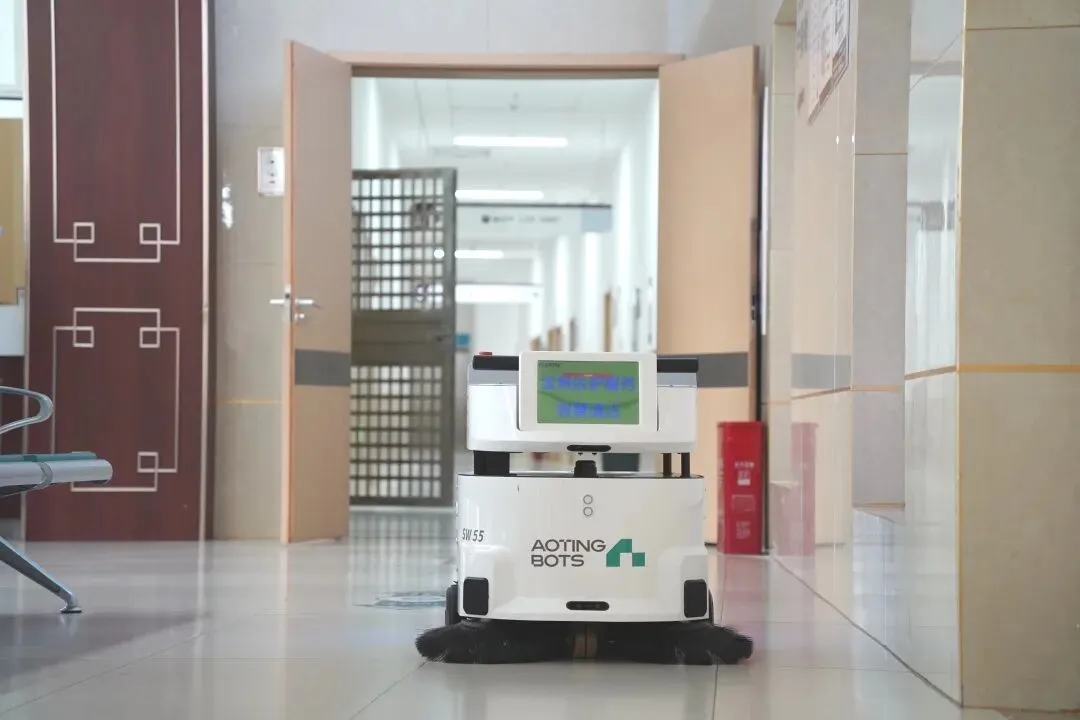
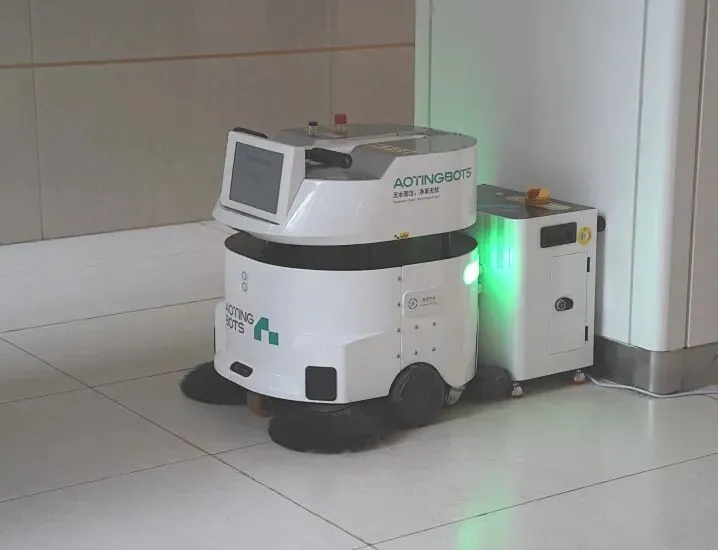
Cleaning in medical environments requires more than just thoroughness; it demands safety, quiet operation, and minimal disruption to daily hospital functions. The Aoting SW55 A waterless cleaning robot leverages waterless cleaning technology, integrated with intelligent navigation, obstacle avoidance, and task management, to align perfectly with the operational realities of a hospital.
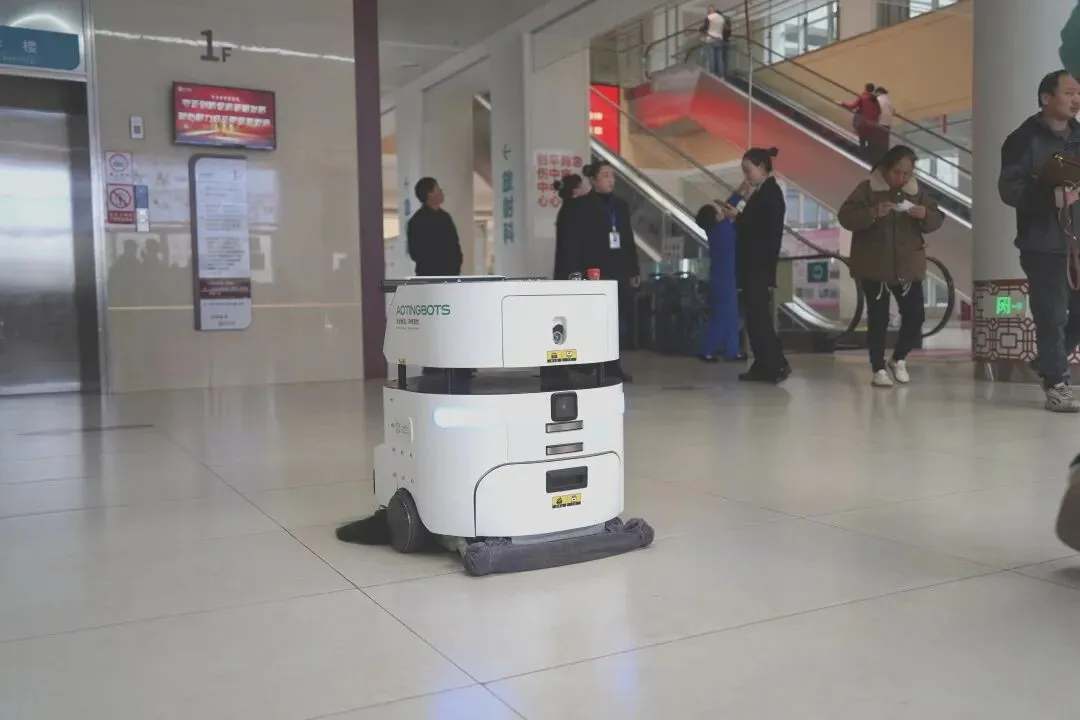
Hospital outpatient lobbies experience high foot traffic. Traditional cleaning methods—relying on frequent manual rounds, repetitive sweeping, and wet mopping—often entail high labor costs, restricted operating hours, and interference with the flow of people.
How can high-frequency cleaning be achieved while minimizing the impact on hospital operations?
01/
Waterless Cleaning Innovation
Eliminating the Risks of Wet Mopping
Compared to traditional wet cleaning, waterless cleaning transforms hospital floor maintenance by enhancing safety, hygiene, and operational efficiency:
► Mitigating Slip Hazards
Wet mopping leaves floors damp, creating a slip risk in areas with heavy foot traffic. Waterless cleaning eliminates the need for drying time, making it ideal for high-traffic hospital zones.
► Reducing the Risk of Cross-Contamination
By eliminating the generation and disposal of wastewater—and reducing reliance on wet mops—this approach lowers the risk of secondary contamination during the cleaning process.
► Optimized for High-Frequency Use
Without the need for frequent water refills or wastewater drainage, cleaning tasks can be flexibly scheduled based on specific areas and time periods.
02/
Four-in-One Cleaning: Sweeping, Brushing, Vacuuming, and Pushing
Managing Both Visible Debris and Fine Dust
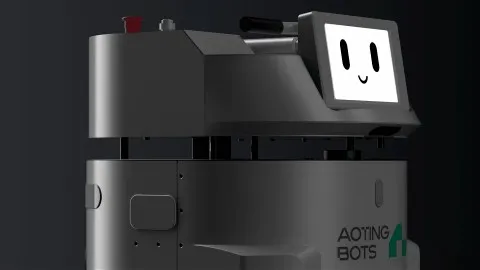
Beyond visible debris, microscopic dust also requires attention. The Aoting SW55 A utilizes a configuration of dual main brushes and dual side brushes to channel debris toward the unit’s internal collection system. Complemented by a powerful vacuum, it effectively contains dust, preventing fine particles from dispersing into the environment. From visible litter to microscopic dust, it ensures comprehensive and consistent floor cleaning for hospitals.
03/
Multi-Dimensional Obstacle Avoidance
Adapting to Dynamic Hospital Foot Traffic
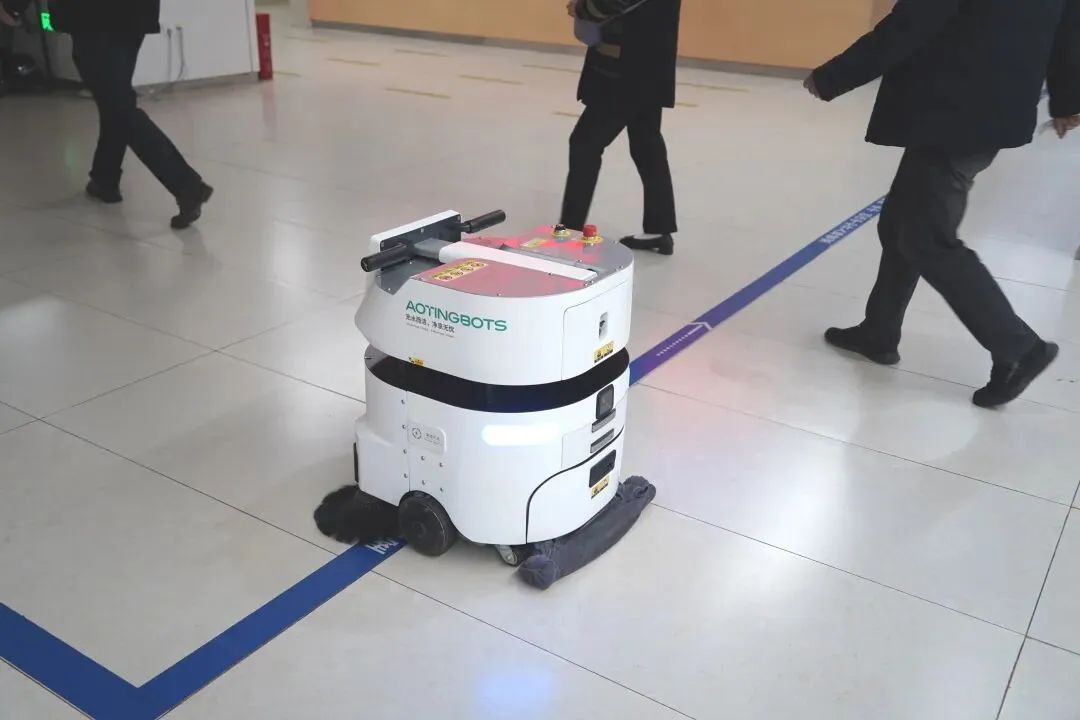
True intelligence in cleaning robots goes beyond simple navigation; it requires the ability to make sound judgments and navigate around obstacles. During the cleaning process, patients, medical staff, and various pieces of equipment may appear in the robot’s path at any time. Equipped with an intelligent navigation and obstacle-avoidance system, the Aodin SW55 A can autonomously plan its route based on the environment, flexibly maneuvering around people and obstacles to ensure that cleaning operations remain in sync with the hospital’s fast-paced rhythm.
04/
Multi-Floor Operation
Comprehensive Coverage Across the Hospital Facility
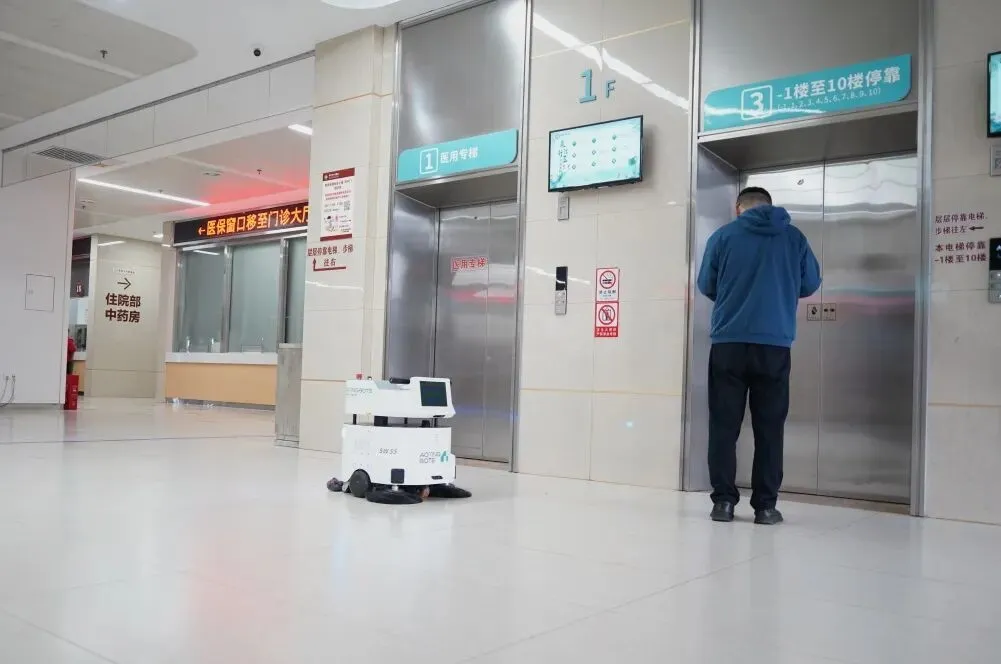
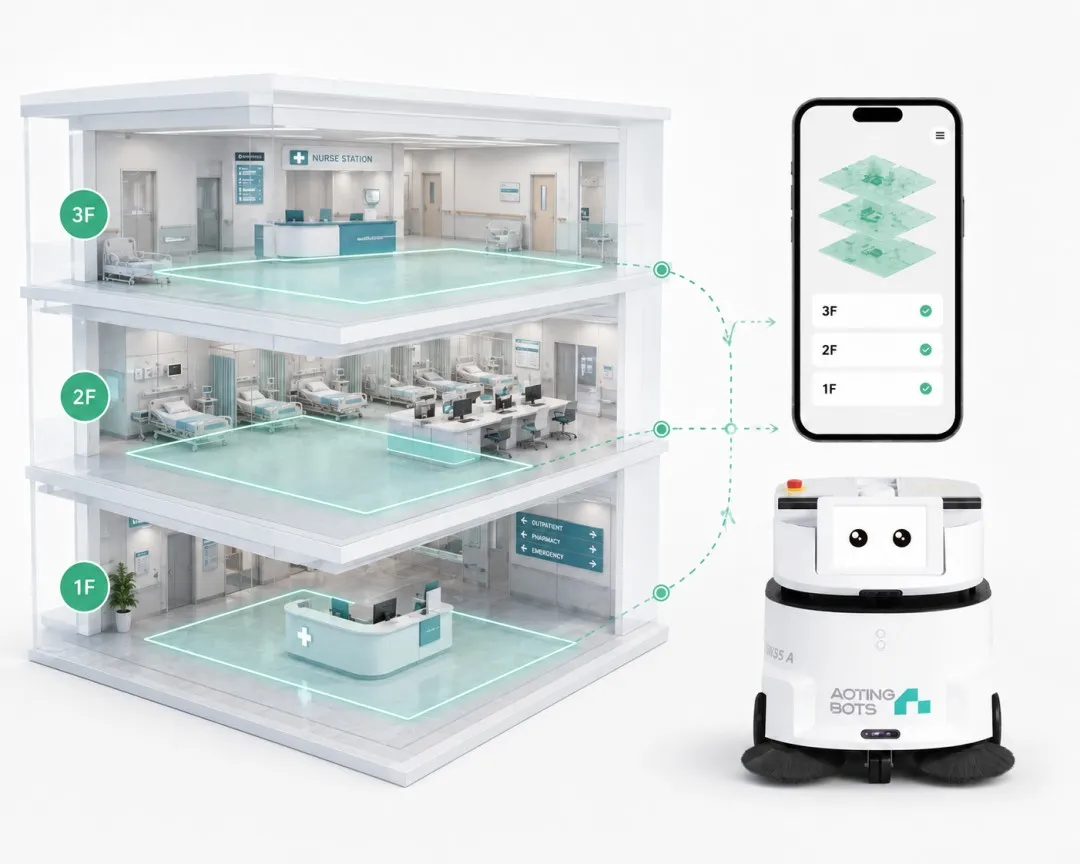
Hospitals are typically characterized by multiple floors, complex layouts, and diverse foot-traffic patterns, which means cleaning tasks are often highly dispersed. To meet specific operational requirements, the Aodin SW55 A is capable of multi-floor operation, significantly expanding its cleaning coverage. From outpatient lobbies to public corridors, and across various floors and functional zones, the robot executes cleaning plans based on preset tasks. This reduces the management burden associated with frequently relocating equipment and personnel between different areas.
05/
Human-Robot Collaboration
Creating a Smart Cleaning Solution Tailored for Hospitals
To unlock the full value of advanced smart hardware, it must be deeply integrated into the facility management service ecosystem. Our partner, Dongyuan Renzhi Service Group, has developed a specialized smart cleaning service for the complex environment of a hospital. Rather than simply deploying robots to replace human staff, this solution addresses the real-world pain points faced by frontline hospital cleaning teams. By fully integrating the Aodin SW55 A—a waterless cleaning robot—into existing property management workflows, they have established a "human + robot" collaborative model.
The robot handles high-frequency, repetitive floor-cleaning tasks, providing automated, comprehensive coverage for areas such as outpatient lobbies and public corridors. Meanwhile, human cleaning staff can focus on high-value tasks, including deep cleaning and on-site operational management. Since the implementation of this solution, the hospital has seen an approximately 50% improvement in both cleaning response speed and coverage frequency. This approach balances operational safety and cleaning efficiency while optimizing labor costs, serving as a practical model for smart cleaning in healthcare institutions.
Moving forward, Aodin’s waterless cleaning robots will continue to evolve based on the specific cleaning needs of hospitals, exploring further possibilities for smart cleaning within healthcare environments.
Cleaning in medical environments requires more than just thoroughness; it demands safety, quiet operation, and minimal disruption to daily hospital functions. The Aoting SW55 A waterless cleaning robot leverages waterless cleaning technology, integrated with intelligent navigation, obstacle avoidance, and task management, to align perfectly with the operational realities of a hospital.
Hospital outpatient lobbies experience high foot traffic. Traditional cleaning methods—relying on frequent manual rounds, repetitive sweeping, and wet mopping—often entail high labor costs, restricted operating hours, and interference with the flow of people.
How can high-frequency cleaning be achieved while minimizing the impact on hospital operations?
01/
Waterless Cleaning Innovation
Eliminating the Risks of Wet Mopping
Compared to traditional wet cleaning, waterless cleaning transforms hospital floor maintenance by enhancing safety, hygiene, and operational efficiency:
► Mitigating Slip Hazards
Wet mopping leaves floors damp, creating a slip risk in areas with heavy foot traffic. Waterless cleaning eliminates the need for drying time, making it ideal for high-traffic hospital zones.
► Reducing the Risk of Cross-Contamination
By eliminating the generation and disposal of wastewater—and reducing reliance on wet mops—this approach lowers the risk of secondary contamination during the cleaning process.
► Optimized for High-Frequency Use
Without the need for frequent water refills or wastewater drainage, cleaning tasks can be flexibly scheduled based on specific areas and time periods.
02/
Four-in-One Cleaning: Sweeping, Brushing, Vacuuming, and Pushing
Managing Both Visible Debris and Fine Dust
Beyond visible debris, microscopic dust also requires attention. The Aoting SW55 A utilizes a configuration of dual main brushes and dual side brushes to channel debris toward the unit’s internal collection system. Complemented by a powerful vacuum, it effectively contains dust, preventing fine particles from dispersing into the environment. From visible litter to microscopic dust, it ensures comprehensive and consistent floor cleaning for hospitals.
03/
Multi-Dimensional Obstacle Avoidance
Adapting to Dynamic Hospital Foot Traffic
True intelligence in cleaning robots goes beyond simple navigation; it requires the ability to make sound judgments and navigate around obstacles. During the cleaning process, patients, medical staff, and various pieces of equipment may appear in the robot’s path at any time. Equipped with an intelligent navigation and obstacle-avoidance system, the Aodin SW55 A can autonomously plan its route based on the environment, flexibly maneuvering around people and obstacles to ensure that cleaning operations remain in sync with the hospital’s fast-paced rhythm.
04/
Multi-Floor Operation
Comprehensive Coverage Across the Hospital Facility
Hospitals are typically characterized by multiple floors, complex layouts, and diverse foot-traffic patterns, which means cleaning tasks are often highly dispersed. To meet specific operational requirements, the Aodin SW55 A is capable of multi-floor operation, significantly expanding its cleaning coverage. From outpatient lobbies to public corridors, and across various floors and functional zones, the robot executes cleaning plans based on preset tasks. This reduces the management burden associated with frequently relocating equipment and personnel between different areas.
05/
Human-Robot Collaboration
Creating a Smart Cleaning Solution Tailored for Hospitals
To unlock the full value of advanced smart hardware, it must be deeply integrated into the facility management service ecosystem. Our partner, Dongyuan Renzhi Service Group, has developed a specialized smart cleaning service for the complex environment of a hospital. Rather than simply deploying robots to replace human staff, this solution addresses the real-world pain points faced by frontline hospital cleaning teams. By fully integrating the Aodin SW55 A—a waterless cleaning robot—into existing property management workflows, they have established a "human + robot" collaborative model.
The robot handles high-frequency, repetitive floor-cleaning tasks, providing automated, comprehensive coverage for areas such as outpatient lobbies and public corridors. Meanwhile, human cleaning staff can focus on high-value tasks, including deep cleaning and on-site operational management. Since the implementation of this solution, the hospital has seen an approximately 50% improvement in both cleaning response speed and coverage frequency. This approach balances operational safety and cleaning efficiency while optimizing labor costs, serving as a practical model for smart cleaning in healthcare institutions.
Moving forward, Aodin’s waterless cleaning robots will continue to evolve based on the specific cleaning needs of hospitals, exploring further possibilities for smart cleaning within healthcare environments.
CONTACT US
we aim to become a global leader in manufacturer space service robotics and artificial intelligence.


