
CONTACT US
SEARCH WHAT YOU WANT
A distributor comparing commercial cleaning robot manufacturers needs more than a brochure and a list of features. The practical questions are whether a machine will clean the customer's floors, whether the supplier can document its claims, and who will solve problems six months after installation. For multi-site buyers, even the packaging of spare parts and consistency of software versions matter.
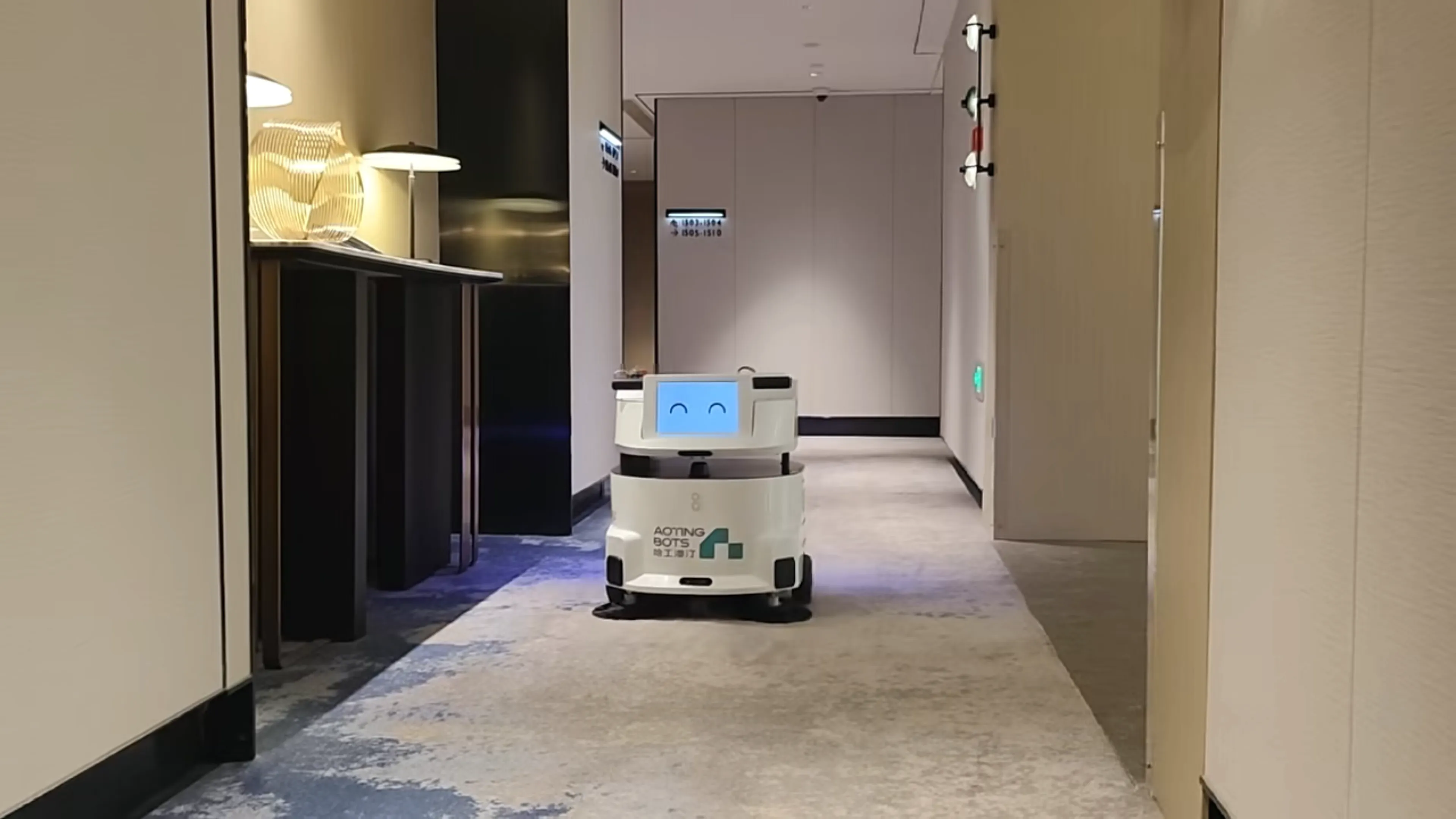
Make a short operating brief before asking for quotations. Record the cleanable area rather than the building's gross floor area; floor coverings; the narrowest access point; public opening hours; likely debris; and the amount of wet or sticky contamination. A dry sweeping and vacuuming system may be a good fit for tracked-in dust. It should not be sold as a replacement for specialist spill removal or disinfection.
Ask each potential manufacturer to demonstrate the same representative route. A glossy demonstration in an empty showroom says little about a hotel lobby with luggage, an office corridor with glass walls, or a factory with temporary pallets. During a trial, note missed strips along edges, the number of interventions and time spent emptying waste. Those observations make competing claims easier to judge.
A cleaning robot's advertised square metres per hour is a reference figure, not a promise of usable daily coverage. Request the cleaning-path width, stated efficiency, test conditions, battery endurance by mode, charging time, robot dimensions, noise data, debris capacity and navigation method. Distinguish a theoretical maximum from a recorded site result.
AotingBots' SW55 A is specified at 1,200 m²/h, measures 615 × 585 × 650 mm and is positioned for commercial environments. The larger SW80 A has an 850 mm cleaning path and a stated efficiency of 1,600 m²/h, with positioning for commercial and industrial sites. Neither number establishes how much floor will actually be completed in a busy shift. Turning, obstacles and restricted zones can reduce coverage.
Manufacturer due diligence should cover serial-number traceability, factory testing, inspection records and how hardware revisions are communicated. Buyers should also ask how software updates affect existing maps and whether spare parts remain compatible across production batches. For overseas projects, request the actual documents applicable to the market and chosen configuration rather than assuming that a website logo proves compliance.
The IEC 63327 commercial automatic floor-treatment standard provides a useful reference point for discussions about relevant machine safety requirements. Applicability and conformity need checking for each product; citing the standard does not itself mean a robot is certified.

Who maps the first site? Can local technicians replace brushes and filters? What are the lead times for a failed sensor or battery? Will the supplier provide training materials, technical diagrams and escalation contacts? A distributor should also clarify warranty exclusions, remote troubleshooting arrangements and the procedure for shipping replacement components.
For a small initial purchase, these may feel like secondary matters. For a chain of shopping malls, the absence of a clear support plan can outweigh a competitive unit price. Put service response commitments and the list of included spare parts in the written quotation.
Choose a trial zone that includes the difficult features of the site: one tight turn, an entrance mat transition and a corridor with actual pedestrian traffic. Establish success criteria before the demonstration. Record the percentage of the planned area completed, intervention count, debris condition after cleaning and time required for operator servicing. Repeat the same route where practical.
AotingBots lists its commercial cleaning robots with model specifications that can form the starting point for this discussion. Procurement teams should request project-specific evidence before treating general capability statements as purchase guarantees.
Imagine two robots with the same advertised hourly efficiency. Supplier A includes site mapping, spare brushes and operator training; Supplier B lists only the machine and charger. If the facility has three floors and restricted corridors, the cheaper headline price may leave several important tasks uncovered. The buyer can resolve the difference by requesting a common quotation template and asking both vendors to quote the same pilot. This is also a useful way to evaluate whether technical and sales teams provide consistent answers. Record unresolved items before placing a volume order rather than treating them as minor details.
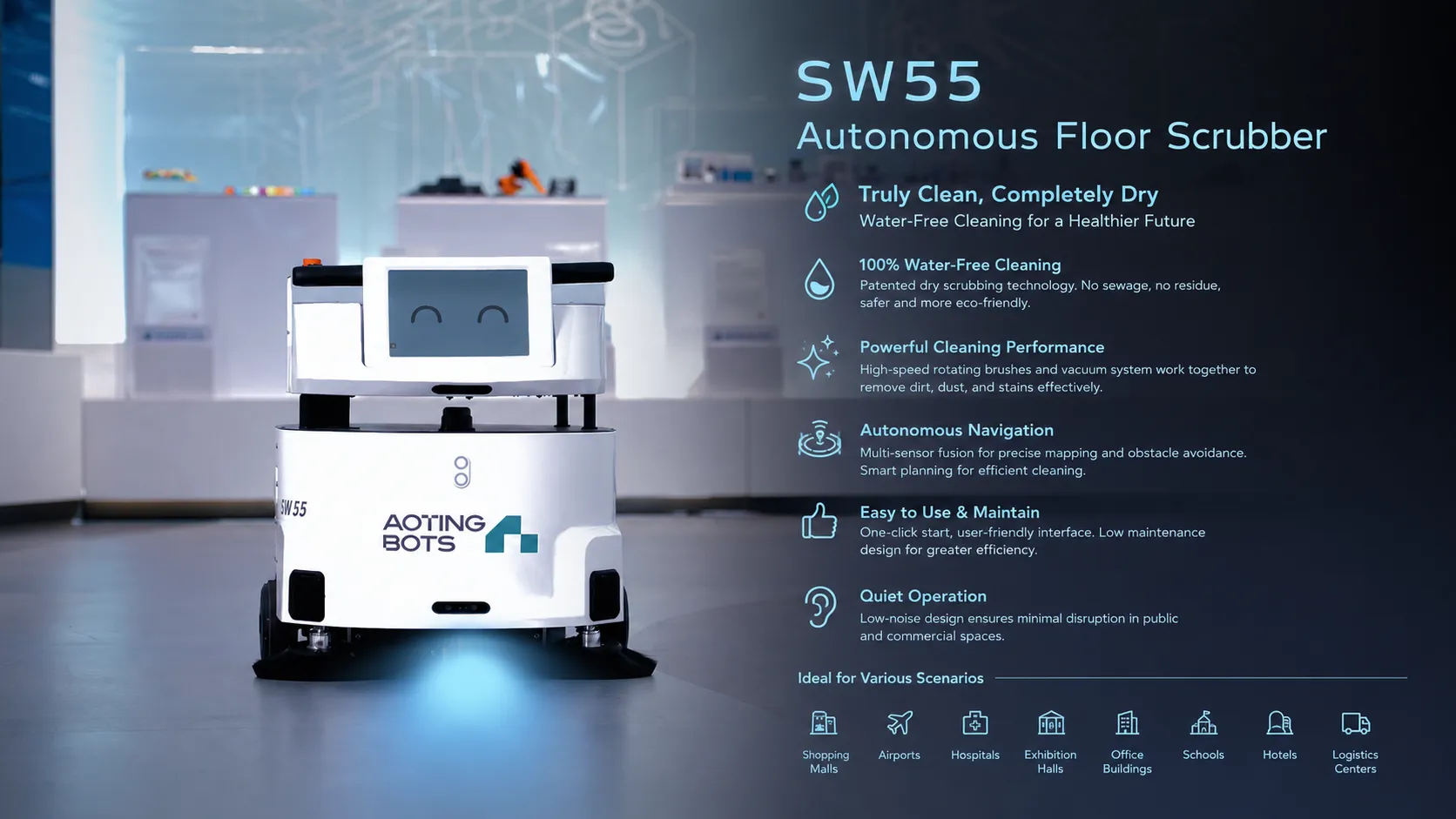
Not necessarily. Manufacturing control may simplify technical clarification, while a well-equipped local distributor may provide faster after-sales support. Verify who is responsible for product quality, training and warranty.
At minimum: exact model and configuration, charger, consumables, delivery terms, training scope, warranty conditions, spare-part arrangements and applicable documentation. Keep integration and software charges explicit.
A good manufacturer evaluation produces a clear record of what the machine can do on your site and what happens when it needs help. That evidence is more useful than a long list of untested advantages.
A distributor comparing commercial cleaning robot manufacturers needs more than a brochure and a list of features. The practical questions are whether a machine will clean the customer's floors, whether the supplier can document its claims, and who will solve problems six months after installation. For multi-site buyers, even the packaging of spare parts and consistency of software versions matter.
Make a short operating brief before asking for quotations. Record the cleanable area rather than the building's gross floor area; floor coverings; the narrowest access point; public opening hours; likely debris; and the amount of wet or sticky contamination. A dry sweeping and vacuuming system may be a good fit for tracked-in dust. It should not be sold as a replacement for specialist spill removal or disinfection.
Ask each potential manufacturer to demonstrate the same representative route. A glossy demonstration in an empty showroom says little about a hotel lobby with luggage, an office corridor with glass walls, or a factory with temporary pallets. During a trial, note missed strips along edges, the number of interventions and time spent emptying waste. Those observations make competing claims easier to judge.
A cleaning robot's advertised square metres per hour is a reference figure, not a promise of usable daily coverage. Request the cleaning-path width, stated efficiency, test conditions, battery endurance by mode, charging time, robot dimensions, noise data, debris capacity and navigation method. Distinguish a theoretical maximum from a recorded site result.
AotingBots' SW55 A is specified at 1,200 m²/h, measures 615 × 585 × 650 mm and is positioned for commercial environments. The larger SW80 A has an 850 mm cleaning path and a stated efficiency of 1,600 m²/h, with positioning for commercial and industrial sites. Neither number establishes how much floor will actually be completed in a busy shift. Turning, obstacles and restricted zones can reduce coverage.
Manufacturer due diligence should cover serial-number traceability, factory testing, inspection records and how hardware revisions are communicated. Buyers should also ask how software updates affect existing maps and whether spare parts remain compatible across production batches. For overseas projects, request the actual documents applicable to the market and chosen configuration rather than assuming that a website logo proves compliance.
The IEC 63327 commercial automatic floor-treatment standard provides a useful reference point for discussions about relevant machine safety requirements. Applicability and conformity need checking for each product; citing the standard does not itself mean a robot is certified.
Who maps the first site? Can local technicians replace brushes and filters? What are the lead times for a failed sensor or battery? Will the supplier provide training materials, technical diagrams and escalation contacts? A distributor should also clarify warranty exclusions, remote troubleshooting arrangements and the procedure for shipping replacement components.
For a small initial purchase, these may feel like secondary matters. For a chain of shopping malls, the absence of a clear support plan can outweigh a competitive unit price. Put service response commitments and the list of included spare parts in the written quotation.
Choose a trial zone that includes the difficult features of the site: one tight turn, an entrance mat transition and a corridor with actual pedestrian traffic. Establish success criteria before the demonstration. Record the percentage of the planned area completed, intervention count, debris condition after cleaning and time required for operator servicing. Repeat the same route where practical.
AotingBots lists its commercial cleaning robots with model specifications that can form the starting point for this discussion. Procurement teams should request project-specific evidence before treating general capability statements as purchase guarantees.
Imagine two robots with the same advertised hourly efficiency. Supplier A includes site mapping, spare brushes and operator training; Supplier B lists only the machine and charger. If the facility has three floors and restricted corridors, the cheaper headline price may leave several important tasks uncovered. The buyer can resolve the difference by requesting a common quotation template and asking both vendors to quote the same pilot. This is also a useful way to evaluate whether technical and sales teams provide consistent answers. Record unresolved items before placing a volume order rather than treating them as minor details.
Not necessarily. Manufacturing control may simplify technical clarification, while a well-equipped local distributor may provide faster after-sales support. Verify who is responsible for product quality, training and warranty.
At minimum: exact model and configuration, charger, consumables, delivery terms, training scope, warranty conditions, spare-part arrangements and applicable documentation. Keep integration and software charges explicit.
A good manufacturer evaluation produces a clear record of what the machine can do on your site and what happens when it needs help. That evidence is more useful than a long list of untested advantages.
CONTACT US
we aim to become a global leader in manufacturer space service robotics and artificial intelligence.


