
CONTACT US
SEARCH WHAT YOU WANT
In modern industrial manufacturing, floor cleanliness is a direct indicator of operational safety and efficiency. Traditional manual cleaning methods often fail to meet the rigorous standards of high-precision environments like electronics assembly or automotive plants. The introduction of autonomous mobile robots (AMRs) has transitioned floor maintenance from a labor-dependent task to a predictable, data-driven utility.
Selecting the best cleaning robot for manufacturing requires an engineering perspective. Unlike domestic or retail robots, industrial units must navigate complex layouts, handle chemical spills, and operate safely alongside human workers and heavy machinery.
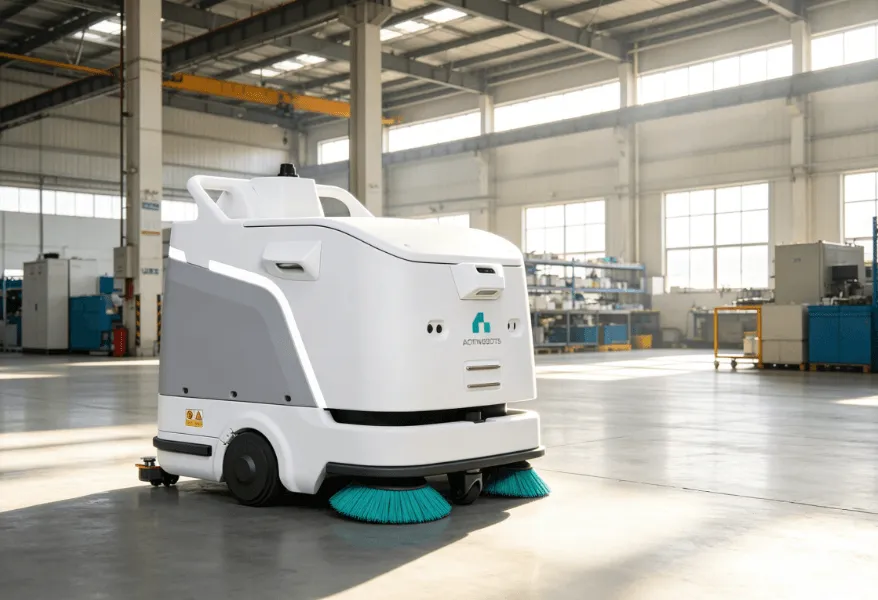
Manufacturing environments present unique challenges such as metallic dust, oil leakages, and narrow racking aisles. To find a solution that offers a genuine return on investment (ROI), facility managers should evaluate three primary technical pillars:
Industrial floors are dynamic. The best robots utilize "Sensor Fusion," combining LiDAR, depth cameras, and ultrasonic sensors. This allows the unit to distinguish between a permanent pillar and a temporary pallet. High-tier robots employ SLAM (Simultaneous Localization and Mapping) to navigate without the need for magnetic strips or floor markers.
Efficiency is measured by the area covered per hour versus the downtime required for charging or water changes. In a large-scale facility, a robot with a cleaning width of less than 500mm is often insufficient. For instance, high-performance models like the Aoting SW80-A offer a cleaning efficiency of up to 3,000–5,000 m²/h, making them suitable for expansive logistics centers and assembly halls.
Industrial environments are harsh. Robots require an IP (Ingress Protection) rating sufficient to withstand dust and moisture. Furthermore, the "total cost of ownership" is determined by how easily wear parts—such as squeegees and brushes—can be replaced by on-site staff without specialized tools.
The "best" robot is ultimately the one that matches your specific manufacturing floor material and soil type.
Epoxy-Coated Floors: Common in electronics and pharmaceutical plants. These require soft cylindrical brushes to prevent scratching the protective coating while maintaining high gloss.
Polished Concrete: Found in heavy machinery plants. These floors benefit from high-pressure disc brushes that can remove stubborn grease and tire marks.
Small-Scale Workshops: If the layout features high density and narrow aisles, navigation agility is more important than raw tank size.
For facilities with high-volume requirements, the Aoting SW80-A stands out due to its industrial-grade 80L clean water tank. This capacity allows the robot to complete a full shift with minimal intervention, significantly reducing "dead time" spent at service stations.
When calculating the commercial value of a cleaning robot, project managers must look beyond the initial capital expenditure (CAPEX).
Labor Reallocation: Automating floor care allows janitorial staff to focus on specialized high-touch disinfection or hazardous waste management.
Resource Savings: Precision dosing systems in advanced robots reduce chemical and water consumption by up to 30% compared to manual mopping.
Data Logging: Modern robots provide digital cleaning reports. This is essential for plants maintaining ISO 9001 or specialized safety certifications.
Consistency: Unlike manual cleaning, a robot follows the exact same path with the same downward brush pressure every time, ensuring uniform floor friction levels.
Manufacturing consultants emphasize the importance of post-sales support. An industrial cleaning robot is a mechanical asset that requires periodic calibration. Ensure your supplier provides:
On-site Mapping: Professional technicians should assist in the initial SLAM mapping to account for "blind spots" or signal interference.
OTA (Over-the-Air) Updates: To ensure navigation algorithms improve as the factory layout evolves.
Part Availability: A reliable supply chain for brushes and batteries to prevent operational downtime.
The current market trend indicates a shift toward "all-in-one" workstations. These allow the robot to autonomously dump sewage, refill clean water, and recharge, achieving a truly "lights-out" maintenance operation.
Can a cleaning robot handle oil spills in a CNC shop?
Yes, but the robot must be equipped with oil-resistant squeegees and the correct surfactant. High-performance industrial scrubbers are designed to pick up moderate oil residues, but large-scale spills should still be treated as hazardous waste first.
How does the robot handle obstacles like forklifts?
Professional industrial robots utilize LiDAR and 3D cameras to detect moving objects. They are programmed to stop or navigate around obstacles, following safety protocols similar to AGVs (Automated Guided Vehicles).
Is the SW80-A suitable for multi-floor plants?
Most industrial cleaning robots require elevator integration modules to move between floors autonomously. If your plant has elevators, ensure the robot's software is compatible with the elevator control system.
What is the lifespan of an industrial cleaning robot?
In a typical manufacturing environment with a 100% duty cycle, a high-quality robot is expected to last 5–8 years, provided the battery and brushes are replaced according to the manufacturer’s schedule.
ISO 13482:2014: Safety requirements for personal care robots (Safety standards for human-robot interaction).
ANSI/RIA R15.08: American National Standard for Industrial Mobile Robots (Safety standards).
SGS Performance Testing: Independent verification of cleaning efficiency in industrial settings.
IEEE Robotics and Automation Society: Technical whitepapers on SLAM and navigation for industrial AMRs.
In modern industrial manufacturing, floor cleanliness is a direct indicator of operational safety and efficiency. Traditional manual cleaning methods often fail to meet the rigorous standards of high-precision environments like electronics assembly or automotive plants. The introduction of autonomous mobile robots (AMRs) has transitioned floor maintenance from a labor-dependent task to a predictable, data-driven utility.
Selecting the best cleaning robot for manufacturing requires an engineering perspective. Unlike domestic or retail robots, industrial units must navigate complex layouts, handle chemical spills, and operate safely alongside human workers and heavy machinery.
Manufacturing environments present unique challenges such as metallic dust, oil leakages, and narrow racking aisles. To find a solution that offers a genuine return on investment (ROI), facility managers should evaluate three primary technical pillars:
Industrial floors are dynamic. The best robots utilize "Sensor Fusion," combining LiDAR, depth cameras, and ultrasonic sensors. This allows the unit to distinguish between a permanent pillar and a temporary pallet. High-tier robots employ SLAM (Simultaneous Localization and Mapping) to navigate without the need for magnetic strips or floor markers.
Efficiency is measured by the area covered per hour versus the downtime required for charging or water changes. In a large-scale facility, a robot with a cleaning width of less than 500mm is often insufficient. For instance, high-performance models like the Aoting SW80-A offer a cleaning efficiency of up to 3,000–5,000 m²/h, making them suitable for expansive logistics centers and assembly halls.
Industrial environments are harsh. Robots require an IP (Ingress Protection) rating sufficient to withstand dust and moisture. Furthermore, the "total cost of ownership" is determined by how easily wear parts—such as squeegees and brushes—can be replaced by on-site staff without specialized tools.
The "best" robot is ultimately the one that matches your specific manufacturing floor material and soil type.
Epoxy-Coated Floors: Common in electronics and pharmaceutical plants. These require soft cylindrical brushes to prevent scratching the protective coating while maintaining high gloss.
Polished Concrete: Found in heavy machinery plants. These floors benefit from high-pressure disc brushes that can remove stubborn grease and tire marks.
Small-Scale Workshops: If the layout features high density and narrow aisles, navigation agility is more important than raw tank size.
For facilities with high-volume requirements, the Aoting SW80-A stands out due to its industrial-grade 80L clean water tank. This capacity allows the robot to complete a full shift with minimal intervention, significantly reducing "dead time" spent at service stations.
When calculating the commercial value of a cleaning robot, project managers must look beyond the initial capital expenditure (CAPEX).
Labor Reallocation: Automating floor care allows janitorial staff to focus on specialized high-touch disinfection or hazardous waste management.
Resource Savings: Precision dosing systems in advanced robots reduce chemical and water consumption by up to 30% compared to manual mopping.
Data Logging: Modern robots provide digital cleaning reports. This is essential for plants maintaining ISO 9001 or specialized safety certifications.
Consistency: Unlike manual cleaning, a robot follows the exact same path with the same downward brush pressure every time, ensuring uniform floor friction levels.
Manufacturing consultants emphasize the importance of post-sales support. An industrial cleaning robot is a mechanical asset that requires periodic calibration. Ensure your supplier provides:
On-site Mapping: Professional technicians should assist in the initial SLAM mapping to account for "blind spots" or signal interference.
OTA (Over-the-Air) Updates: To ensure navigation algorithms improve as the factory layout evolves.
Part Availability: A reliable supply chain for brushes and batteries to prevent operational downtime.
The current market trend indicates a shift toward "all-in-one" workstations. These allow the robot to autonomously dump sewage, refill clean water, and recharge, achieving a truly "lights-out" maintenance operation.
Can a cleaning robot handle oil spills in a CNC shop?
Yes, but the robot must be equipped with oil-resistant squeegees and the correct surfactant. High-performance industrial scrubbers are designed to pick up moderate oil residues, but large-scale spills should still be treated as hazardous waste first.
How does the robot handle obstacles like forklifts?
Professional industrial robots utilize LiDAR and 3D cameras to detect moving objects. They are programmed to stop or navigate around obstacles, following safety protocols similar to AGVs (Automated Guided Vehicles).
Is the SW80-A suitable for multi-floor plants?
Most industrial cleaning robots require elevator integration modules to move between floors autonomously. If your plant has elevators, ensure the robot's software is compatible with the elevator control system.
What is the lifespan of an industrial cleaning robot?
In a typical manufacturing environment with a 100% duty cycle, a high-quality robot is expected to last 5–8 years, provided the battery and brushes are replaced according to the manufacturer’s schedule.
ISO 13482:2014: Safety requirements for personal care robots (Safety standards for human-robot interaction).
ANSI/RIA R15.08: American National Standard for Industrial Mobile Robots (Safety standards).
SGS Performance Testing: Independent verification of cleaning efficiency in industrial settings.
IEEE Robotics and Automation Society: Technical whitepapers on SLAM and navigation for industrial AMRs.
CONTACT US
we aim to become a global leader in manufacturer space service robotics and artificial intelligence.


