
CONTACT US
SEARCH WHAT YOU WANT
Industrial facilities are under increasing pressure to balance operational efficiency with environmental sustainability. Traditional floor maintenance relies heavily on wet scrubbing, which consumes thousands of gallons of water annually and requires the disposal of chemically contaminated gray water. The emergence of a waterless cleaning robot for factories offers a technical alternative that eliminates liquid consumption while maintaining high cleanliness standards.
By utilizing high-speed mechanical agitation and advanced vacuum systems, these autonomous mobile robots (AMRs) manage dust and debris without a single drop of water. This shift not only saves natural resources but also mitigates safety risks associated with wet floors in high-traffic manufacturing zones.
Standard industrial scrubbers operate by flooding a surface, agitating it with brushes, and squeegeeing the slurry into a recovery tank. A waterless cleaning robot replaces this liquid-dependent process with three primary mechanical stages:
High-Speed Agitation: Dual cylindrical or disc brushes rotate at high RPMs to dislodge fine particulates and heavy debris from floor pores.
Negative Pressure Suction: A powerful industrial vacuum motor creates a vacuum seal around the brush head, ensuring all dislodged material is drawn into the unit.
Multi-Stage HEPA Filtration: Instead of using water to "trap" dust, the robot uses certified HEPA filters to capture 99.97% of particulates as small as 0.3 microns, returning clean air to the factory environment.
This "dry" approach is particularly vital in electronics manufacturing or logistics centers where ambient humidity must be strictly controlled to protect sensitive components or prevent the degradation of cardboard packaging.
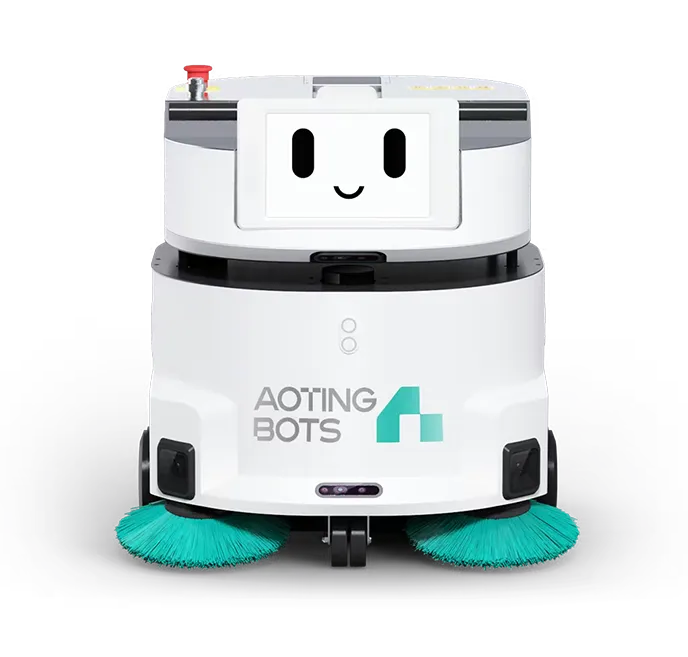
In a large-scale manufacturing environment, the "hidden costs" of water-based cleaning go beyond the utility bill. Implementing dry robotic cleaning addresses several industrial pain points simultaneously.
Wet scrubbing creates temporary "exclusion zones" where forklifts and personnel cannot travel safely. Dry cleaning allows for a continuous duty cycle. Personnel and machinery can traverse the cleaned path immediately, removing the "wait-to-dry" bottleneck in 24/7 operations.
Water mists and chemical vapors from traditional cleaning can lead to the corrosion of CNC machines and robotic arms. A waterless cleaning robot for factories prevents the introduction of moisture into the facility’s micro-climate. This is essential for facilities maintaining ISO Class 7 or 8 cleanroom standards.
Traditional cleaning chemicals often contain Volatile Organic Compounds (VOCs). Dry cleaning relies on mechanical force rather than chemical solvents, improving the overall air quality for the facility's workforce and simplifying environmental compliance reporting.
| Feature | Traditional Wet Scrubbing | Waterless Robotic Cleaning |
|---|---|---|
| Water Consumption | High (50-200 gallons/shift) | Zero |
| Downtime | Requires drying time | Immediate floor usage |
| Maintenance | Tank cleaning & chemical dosing | Filter changes & bin emptying |
| Slip Risk | Significant during/after cleaning | Negligible |
| Environmental Impact | Chemical gray water disposal | Concentrated dry waste only |
The efficiency of a waterless cleaning robot for factories is dictated by its navigational logic. These robots utilize Simultaneous Localization and Mapping (SLAM) to navigate complex layouts without the need for floor markers or magnetic tape.
Modern systems, such as those analyzed in real-world factory cases, integrate with a facility’s Building Management System (BMS). This allows the robot to report cleaning "heat maps" and filter health in real-time. By analyzing these data points, facility managers can adjust cleaning frequency based on actual dust accumulation rather than arbitrary schedules.
Furthermore, dry robots often feature longer battery run-times than their wet counterparts. Because they do not have the added weight of 20–30 gallons of water, the energy required for propulsion is significantly lower, allowing for extended coverage on a single charge.
When evaluating the commercial value of waterless robotic systems, project managers should look at the "Total Cost of Clean." While the initial capital expenditure (CAPEX) for a robot is higher than a manual scrubber, the operational savings are immediate:
Utility Savings: Zero water costs and reduced wastewater treatment fees.
Labor Reallocation: Janitorial staff can be moved from floor pushing to more complex technical cleaning tasks.
Chemical Procurement: Elimination of expensive floor surfactants and neutralizers.
Safety Compliance: Massive reduction in insurance premiums related to workplace slip-and-fall incidents.
For facilities seeking to optimize their footprint, the transition to dry robotic cleaning represents a fundamental evolution in industrial maintenance—one where resource conservation and operational uptime are no longer mutually exclusive.

Can a waterless robot handle oil spills in a machine shop?
No. Waterless robots are designed for dust, metal shavings, and dry debris. Liquid spills or oily residues typically require a wet scrubber or specialized absorbent materials. However, using a dry robot for daily dust management prevents oil from mixing with dust to create "grime," making the occasional deep-wet-clean much easier.
How often do the HEPA filters need to be replaced?
In standard manufacturing environments, HEPA filters are usually replaced every 3 to 6 months. Many robots feature "clog sensors" that notify the maintenance team via a mobile app when airflow is restricted, ensuring the robot always operates at peak suction.
Is dry cleaning as effective as wet scrubbing for removing tire marks?
Wet scrubbers are generally better at removing deep-set rubber tire marks from forklifts. However, high-speed dry brushes can mitigate the buildup of these marks if used daily. Some factories use a "Hybrid" approach: daily dry robotic cleaning with a weekly deep-wet-scrub.
Does the robot require a special docking station?
Most industrial cleaning robots feature an autonomous docking station. For waterless units, this station is simplified as it only requires a power connection for charging, eliminating the need for complex plumbing or drainage infrastructure.
ISO 14001: Environmental management systems — Requirements with guidance for use.
ASTM F45: New standards for robotics, specifically focusing on navigation and object detection in shared spaces.
SGS Industrial Reports: Whitepapers on the reduction of VOCs and gray water in modern manufacturing plants.
IEEE Robotics and Automation Society: Technical standards for SLAM and navigational precision in AMRs.
Industrial facilities are under increasing pressure to balance operational efficiency with environmental sustainability. Traditional floor maintenance relies heavily on wet scrubbing, which consumes thousands of gallons of water annually and requires the disposal of chemically contaminated gray water. The emergence of a waterless cleaning robot for factories offers a technical alternative that eliminates liquid consumption while maintaining high cleanliness standards.
By utilizing high-speed mechanical agitation and advanced vacuum systems, these autonomous mobile robots (AMRs) manage dust and debris without a single drop of water. This shift not only saves natural resources but also mitigates safety risks associated with wet floors in high-traffic manufacturing zones.
Standard industrial scrubbers operate by flooding a surface, agitating it with brushes, and squeegeeing the slurry into a recovery tank. A waterless cleaning robot replaces this liquid-dependent process with three primary mechanical stages:
High-Speed Agitation: Dual cylindrical or disc brushes rotate at high RPMs to dislodge fine particulates and heavy debris from floor pores.
Negative Pressure Suction: A powerful industrial vacuum motor creates a vacuum seal around the brush head, ensuring all dislodged material is drawn into the unit.
Multi-Stage HEPA Filtration: Instead of using water to "trap" dust, the robot uses certified HEPA filters to capture 99.97% of particulates as small as 0.3 microns, returning clean air to the factory environment.
This "dry" approach is particularly vital in electronics manufacturing or logistics centers where ambient humidity must be strictly controlled to protect sensitive components or prevent the degradation of cardboard packaging.
In a large-scale manufacturing environment, the "hidden costs" of water-based cleaning go beyond the utility bill. Implementing dry robotic cleaning addresses several industrial pain points simultaneously.
Wet scrubbing creates temporary "exclusion zones" where forklifts and personnel cannot travel safely. Dry cleaning allows for a continuous duty cycle. Personnel and machinery can traverse the cleaned path immediately, removing the "wait-to-dry" bottleneck in 24/7 operations.
Water mists and chemical vapors from traditional cleaning can lead to the corrosion of CNC machines and robotic arms. A waterless cleaning robot for factories prevents the introduction of moisture into the facility’s micro-climate. This is essential for facilities maintaining ISO Class 7 or 8 cleanroom standards.
Traditional cleaning chemicals often contain Volatile Organic Compounds (VOCs). Dry cleaning relies on mechanical force rather than chemical solvents, improving the overall air quality for the facility's workforce and simplifying environmental compliance reporting.
| Feature | Traditional Wet Scrubbing | Waterless Robotic Cleaning |
|---|---|---|
| Water Consumption | High (50-200 gallons/shift) | Zero |
| Downtime | Requires drying time | Immediate floor usage |
| Maintenance | Tank cleaning & chemical dosing | Filter changes & bin emptying |
| Slip Risk | Significant during/after cleaning | Negligible |
| Environmental Impact | Chemical gray water disposal | Concentrated dry waste only |
The efficiency of a waterless cleaning robot for factories is dictated by its navigational logic. These robots utilize Simultaneous Localization and Mapping (SLAM) to navigate complex layouts without the need for floor markers or magnetic tape.
Modern systems, such as those analyzed in real-world factory cases, integrate with a facility’s Building Management System (BMS). This allows the robot to report cleaning "heat maps" and filter health in real-time. By analyzing these data points, facility managers can adjust cleaning frequency based on actual dust accumulation rather than arbitrary schedules.
Furthermore, dry robots often feature longer battery run-times than their wet counterparts. Because they do not have the added weight of 20–30 gallons of water, the energy required for propulsion is significantly lower, allowing for extended coverage on a single charge.
When evaluating the commercial value of waterless robotic systems, project managers should look at the "Total Cost of Clean." While the initial capital expenditure (CAPEX) for a robot is higher than a manual scrubber, the operational savings are immediate:
Utility Savings: Zero water costs and reduced wastewater treatment fees.
Labor Reallocation: Janitorial staff can be moved from floor pushing to more complex technical cleaning tasks.
Chemical Procurement: Elimination of expensive floor surfactants and neutralizers.
Safety Compliance: Massive reduction in insurance premiums related to workplace slip-and-fall incidents.
For facilities seeking to optimize their footprint, the transition to dry robotic cleaning represents a fundamental evolution in industrial maintenance—one where resource conservation and operational uptime are no longer mutually exclusive.
Can a waterless robot handle oil spills in a machine shop?
No. Waterless robots are designed for dust, metal shavings, and dry debris. Liquid spills or oily residues typically require a wet scrubber or specialized absorbent materials. However, using a dry robot for daily dust management prevents oil from mixing with dust to create "grime," making the occasional deep-wet-clean much easier.
How often do the HEPA filters need to be replaced?
In standard manufacturing environments, HEPA filters are usually replaced every 3 to 6 months. Many robots feature "clog sensors" that notify the maintenance team via a mobile app when airflow is restricted, ensuring the robot always operates at peak suction.
Is dry cleaning as effective as wet scrubbing for removing tire marks?
Wet scrubbers are generally better at removing deep-set rubber tire marks from forklifts. However, high-speed dry brushes can mitigate the buildup of these marks if used daily. Some factories use a "Hybrid" approach: daily dry robotic cleaning with a weekly deep-wet-scrub.
Does the robot require a special docking station?
Most industrial cleaning robots feature an autonomous docking station. For waterless units, this station is simplified as it only requires a power connection for charging, eliminating the need for complex plumbing or drainage infrastructure.
ISO 14001: Environmental management systems — Requirements with guidance for use.
ASTM F45: New standards for robotics, specifically focusing on navigation and object detection in shared spaces.
SGS Industrial Reports: Whitepapers on the reduction of VOCs and gray water in modern manufacturing plants.
IEEE Robotics and Automation Society: Technical standards for SLAM and navigational precision in AMRs.
CONTACT US
we aim to become a global leader in manufacturer space service robotics and artificial intelligence.

