
CONTACT US
SEARCH WHAT YOU WANT
The commercial cleaning robot total cost involves much more than the initial equipment price. Businesses must account for installation, operator training, maintenance, consumables, battery replacement, electricity, software, and equipment downtime throughout its service life.
For facility managers and procurement teams, understanding these expenses is essential before investing in autonomous cleaning equipment. A robot with a higher purchase price may deliver better long-term value if it reduces manual cleaning hours, requires less maintenance, and maintains consistent cleaning performance.
This guide explains how to calculate the total cost of ownership (TCO), identify hidden expenses, and evaluate whether a commercial cleaning robot makes financial sense for your facility.
Total cost of ownership (TCO) is the combined cost of acquiring, operating, maintaining, and eventually replacing or disposing of equipment over its useful life.
For commercial cleaning robots, the main cost categories include:
Initial investment: Equipment purchase, delivery, installation, and commissioning.
Labor costs: Operator supervision, training, and routine handling.
Maintenance: Brushes, filters, sensors, repairs, and preventive servicing.
Battery and energy: Electricity consumption and eventual battery replacement.
Software and integration: Navigation software, system updates, and facility integration where applicable.
Downtime: Lost cleaning capacity during repairs or maintenance.
End-of-life costs: Equipment disposal, replacement, or residual value.
The U.S. Department of Energy life-cycle cost guidance identifies acquisition, energy, maintenance, repair, and disposal as important ownership cost components.
A commercial cleaning robot should therefore be evaluated over its expected service period rather than by comparing purchase quotations alone.
|
Cost Category |
Typical Expenses |
Cost Behavior |
|---|---|---|
|
Equipment |
Robot, charger, accessories |
Initial |
|
Installation |
Mapping, configuration, commissioning |
Initial or project-based |
|
Labor |
Supervision, training, handling |
Recurring |
|
Maintenance |
Brushes, filters, repairs |
Recurring |
|
Battery |
Charging and eventual replacement |
Recurring / periodic |
|
Energy |
Electricity consumption |
Recurring |
|
Software |
Licensing and system support |
Contract-dependent |
|
Downtime |
Lost productivity and backup cleaning |
Variable |
|
Replacement |
New equipment or disposal |
Long-term |
Not every facility will incur every expense. Some manufacturers include software, technical support, or preventive maintenance in their commercial packages.
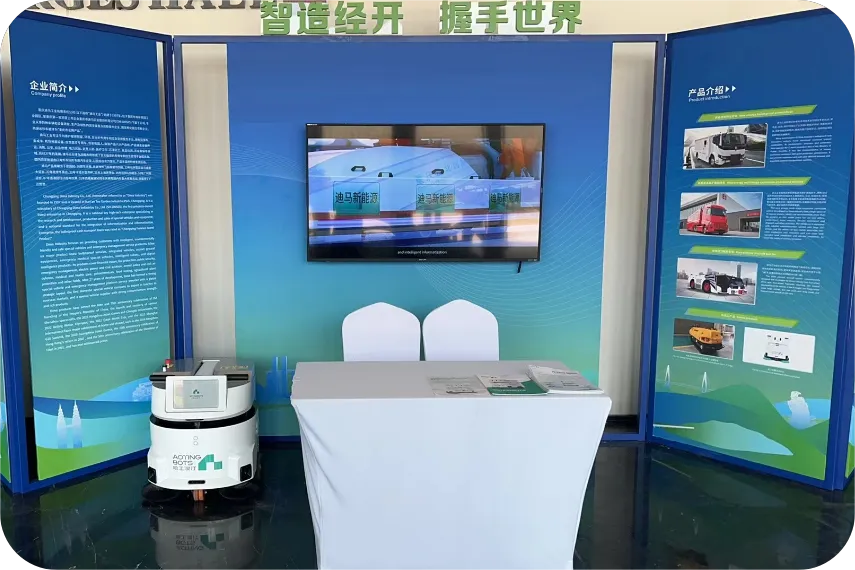
A practical TCO calculation should use the same evaluation period for every equipment option.
For most business comparisons, a three-year or five-year model provides a useful starting point. The selected period should reflect the expected service life, replacement cycle, and financial planning requirements.
The basic calculation is:
Total Cost of Ownership = Initial Investment + Operating Costs + Maintenance Costs + Replacement Costs + Downtime Costs − Residual Value
Each component should be calculated separately.
The purchase price is usually the most visible expense.
However, procurement teams should confirm whether the quotation includes:
Cleaning robot and standard accessories.
Charging equipment.
Initial site mapping.
Navigation configuration.
Installation and commissioning.
Operator training.
Software activation.
Technical support during deployment.
For example, a facility with multiple floors may require additional mapping and access-control integration. These requirements can increase deployment costs even when the robot's base price remains unchanged.
A clear quotation should separate standard equipment from optional services.
Labor is often one of the most important variables when evaluating cleaning automation.
However, purchasing a robot does not automatically eliminate cleaning staff. Employees may still need to manage waste collection, inspect cleaning results, handle unexpected obstacles, and maintain equipment.
To estimate potential labor savings, use:
Annual Labor Savings = Reduced Cleaning Hours × Fully Loaded Hourly Labor Cost × Annual Operating Days
Consider a hypothetical facility that reduces manual cleaning by two hours per day.
If the fully loaded labor cost is $20 per hour and the facility operates 300 days annually:
2 × $20 × 300 = $12,000 annual labor cost reduction.
This is a theoretical reduction in labor expenditure, not guaranteed cash savings. Actual financial benefits depend on staffing arrangements and whether the recovered hours can be reassigned productively.
Maintenance costs depend on operating frequency, floor conditions, equipment design, and servicing arrangements.
Commercial cleaning robots may require attention to:
Brushes and side brushes.
Filters and dust collection components.
Sensors and navigation equipment.
Wheels and drive components.
Charging connectors.
Mechanical assemblies.
Battery condition.
Facilities with dusty floors or frequent operation may experience faster consumable wear.
In large warehouses, debris, packaging materials, and uneven floor surfaces can also increase inspection and maintenance requirements.
Ask manufacturers for recommended maintenance intervals and replacement part availability. Do not assume that every repair or consumable is included in the purchase price.
Battery performance affects both operating expenses and daily cleaning capacity.
A robot with insufficient endurance may require additional charging periods or a second cleaning cycle. This can reduce available operating time.
Electricity costs can be estimated using:
Annual Electricity Cost = Average Charging Energy per Day × Electricity Rate × Operating Days
For example, assume a robot uses an estimated 1.5 kWh per day for charging.
At an electricity rate of $0.15/kWh and 300 operating days:
1.5 × $0.15 × 300 = $67.50 annually.
This is an illustrative calculation, not a measured SW55 A energy consumption figure.
Battery replacement should also be considered separately. Actual replacement timing depends on battery chemistry, charging practices, operating conditions, and manufacturer recommendations.
A robot that cannot operate because of a technical fault may force employees to return to manual cleaning.
The resulting costs can include:
Additional labor hours.
Delayed cleaning schedules.
Emergency maintenance.
Replacement equipment.
Reduced facility cleanliness during repairs.
Procurement teams should evaluate warranty coverage, technical support response times, spare parts availability, and repair procedures.
For facilities operating multiple shifts, equipment reliability may be just as important as the initial purchase price.
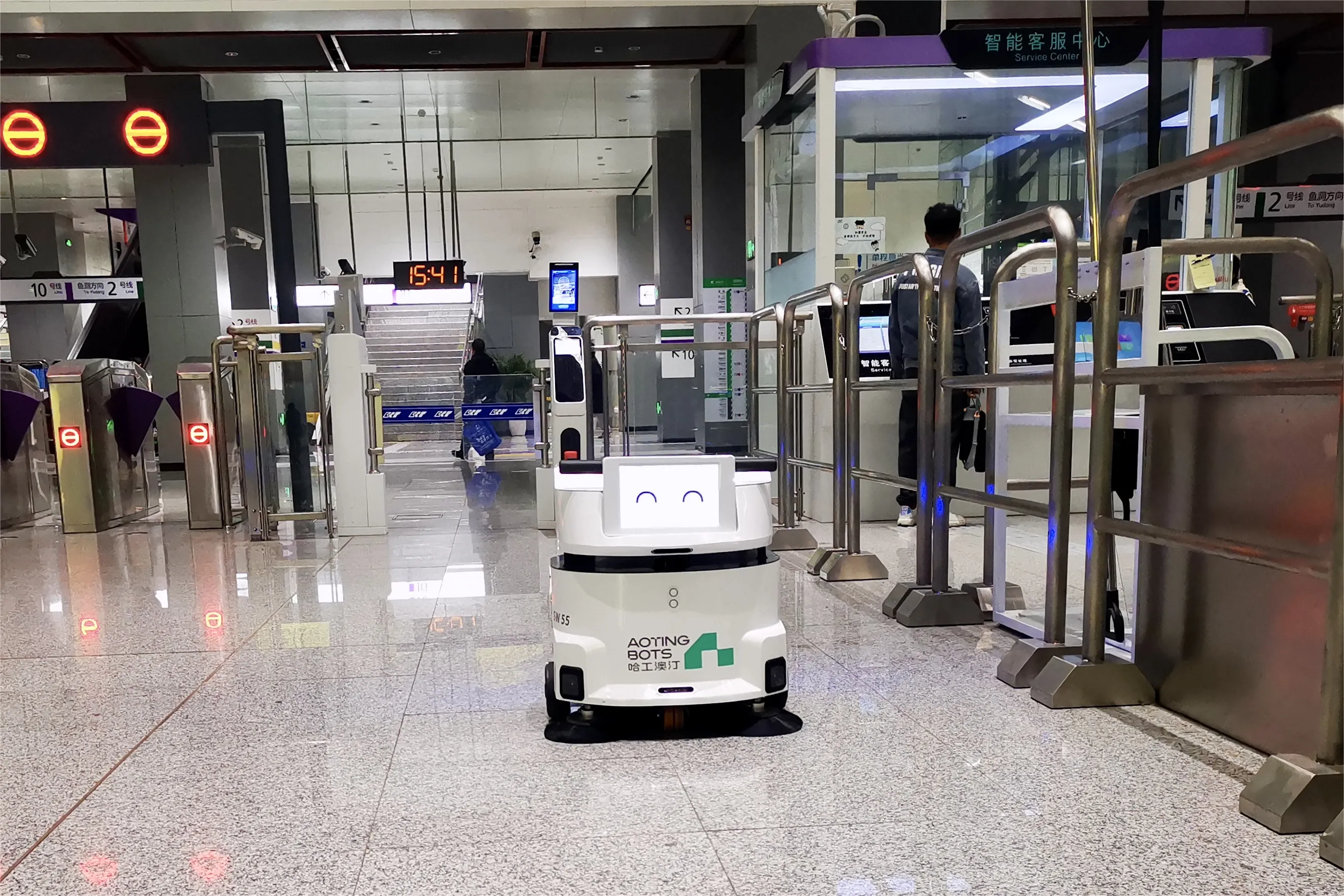
The cost structure changes with the operating environment. A robot used in a hotel has different maintenance demands from one operating in a warehouse with continuous forklift traffic.
Warehouses often have large floor areas and long operating schedules.
Important cost considerations include:
Cleaning coverage per operating hour.
Battery endurance across shifts.
Dust collection capacity.
Navigation around forklifts and storage equipment.
Maintenance frequency under heavy use.
A robot that cannot complete its assigned routes within the available cleaning window may require additional equipment or manual intervention.
For warehouse operators, the warehouse cleaning robot ROI analysis provides additional context for evaluating labor savings and operational efficiency.
Manufacturing environments may involve dust, packaging debris, production residues, and frequent vehicle movement.
The cost evaluation should consider:
Floor material and surface conditions.
Cleaning requirements around production equipment.
Debris collection and filter maintenance.
Navigation reliability in active production areas.
Cleaning schedules that avoid disrupting manufacturing.
In these environments, equipment durability and maintenance access can influence long-term ownership costs.
Commercial buildings often have mixed flooring, public traffic, and restricted cleaning windows.
Their cost priorities may include:
Noise during operating hours.
Cleaning around furniture and visitors.
Elevator and access-control integration.
Cleaning performance on different floor surfaces.
Compact equipment dimensions.
Daily maintenance requirements.
A smaller robot may be more practical when maneuverability and access are more important than maximum theoretical cleaning coverage.
Selecting a suitable model is an important part of controlling the commercial cleaning robot total cost.
A machine with higher nominal cleaning efficiency is not necessarily the most economical choice. If its dimensions do not fit the facility, or its operating configuration requires frequent intervention, the expected productivity benefits may not materialize.
The AotingBots SW55 A commercial cleaning robot is designed for medium and small commercial environments.
It integrates sweeping, vacuuming, scrubbing, and dust mopping into one waterless cleaning solution.
Its published technical specifications include:
|
Technical Parameter |
SW55 A Specification |
|---|---|
|
Dimensions |
615 × 585 × 650 mm |
|
Robot weight |
91 kg |
|
Cleaning efficiency |
1,200 m²/h |
|
Cleaning path |
705 mm large side brush / 615 mm small side brush |
|
Battery capacity |
52 Ah |
|
Hard-floor endurance |
Up to 12 hours |
|
Silent-mode endurance |
Up to 16.5 hours |
|
Charging time |
2 hours |
|
Maximum mapping area |
40,000 m² |
|
Noise level |
≤62 dB(A) |
|
Trash bin capacity |
4 L |
|
Dustbag capacity |
7.5 L |
|
Maximum vacuum power |
9 kPa |
These specifications provide several useful inputs for a TCO assessment.
Cleaning efficiency: The published 1,200 m²/h figure provides a starting point for estimating theoretical coverage. Actual productivity will depend on obstacles, route design, floor conditions, and cleaning requirements.
Battery endurance: The stated 12-hour hard-floor endurance helps facility managers assess whether the robot can cover the planned operating schedule.
Compact dimensions: Its 615 × 585 mm footprint can help when evaluating access through corridors and other restricted areas.
Multiple cleaning functions: Combining several floor-cleaning functions may reduce the need to coordinate separate cleaning machines, depending on the facility's requirements.
For hotels, office buildings, shopping malls, residential communities, and conference centers, these factors should be evaluated against the actual cleaning workload.
You can review the SW55 A technical specifications before preparing an equipment budget.
AotingBots' published specifications do not provide a complete purchase price, battery replacement price, or annual maintenance quotation. These figures should be confirmed before calculating the actual ownership cost.
Consider a commercial facility evaluating one autonomous cleaning robot over three years.
The following figures are hypothetical and are intended to demonstrate a calculation method. They are not AotingBots prices or a confirmed operating-cost estimate.
|
Cost Item |
Year 1 |
Year 2 |
Year 3 |
|---|---|---|---|
|
Equipment purchase |
$18,000 |
$0 |
$0 |
|
Installation and setup |
$1,000 |
$0 |
$0 |
|
Maintenance allowance |
$1,200 |
$1,200 |
$1,200 |
|
Electricity |
$100 |
$100 |
$100 |
|
Consumables |
$500 |
$500 |
$500 |
|
Downtime allowance |
$400 |
$400 |
$400 |
|
Annual total |
$21,200 |
$2,200 |
$2,200 |
Illustrative assumptions only. Actual maintenance, energy, consumable, and downtime costs require supplier quotations and facility operating data.
The three-year ownership cost is:
Now assume the facility reduces manual cleaning by two hours daily, with a fully loaded labor cost of $20 per hour and 300 operating days annually.
Annual theoretical labor cost reduction:
Three-year theoretical labor cost reduction:
The illustrative net financial benefit would be:
This result assumes the labor reduction is genuinely realized and does not include financing, taxes, discount rates, or residual value. It should not be interpreted as a guaranteed return.
The example demonstrates why buyers should evaluate equipment expenses and operational savings together.
Reducing ownership costs starts before purchasing the equipment. The most effective approach is to match the robot's capabilities with actual cleaning requirements rather than selecting a model based on its headline specifications.
Consider the following procurement checks:
Calculate actual cleaning demand: Measure the usable floor area instead of relying on the building's total floor space.
Check daily operating hours: Match battery endurance and charging time with the required cleaning schedule.
Review consumable availability: Confirm replacement brush, filter, and battery availability.
Evaluate maintenance arrangements: Understand warranty coverage, service response times, and repair responsibilities.
Request a site demonstration: Verify navigation, cleaning coverage, and performance under real operating conditions.
Compare equivalent equipment: Use the same evaluation period and cleaning requirements when comparing different quotations.
Include residual value: Consider potential resale value or disposal expenses at the end of the ownership period.
For a more detailed technical selection framework, see the industrial cleaning robot selection guide.
A well-prepared equipment evaluation should include both technical specifications and financial assumptions. This makes it easier to compare suppliers without overlooking long-term operating expenses.
TCO includes the purchase price, installation, training, electricity, maintenance, consumables, battery replacement, software fees, downtime, and eventual disposal or residual value.
Annual operating costs depend on equipment specifications, cleaning frequency, electricity rates, maintenance requirements, and consumable replacement intervals. Buyers should request a detailed operating-cost estimate based on their facility's actual usage.
Yes. Routine maintenance may include cleaning sensors, checking brushes, emptying dust collection components, inspecting wheels, and monitoring battery condition. The maintenance schedule should follow the manufacturer's recommendations.
Battery capacity and endurance influence charging frequency and available operating hours. Battery replacement also contributes to long-term ownership expenses. Buyers should evaluate both charging performance and expected battery service life.
It can reduce the number of manual cleaning hours required for repetitive tasks. However, employees may still need to supervise operations, maintain equipment, and handle cleaning tasks that require manual intervention.
Three-year and five-year evaluations are common planning approaches. The appropriate period depends on the expected equipment service life, maintenance arrangements, and the facility's investment horizon.
No. A higher initial price may be offset by lower maintenance requirements, better utilization, or reduced labor hours. The comparison should consider total ownership costs over the same operating period.
Request a detailed equipment quotation, technical specifications, warranty terms, recommended maintenance schedule, replacement part pricing, battery information, software fees, and technical support arrangements.
1. U.S. Department of Energy – Life Cycle Costs for Acquisition — Explains the importance of acquisition, energy, maintenance, and disposal costs.
2. NIST Handbook 135 – Life Cycle Costing Manual — Provides a framework for evaluating ownership, operating, maintenance, and replacement costs.
3. U.S. Department of Energy – Take Five: Life Cycle Costs for Acquisition — Explains how equipment efficiency affects lifetime expenses.
4. AotingBots SW55 A – Official Product Specifications — Manufacturer specifications, cleaning capabilities, and application information.
5. AotingBots – Industrial Cleaning Robot Selection Guide — Technical considerations for commercial cleaning robot selection.
The commercial cleaning robot total cost involves much more than the initial equipment price. Businesses must account for installation, operator training, maintenance, consumables, battery replacement, electricity, software, and equipment downtime throughout its service life.
For facility managers and procurement teams, understanding these expenses is essential before investing in autonomous cleaning equipment. A robot with a higher purchase price may deliver better long-term value if it reduces manual cleaning hours, requires less maintenance, and maintains consistent cleaning performance.
This guide explains how to calculate the total cost of ownership (TCO), identify hidden expenses, and evaluate whether a commercial cleaning robot makes financial sense for your facility.
Total cost of ownership (TCO) is the combined cost of acquiring, operating, maintaining, and eventually replacing or disposing of equipment over its useful life.
For commercial cleaning robots, the main cost categories include:
Initial investment: Equipment purchase, delivery, installation, and commissioning.
Labor costs: Operator supervision, training, and routine handling.
Maintenance: Brushes, filters, sensors, repairs, and preventive servicing.
Battery and energy: Electricity consumption and eventual battery replacement.
Software and integration: Navigation software, system updates, and facility integration where applicable.
Downtime: Lost cleaning capacity during repairs or maintenance.
End-of-life costs: Equipment disposal, replacement, or residual value.
The U.S. Department of Energy life-cycle cost guidance identifies acquisition, energy, maintenance, repair, and disposal as important ownership cost components.
A commercial cleaning robot should therefore be evaluated over its expected service period rather than by comparing purchase quotations alone.
|
Cost Category |
Typical Expenses |
Cost Behavior |
|---|---|---|
|
Equipment |
Robot, charger, accessories |
Initial |
|
Installation |
Mapping, configuration, commissioning |
Initial or project-based |
|
Labor |
Supervision, training, handling |
Recurring |
|
Maintenance |
Brushes, filters, repairs |
Recurring |
|
Battery |
Charging and eventual replacement |
Recurring / periodic |
|
Energy |
Electricity consumption |
Recurring |
|
Software |
Licensing and system support |
Contract-dependent |
|
Downtime |
Lost productivity and backup cleaning |
Variable |
|
Replacement |
New equipment or disposal |
Long-term |
Not every facility will incur every expense. Some manufacturers include software, technical support, or preventive maintenance in their commercial packages.
A practical TCO calculation should use the same evaluation period for every equipment option.
For most business comparisons, a three-year or five-year model provides a useful starting point. The selected period should reflect the expected service life, replacement cycle, and financial planning requirements.
The basic calculation is:
Total Cost of Ownership = Initial Investment + Operating Costs + Maintenance Costs + Replacement Costs + Downtime Costs − Residual Value
Each component should be calculated separately.
The purchase price is usually the most visible expense.
However, procurement teams should confirm whether the quotation includes:
Cleaning robot and standard accessories.
Charging equipment.
Initial site mapping.
Navigation configuration.
Installation and commissioning.
Operator training.
Software activation.
Technical support during deployment.
For example, a facility with multiple floors may require additional mapping and access-control integration. These requirements can increase deployment costs even when the robot's base price remains unchanged.
A clear quotation should separate standard equipment from optional services.
Labor is often one of the most important variables when evaluating cleaning automation.
However, purchasing a robot does not automatically eliminate cleaning staff. Employees may still need to manage waste collection, inspect cleaning results, handle unexpected obstacles, and maintain equipment.
To estimate potential labor savings, use:
Annual Labor Savings = Reduced Cleaning Hours × Fully Loaded Hourly Labor Cost × Annual Operating Days
Consider a hypothetical facility that reduces manual cleaning by two hours per day.
If the fully loaded labor cost is $20 per hour and the facility operates 300 days annually:
2 × $20 × 300 = $12,000 annual labor cost reduction.
This is a theoretical reduction in labor expenditure, not guaranteed cash savings. Actual financial benefits depend on staffing arrangements and whether the recovered hours can be reassigned productively.
Maintenance costs depend on operating frequency, floor conditions, equipment design, and servicing arrangements.
Commercial cleaning robots may require attention to:
Brushes and side brushes.
Filters and dust collection components.
Sensors and navigation equipment.
Wheels and drive components.
Charging connectors.
Mechanical assemblies.
Battery condition.
Facilities with dusty floors or frequent operation may experience faster consumable wear.
In large warehouses, debris, packaging materials, and uneven floor surfaces can also increase inspection and maintenance requirements.
Ask manufacturers for recommended maintenance intervals and replacement part availability. Do not assume that every repair or consumable is included in the purchase price.
Battery performance affects both operating expenses and daily cleaning capacity.
A robot with insufficient endurance may require additional charging periods or a second cleaning cycle. This can reduce available operating time.
Electricity costs can be estimated using:
Annual Electricity Cost = Average Charging Energy per Day × Electricity Rate × Operating Days
For example, assume a robot uses an estimated 1.5 kWh per day for charging.
At an electricity rate of $0.15/kWh and 300 operating days:
1.5 × $0.15 × 300 = $67.50 annually.
This is an illustrative calculation, not a measured SW55 A energy consumption figure.
Battery replacement should also be considered separately. Actual replacement timing depends on battery chemistry, charging practices, operating conditions, and manufacturer recommendations.
A robot that cannot operate because of a technical fault may force employees to return to manual cleaning.
The resulting costs can include:
Additional labor hours.
Delayed cleaning schedules.
Emergency maintenance.
Replacement equipment.
Reduced facility cleanliness during repairs.
Procurement teams should evaluate warranty coverage, technical support response times, spare parts availability, and repair procedures.
For facilities operating multiple shifts, equipment reliability may be just as important as the initial purchase price.
The cost structure changes with the operating environment. A robot used in a hotel has different maintenance demands from one operating in a warehouse with continuous forklift traffic.
Warehouses often have large floor areas and long operating schedules.
Important cost considerations include:
Cleaning coverage per operating hour.
Battery endurance across shifts.
Dust collection capacity.
Navigation around forklifts and storage equipment.
Maintenance frequency under heavy use.
A robot that cannot complete its assigned routes within the available cleaning window may require additional equipment or manual intervention.
For warehouse operators, the warehouse cleaning robot ROI analysis provides additional context for evaluating labor savings and operational efficiency.
Manufacturing environments may involve dust, packaging debris, production residues, and frequent vehicle movement.
The cost evaluation should consider:
Floor material and surface conditions.
Cleaning requirements around production equipment.
Debris collection and filter maintenance.
Navigation reliability in active production areas.
Cleaning schedules that avoid disrupting manufacturing.
In these environments, equipment durability and maintenance access can influence long-term ownership costs.
Commercial buildings often have mixed flooring, public traffic, and restricted cleaning windows.
Their cost priorities may include:
Noise during operating hours.
Cleaning around furniture and visitors.
Elevator and access-control integration.
Cleaning performance on different floor surfaces.
Compact equipment dimensions.
Daily maintenance requirements.
A smaller robot may be more practical when maneuverability and access are more important than maximum theoretical cleaning coverage.
Selecting a suitable model is an important part of controlling the commercial cleaning robot total cost.
A machine with higher nominal cleaning efficiency is not necessarily the most economical choice. If its dimensions do not fit the facility, or its operating configuration requires frequent intervention, the expected productivity benefits may not materialize.
The AotingBots SW55 A commercial cleaning robot is designed for medium and small commercial environments.
It integrates sweeping, vacuuming, scrubbing, and dust mopping into one waterless cleaning solution.
Its published technical specifications include:
|
Technical Parameter |
SW55 A Specification |
|---|---|
|
Dimensions |
615 × 585 × 650 mm |
|
Robot weight |
91 kg |
|
Cleaning efficiency |
1,200 m²/h |
|
Cleaning path |
705 mm large side brush / 615 mm small side brush |
|
Battery capacity |
52 Ah |
|
Hard-floor endurance |
Up to 12 hours |
|
Silent-mode endurance |
Up to 16.5 hours |
|
Charging time |
2 hours |
|
Maximum mapping area |
40,000 m² |
|
Noise level |
≤62 dB(A) |
|
Trash bin capacity |
4 L |
|
Dustbag capacity |
7.5 L |
|
Maximum vacuum power |
9 kPa |
These specifications provide several useful inputs for a TCO assessment.
Cleaning efficiency: The published 1,200 m²/h figure provides a starting point for estimating theoretical coverage. Actual productivity will depend on obstacles, route design, floor conditions, and cleaning requirements.
Battery endurance: The stated 12-hour hard-floor endurance helps facility managers assess whether the robot can cover the planned operating schedule.
Compact dimensions: Its 615 × 585 mm footprint can help when evaluating access through corridors and other restricted areas.
Multiple cleaning functions: Combining several floor-cleaning functions may reduce the need to coordinate separate cleaning machines, depending on the facility's requirements.
For hotels, office buildings, shopping malls, residential communities, and conference centers, these factors should be evaluated against the actual cleaning workload.
You can review the SW55 A technical specifications before preparing an equipment budget.
AotingBots' published specifications do not provide a complete purchase price, battery replacement price, or annual maintenance quotation. These figures should be confirmed before calculating the actual ownership cost.
Consider a commercial facility evaluating one autonomous cleaning robot over three years.
The following figures are hypothetical and are intended to demonstrate a calculation method. They are not AotingBots prices or a confirmed operating-cost estimate.
|
Cost Item |
Year 1 |
Year 2 |
Year 3 |
|---|---|---|---|
|
Equipment purchase |
$18,000 |
$0 |
$0 |
|
Installation and setup |
$1,000 |
$0 |
$0 |
|
Maintenance allowance |
$1,200 |
$1,200 |
$1,200 |
|
Electricity |
$100 |
$100 |
$100 |
|
Consumables |
$500 |
$500 |
$500 |
|
Downtime allowance |
$400 |
$400 |
$400 |
|
Annual total |
$21,200 |
$2,200 |
$2,200 |
Illustrative assumptions only. Actual maintenance, energy, consumable, and downtime costs require supplier quotations and facility operating data.
The three-year ownership cost is:
Now assume the facility reduces manual cleaning by two hours daily, with a fully loaded labor cost of $20 per hour and 300 operating days annually.
Annual theoretical labor cost reduction:
Three-year theoretical labor cost reduction:
The illustrative net financial benefit would be:
This result assumes the labor reduction is genuinely realized and does not include financing, taxes, discount rates, or residual value. It should not be interpreted as a guaranteed return.
The example demonstrates why buyers should evaluate equipment expenses and operational savings together.
Reducing ownership costs starts before purchasing the equipment. The most effective approach is to match the robot's capabilities with actual cleaning requirements rather than selecting a model based on its headline specifications.
Consider the following procurement checks:
Calculate actual cleaning demand: Measure the usable floor area instead of relying on the building's total floor space.
Check daily operating hours: Match battery endurance and charging time with the required cleaning schedule.
Review consumable availability: Confirm replacement brush, filter, and battery availability.
Evaluate maintenance arrangements: Understand warranty coverage, service response times, and repair responsibilities.
Request a site demonstration: Verify navigation, cleaning coverage, and performance under real operating conditions.
Compare equivalent equipment: Use the same evaluation period and cleaning requirements when comparing different quotations.
Include residual value: Consider potential resale value or disposal expenses at the end of the ownership period.
For a more detailed technical selection framework, see the industrial cleaning robot selection guide.
A well-prepared equipment evaluation should include both technical specifications and financial assumptions. This makes it easier to compare suppliers without overlooking long-term operating expenses.
TCO includes the purchase price, installation, training, electricity, maintenance, consumables, battery replacement, software fees, downtime, and eventual disposal or residual value.
Annual operating costs depend on equipment specifications, cleaning frequency, electricity rates, maintenance requirements, and consumable replacement intervals. Buyers should request a detailed operating-cost estimate based on their facility's actual usage.
Yes. Routine maintenance may include cleaning sensors, checking brushes, emptying dust collection components, inspecting wheels, and monitoring battery condition. The maintenance schedule should follow the manufacturer's recommendations.
Battery capacity and endurance influence charging frequency and available operating hours. Battery replacement also contributes to long-term ownership expenses. Buyers should evaluate both charging performance and expected battery service life.
It can reduce the number of manual cleaning hours required for repetitive tasks. However, employees may still need to supervise operations, maintain equipment, and handle cleaning tasks that require manual intervention.
Three-year and five-year evaluations are common planning approaches. The appropriate period depends on the expected equipment service life, maintenance arrangements, and the facility's investment horizon.
No. A higher initial price may be offset by lower maintenance requirements, better utilization, or reduced labor hours. The comparison should consider total ownership costs over the same operating period.
Request a detailed equipment quotation, technical specifications, warranty terms, recommended maintenance schedule, replacement part pricing, battery information, software fees, and technical support arrangements.
1. U.S. Department of Energy – Life Cycle Costs for Acquisition — Explains the importance of acquisition, energy, maintenance, and disposal costs.
2. NIST Handbook 135 – Life Cycle Costing Manual — Provides a framework for evaluating ownership, operating, maintenance, and replacement costs.
3. U.S. Department of Energy – Take Five: Life Cycle Costs for Acquisition — Explains how equipment efficiency affects lifetime expenses.
4. AotingBots SW55 A – Official Product Specifications — Manufacturer specifications, cleaning capabilities, and application information.
5. AotingBots – Industrial Cleaning Robot Selection Guide — Technical considerations for commercial cleaning robot selection.
CONTACT US
we aim to become a global leader in manufacturer space service robotics and artificial intelligence.


