
CONTACT US
SEARCH WHAT YOU WANT
Selecting an industrial cleaning robot manufacturer is a critical decision for factories investing in automation. The wrong supplier may lead to poor navigation performance, insufficient cleaning efficiency, difficult maintenance, and unexpected operating costs. Unlike consumer cleaning robots, industrial systems must operate in complex environments involving forklifts, workers, production equipment, dust, oil, and large floor areas. This guide explains the key factors factory buyers should evaluate before choosing an industrial cleaning robot supplier.
For facility managers and OEM project managers, selecting an industrial cleaning robot manufacturer is a strategic move toward Industry 4.0. Beyond basic floor maintenance, these robots represent a significant reduction in operational overhead and an increase in site safety. In high-traffic manufacturing environments, a reliable robotic partner must provide more than just hardware; they must deliver a scalable automation ecosystem that integrates with existing factory workflows.
When evaluating a manufacturer, B2B buyers must look beyond the initial purchase price. The focus should be on the technical sophistication of the navigation systems, the durability of the mechanical components, and the robustness of the fleet management software.
Choosing the right manufacturer requires an audit of their engineering depth and their understanding of industrial constraints. A good partner doesn't just sell a machine; they solve a labor bottleneck.
In a dynamic factory floor where forklifts, AGVs, and personnel move constantly, "static" mapping is insufficient. Leading manufacturers utilize Simultaneous Localization and Mapping (SLAM) powered by multi-sensor fusion. This typically includes:
LiDAR: For long-range obstacle detection and environmental mapping.
3D Depth Cameras: For identifying low-profile obstacles or overhangs that LiDAR might miss.
Ultrasonic Sensors: For detecting glass or highly reflective surfaces.
Industrial environments are harsh. A manufacturer’s build quality should be rated for at least IP54 to resist dust and water splashes. High-quality scrubbers use industrial-grade squeegees and brushes that withstand 24/7 duty cycles. In large-scale automotive or electronics plants, the failure of a cleaning unit can lead to slip hazards, making mechanical reliability a top-tier safety requirement.
A single robot is a tool; a fleet is a solution. Top manufacturers provide centralized cloud platforms that allow managers to monitor water levels, battery health, and cleaning heat maps in real-time. This integration with a facility’s ERP or Building Management System (BMS) is essential for documenting compliance with hygiene standards.
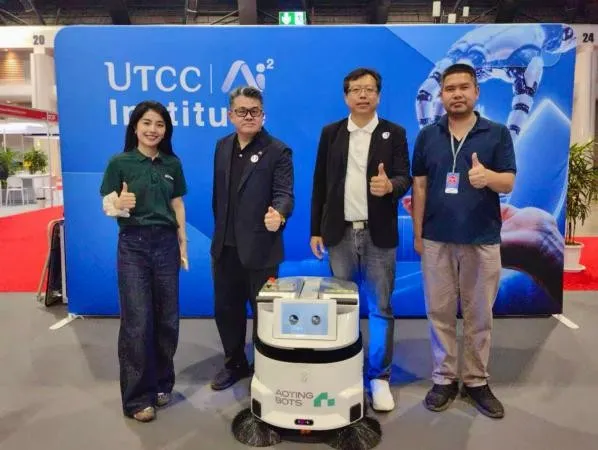
When comparing different tiers of manufacturers, it is helpful to look at the "Mission Success Rate" and the "Autonomy Level" of their units.
Manufacturing consultants often emphasize that the initial CapEx is only 30% of the total cost. A professional industrial cleaning robot manufacturer focuses on reducing the remaining 70%, which consists of maintenance, consumables, and electricity.
Labor Reallocation: A robot that operates autonomously for 6 hours a day saves approximately 1.5 to 2 full-time employee (FTE) equivalents in a multi-shift factory.
Consumable Efficiency: Automated systems dispense water and detergent with milliliter precision, reducing chemical waste by up to 40% compared to manual mopping.
Operational Longevity: Manufacturers who offer modular designs allow for quick part replacement, reducing the downtime that occurs during "sampling delays" for spare parts in cheaper, non-modular units.
Aotingbot stands out in the global market by offering an all-scenario cleaning solution that addresses the specific pain points of industrial facilities. Their technology stack is designed for "all-process" automation, meaning the robot handles the cleaning, the recharging, and the water exchange without human intervention.
As a manufacturer, Aotingbot prioritizes:
Versatility: Their units, such as the SW80, are engineered for everything from warehouse dust management to heavy-duty scrubbing in manufacturing plants.
Safety Compliance: Every unit is equipped with emergency stop mechanisms and audible/visual warning systems to ensure safe co-habitation with human workers.
Global Support: Understanding the B2B need for uptime, they provide a robust support workflow that includes remote diagnostics and rapid-response technical assistance.
For B2B procurement advisors, Aotingbot provides the necessary certifications (CE, RoHS) and technical whitepapers to satisfy compliance audits and internal safety committees.
The transition from manual cleaning to a robotic fleet follows a structured engineering workflow:
Site Audit: The manufacturer maps the facility, identifying "no-go zones" and high-traffic corridors.
Network Integration: Connecting the fleet to the local Wi-Fi/5G network for cloud reporting.
Staff Training: Ensuring facility managers can interpret analytics and perform basic daily maintenance (brush cleaning).
Pilot Scaling: Starting with a single unit to verify ROI before rolling out a full fleet across multiple production halls.
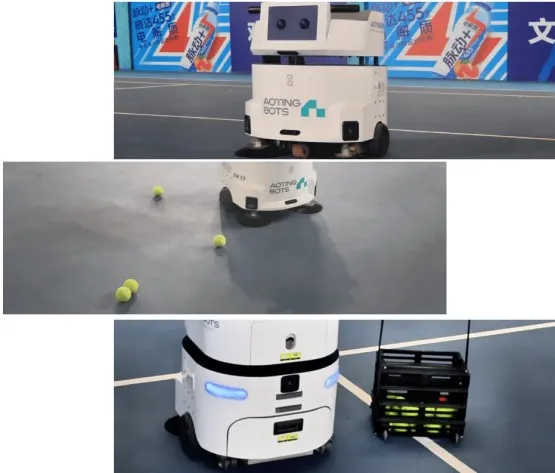
Selecting the right industrial cleaning robot manufacturer is a critical decision for factories investing in automation. Unlike standard cleaning equipment, industrial cleaning robots need to operate reliably in complex environments, including production floors, warehouses, and manufacturing facilities with moving equipment and changing layouts.
The wrong supplier choice can lead to several operational challenges, such as low cleaning efficiency, poor navigation performance, difficult maintenance, and higher long-term operating costs.
A reliable industrial cleaning robot manufacturer should provide not only high-quality robotic equipment but also strong technical support, customization capability, and industry experience.
A poorly designed cleaning robot may fail to achieve full floor coverage, require frequent manual intervention, or spend excessive time completing cleaning tasks. This reduces the expected benefits of automation.
Industrial environments are dynamic. Robots must safely navigate around:
Workers
Forklifts
Production equipment
Temporary obstacles
Advanced navigation technologies such as SLAM mapping, LiDAR detection, and AI-based obstacle avoidance are essential for stable operation.
A low-quality robot may require frequent repairs, replacement parts, and technical support, increasing the total cost of ownership over time.
Industrial automation requires long-term cooperation. A reliable supplier should provide installation guidance, troubleshooting support, software updates, and after-sales service.
When evaluating suppliers, factories should consider:
Robotics technology capability
Manufacturing experience
Product reliability
Customization options
Industry application experience
After-sales support
Total cost of ownership
Choosing the right industrial cleaning robot manufacturer helps factories achieve more efficient cleaning operations, reduce labor dependency, and build a smarter maintenance system.
Selecting an industrial cleaning robot manufacturer is an investment in the long-term hygiene and safety of your production environment. By prioritizing manufacturers that offer 3D SLAM navigation, robust mechanical builds, and integrated fleet management, B2B buyers can ensure their factory remains clean, compliant, and competitive. Partners like Aotingbot provide the technological maturity required to turn facility maintenance from a cost center into a high-efficiency automated utility.
Q: What is the typical lead time for a fleet of 10 industrial robots?
A: Most professional manufacturers maintain a lead time of 4–8 weeks, depending on the level of software customization and the specific power requirements (e.g., localized charging dock voltages).
Q: Can these robots operate in cleanroom environments?
A: Yes, some manufacturers offer specialized units with HEPA filtration and ESD-safe materials specifically for electronics or pharmaceutical manufacturing. You should verify the cleanroom class rating with the manufacturer’s engineering team.
Q: How does the robot handle slopes or floor transitions?
A: Professional industrial robots are typically rated for slopes of 5 to 10 degrees. Their suspension systems are designed to handle transitions like elevator thresholds and expansion joints without losing traction or LiDAR alignment.
Q: What is the expected battery lifespan for a lithium-powered robot?
A: High-quality LiFePO4 batteries used by top-tier manufacturers are rated for approximately 2,000 to 3,000 charge cycles, which equates to 5–8 years of operation in a typical 6-day-a-week factory schedule.
Q: Do I need a full-time technician to manage the robots?
A: No. Autonomous workstations handle water and power. Daily maintenance usually takes less than 15 minutes per unit and involves simple tasks like cleaning the recovery tank and inspecting the brushes.
IFR (International Federation of Robotics): Service Robots in Manufacturing Report.
ISO 13482: Safety Requirements for Personal Care Robots (including cleaning).
Aotingbot Technical Specs: Full Product Portfolio for Industrial Automation.
SGS Certification: CE and RoHS standards for autonomous floor scrubbers.
IEEE Xplore: Navigation and SLAM 3.0 in Industrial Environments.
Selecting an industrial cleaning robot manufacturer is a critical decision for factories investing in automation. The wrong supplier may lead to poor navigation performance, insufficient cleaning efficiency, difficult maintenance, and unexpected operating costs. Unlike consumer cleaning robots, industrial systems must operate in complex environments involving forklifts, workers, production equipment, dust, oil, and large floor areas. This guide explains the key factors factory buyers should evaluate before choosing an industrial cleaning robot supplier.
For facility managers and OEM project managers, selecting an industrial cleaning robot manufacturer is a strategic move toward Industry 4.0. Beyond basic floor maintenance, these robots represent a significant reduction in operational overhead and an increase in site safety. In high-traffic manufacturing environments, a reliable robotic partner must provide more than just hardware; they must deliver a scalable automation ecosystem that integrates with existing factory workflows.
When evaluating a manufacturer, B2B buyers must look beyond the initial purchase price. The focus should be on the technical sophistication of the navigation systems, the durability of the mechanical components, and the robustness of the fleet management software.
Choosing the right manufacturer requires an audit of their engineering depth and their understanding of industrial constraints. A good partner doesn't just sell a machine; they solve a labor bottleneck.
In a dynamic factory floor where forklifts, AGVs, and personnel move constantly, "static" mapping is insufficient. Leading manufacturers utilize Simultaneous Localization and Mapping (SLAM) powered by multi-sensor fusion. This typically includes:
LiDAR: For long-range obstacle detection and environmental mapping.
3D Depth Cameras: For identifying low-profile obstacles or overhangs that LiDAR might miss.
Ultrasonic Sensors: For detecting glass or highly reflective surfaces.
Industrial environments are harsh. A manufacturer’s build quality should be rated for at least IP54 to resist dust and water splashes. High-quality scrubbers use industrial-grade squeegees and brushes that withstand 24/7 duty cycles. In large-scale automotive or electronics plants, the failure of a cleaning unit can lead to slip hazards, making mechanical reliability a top-tier safety requirement.
A single robot is a tool; a fleet is a solution. Top manufacturers provide centralized cloud platforms that allow managers to monitor water levels, battery health, and cleaning heat maps in real-time. This integration with a facility’s ERP or Building Management System (BMS) is essential for documenting compliance with hygiene standards.
When comparing different tiers of manufacturers, it is helpful to look at the "Mission Success Rate" and the "Autonomy Level" of their units.
Manufacturing consultants often emphasize that the initial CapEx is only 30% of the total cost. A professional industrial cleaning robot manufacturer focuses on reducing the remaining 70%, which consists of maintenance, consumables, and electricity.
Labor Reallocation: A robot that operates autonomously for 6 hours a day saves approximately 1.5 to 2 full-time employee (FTE) equivalents in a multi-shift factory.
Consumable Efficiency: Automated systems dispense water and detergent with milliliter precision, reducing chemical waste by up to 40% compared to manual mopping.
Operational Longevity: Manufacturers who offer modular designs allow for quick part replacement, reducing the downtime that occurs during "sampling delays" for spare parts in cheaper, non-modular units.
Aotingbot stands out in the global market by offering an all-scenario cleaning solution that addresses the specific pain points of industrial facilities. Their technology stack is designed for "all-process" automation, meaning the robot handles the cleaning, the recharging, and the water exchange without human intervention.
As a manufacturer, Aotingbot prioritizes:
Versatility: Their units, such as the SW80, are engineered for everything from warehouse dust management to heavy-duty scrubbing in manufacturing plants.
Safety Compliance: Every unit is equipped with emergency stop mechanisms and audible/visual warning systems to ensure safe co-habitation with human workers.
Global Support: Understanding the B2B need for uptime, they provide a robust support workflow that includes remote diagnostics and rapid-response technical assistance.
For B2B procurement advisors, Aotingbot provides the necessary certifications (CE, RoHS) and technical whitepapers to satisfy compliance audits and internal safety committees.
The transition from manual cleaning to a robotic fleet follows a structured engineering workflow:
Site Audit: The manufacturer maps the facility, identifying "no-go zones" and high-traffic corridors.
Network Integration: Connecting the fleet to the local Wi-Fi/5G network for cloud reporting.
Staff Training: Ensuring facility managers can interpret analytics and perform basic daily maintenance (brush cleaning).
Pilot Scaling: Starting with a single unit to verify ROI before rolling out a full fleet across multiple production halls.
Selecting the right industrial cleaning robot manufacturer is a critical decision for factories investing in automation. Unlike standard cleaning equipment, industrial cleaning robots need to operate reliably in complex environments, including production floors, warehouses, and manufacturing facilities with moving equipment and changing layouts.
The wrong supplier choice can lead to several operational challenges, such as low cleaning efficiency, poor navigation performance, difficult maintenance, and higher long-term operating costs.
A reliable industrial cleaning robot manufacturer should provide not only high-quality robotic equipment but also strong technical support, customization capability, and industry experience.
A poorly designed cleaning robot may fail to achieve full floor coverage, require frequent manual intervention, or spend excessive time completing cleaning tasks. This reduces the expected benefits of automation.
Industrial environments are dynamic. Robots must safely navigate around:
Workers
Forklifts
Production equipment
Temporary obstacles
Advanced navigation technologies such as SLAM mapping, LiDAR detection, and AI-based obstacle avoidance are essential for stable operation.
A low-quality robot may require frequent repairs, replacement parts, and technical support, increasing the total cost of ownership over time.
Industrial automation requires long-term cooperation. A reliable supplier should provide installation guidance, troubleshooting support, software updates, and after-sales service.
When evaluating suppliers, factories should consider:
Robotics technology capability
Manufacturing experience
Product reliability
Customization options
Industry application experience
After-sales support
Total cost of ownership
Choosing the right industrial cleaning robot manufacturer helps factories achieve more efficient cleaning operations, reduce labor dependency, and build a smarter maintenance system.
Selecting an industrial cleaning robot manufacturer is an investment in the long-term hygiene and safety of your production environment. By prioritizing manufacturers that offer 3D SLAM navigation, robust mechanical builds, and integrated fleet management, B2B buyers can ensure their factory remains clean, compliant, and competitive. Partners like Aotingbot provide the technological maturity required to turn facility maintenance from a cost center into a high-efficiency automated utility.
Q: What is the typical lead time for a fleet of 10 industrial robots?
A: Most professional manufacturers maintain a lead time of 4–8 weeks, depending on the level of software customization and the specific power requirements (e.g., localized charging dock voltages).
Q: Can these robots operate in cleanroom environments?
A: Yes, some manufacturers offer specialized units with HEPA filtration and ESD-safe materials specifically for electronics or pharmaceutical manufacturing. You should verify the cleanroom class rating with the manufacturer’s engineering team.
Q: How does the robot handle slopes or floor transitions?
A: Professional industrial robots are typically rated for slopes of 5 to 10 degrees. Their suspension systems are designed to handle transitions like elevator thresholds and expansion joints without losing traction or LiDAR alignment.
Q: What is the expected battery lifespan for a lithium-powered robot?
A: High-quality LiFePO4 batteries used by top-tier manufacturers are rated for approximately 2,000 to 3,000 charge cycles, which equates to 5–8 years of operation in a typical 6-day-a-week factory schedule.
Q: Do I need a full-time technician to manage the robots?
A: No. Autonomous workstations handle water and power. Daily maintenance usually takes less than 15 minutes per unit and involves simple tasks like cleaning the recovery tank and inspecting the brushes.
IFR (International Federation of Robotics): Service Robots in Manufacturing Report.
ISO 13482: Safety Requirements for Personal Care Robots (including cleaning).
Aotingbot Technical Specs: Full Product Portfolio for Industrial Automation.
SGS Certification: CE and RoHS standards for autonomous floor scrubbers.
IEEE Xplore: Navigation and SLAM 3.0 in Industrial Environments.
CONTACT US
we aim to become a global leader in manufacturer space service robotics and artificial intelligence.


