Approaching
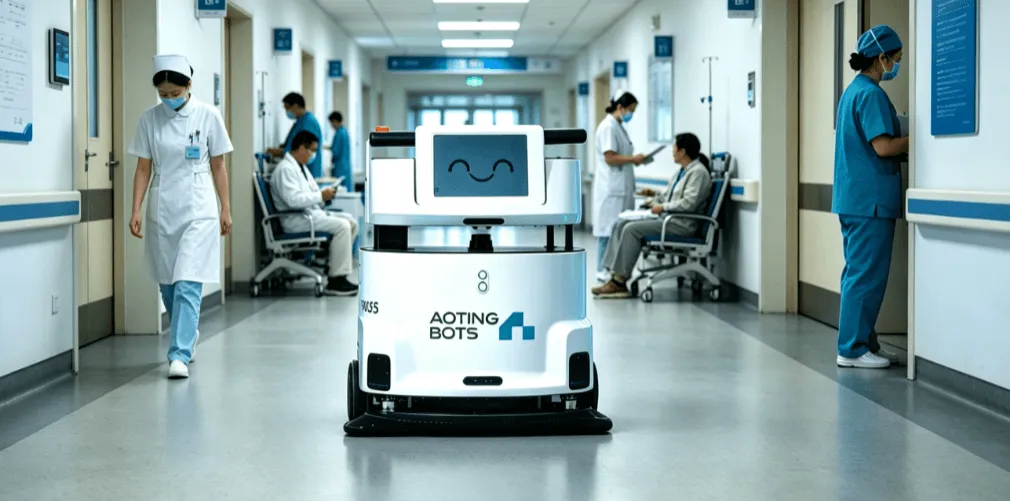
industrial cleaning robot selection requires moving beyond brochure claims and establishing a verifiable evaluation framework. For procurement managers, facility directors, and OEM project leaders, the core question is not "which robot has the most features" but "which machine delivers the lowest total cost of ownership while meeting recognized performance and safety standards." Our SW55 A waterless cleaning robot is engineered precisely within this evidence-based selection logic.
Defining the Evaluation Framework
A seminal study published in Korea Science, A Study on Standardization of Performance Evaluation for Autonomous Cleaning Robot, establishes the four pillars that any credible industrial cleaning robot selection process must assess: mobility, cleaning performance, avoidance of obstruction (safety), and operation noise. The authors designed a performance evaluation platform that measures these dimensions in realistic living and working environments—a methodology that procurement teams should adopt when qualifying suppliers.
China's national standard GB/T 46495-2025, Commercial Cleaning Robots, issued by the Standardization Administration and effective May 1, 2026, codifies these principles into enforceable requirements. The standard:
- Sets minimum cleaning performance thresholds: sweeping ≥70%, vacuuming ≥70%, dust pushing ≥85%, washing ≥80% of nominal value
- Breaks mobility into 9 independent modules: rated speed, obstacle crossing, escape capability, braking, and more
- Mandates noise measurement with a hard limit: actual operating noise shall not exceed 86 dB(A)
- Requires compliance with electrical safety (GB/T 4706.1), mechanical safety (GB/T 44581), information security (GB/T 38244), and EMC (GB/T 37284/37283)
This standard provides procurement teams with a checklist: any supplier claiming "commercial grade" must demonstrate conformance to GB/T 46495-2025 or an equivalent national/international standard such as IEC 63327:2021 for powered automatic floor treatment machines.
Technical Profile: SW55 A Waterless Cleaning Robot
Our SW55 A is purpose-built for medium- and small-scale commercial scenarios—hotels, office buildings, shopping malls, residential communities, and conference centers. Key specifications:
|
Parameter
|
SW55 A Specification
|
|
Dimensions (L×W×H)
|
615×585×650 mm
|
|
Weight
|
91 kg
|
|
Cleaning efficiency
|
1,200 ㎡/h
|
|
Cleaning path (dual-side brush)
|
705 mm (large) / 615 mm (small)
|
|
Battery capacity
|
52 AH
|
|
Endurance (hard flooring)
|
12 hours
|
|
Endurance (silent mode)
|
16.5 hours
|
|
Max. mapping area
|
40,000 ㎡
|
|
Propel speed
|
1.0 / 0.7 / 0.5 m/s (High/Med/Low)
|
|
Noise level
|
≤62 dB(A)
|
|
Max. vacuum power
|
9 kPa
|
|
Trash bin / dustbag
|
4 L / 7.5 L
|
|
Charging time
|
2 hours
|
|
Edge cleaning distance
|
0 cm
|
The ≤62 dB(A) noise level is notably below the 86 dB(A) ceiling mandated by GB/T 46495-2025—a 24 dB margin that matters profoundly in occupied spaces such as hotels, offices, and healthcare facilities where daytime operation is required.
Commercial Comparison Table 1: Category Positioning
|
Dimension
|
Small Vacuum Robot (commercial)
|
Mid-size Floor Scrubber
|
SW55 A (Waterless Multi-function)
|
Source
|
|
Cleaning efficiency
|
~1,000 ㎡/h
|
1,500-3,500 ㎡/h
|
1,200 ㎡/h
|
GrabaRobot 2026 / Sky Market
|
|
Cleaning method
|
Dry vacuum
|
Wet scrub + dry
|
Waterless: scrub, sweep, vacuum, dust-push
|
AotingBots / GrabaRobot
|
|
Water tank requirement
|
None
|
20-80 L
|
None (waterless)
|
Sky Market / AotingBots
|
|
Effective cleaning width
|
<500 mm
|
500-750+ mm
|
615-705 mm (side brush dependent)
|
GB/T 46495-2025 classification
|
|
Typical FOB China price
|
3,000−6,000
|
8,000−15,000 (mid) / 15,000−30,000 (large)
|
Contact for quote
|
GrabaRobot Buying Guide
|
|
Slip hazard risk
|
Low
|
Moderate (wet floor)
|
None (waterless)
|
AotingBots field data
|
|
Noise level
|
Varies
|
Varies
|
≤62 dB(A)
|
AotingBots
|
|
Payback period
|
7-12 months
|
7-12 months
|
7-12 months (per market data)
|
GrabaRobot Market Report
|
Sources: GrabaRobot Commercial Cleaning Robot Market 2026; GrabaRobot Buying Guide 2026; Sky Market Insights B2B Floor Cleaning Robots: AotingBots SW55 A product page
Commercial Comparison Table 2: Performance Against GB/T 46495-2025 Thresholds
|
GB/T 46495-2025 Requirement
|
Standard Threshold
|
SW55 A Performance
|
Compliance Margin
|
Source
|
|
Sweeping performance vs. nominal
|
≥70% of nominal
|
Engineered for 4-in-1 cleaning, 40mm debris pickup
|
Meets functional design
|
GB/T 46495-2025 / AotingBots
|
|
Dust-pushing performance
|
≥85% of nominal
|
Waterless dust-push integrated
|
Meets functional design
|
GB/T 46495-2025 / AotingBots
|
|
Noise limit
|
≤86 dB(A) actual
|
≤62 dB(A)
|
24 dB margin
|
GB/T 46495-2025 / AotingBots
|
|
Rated speed tolerance
|
≤10% deviation from nominal
|
1.0/0.7/0.5 m/s (3 preset gears)
|
Controlled, reproducible
|
GB/T 46495-2025 / AotingBots
|
|
Obstacle avoidance
|
Dynamic + static avoidance, anti-fall
|
360° laser + multi-sensor fusion, centimeter-level positioning
|
Surpasses baseline requirement
|
AotingBots / Korea Science eval framework
|
|
Endurance (minimum)
|
Electric: ≥2.5h; water: ≥1h
|
12h (hard floor), 16.5h (silent)
|
4.8× electric minimum
|
GB/T 46495-2025 / AotingBots
|
|
Mapping capability
|
Not mandated, but expected for autonomy
|
40,000㎡ dynamic mapping
|
Far exceeds typical SME needs
|
AotingBots
|
Sources: GB/T 46495-2025 national standard summary; AotingBots SW55 A specifications
Commercial Comparison Table 3: Total Cost of Ownership Factors
|
TCO Factor
|
Traditional Wet Scrubber
|
Generic Dry Vacuum Robot
|
SW55 A Waterless
|
Source
|
|
Water consumption
|
20-80 L per cycle
|
Zero
|
Zero
|
Sky Market Insights
|
|
Wastewater treatment
|
Required
|
N/A
|
Not required
|
AotingBots
|
|
Slip-and-fall liability exposure
|
Moderate to high
|
Low
|
None (no water, no leakage)
|
AotingBots field data
|
|
Chemical cleaner cost
|
Ongoing
|
N/A
|
Zero (waterless, chemical-free)
|
AotingBots
|
|
Maintenance interval
|
Daily water tank emptying
|
Weekly bin emptying
|
Weekly (4L bin + 7.5L dustbag)
|
AotingBots
|
|
Labor substitution
|
1.5-2.0 FTE
|
1.0-1.5 FTE
|
~20% labor cost reduction per field data
|
GrabaRobot / AotingBots InnoEX data
|
|
ESG alignment
|
Moderate (water + chemical use)
|
Good
|
High (zero water, zero chemical, supports ESG goals)
|
AotingBots
|
|
Night-shift worker cost avoided (US market)
|
45,000−55,000/FTE/year
|
Same
|
Same + water/chemical savings
|
GrabaRobot Market Report
|
Sources: GrabaRobot Commercial Cleaning Robot Market 2026; Sky Market Insights: AotingBots SW55, a product page, and InnoEX 2025 showcase data.
The Market Context for Procurement Teams
The global commercial cleaning robot market reached $4.2 billion in 2026, growing 38% year-over-year, according to MarketsandMarkets data cited by industry analysts. Autonomous floor scrubbers represent 65% of the market, vacuum/sweeper robots 22%, and multi-function platforms—the category SW55 A occupies—13% and growing to an estimated 25% by 2028.
This growth is driven not by technology novelty but by economic inflection: at 15,000−30,000 per unit with 7-12 month payback periods, autonomous cleaning robots now deliver better ROI than human cleaning labor in most developed markets. A US night-shift cleaner costs 45,000−55,000 fully loaded per year; a single autonomous unit replaces 1.5-2.0 FTE equivalents at 3-4× the coverage rate, with annual operating costs of only 3,000−5,000.
Chinese manufacturers account for 58% of global unit sales due to aggressive pricing and manufacturing scale, with landed costs 40-60% below comparable Western models. This positions the SW55 A—manufactured in Hefei, China, by AotingBots—competitively for international B2B buyers.
Application Fit Assessment
Per the Korea Science evaluation framework and GB/T 46495-2025, the SW55 A is optimally selected for:
- Hotels and office buildings: ≤62 dB(A) noise enables daytime operation; waterless cleaning eliminates slip hazards in lobbies and corridors
- Shopping malls and conference centers: 1,200 ㎡/h efficiency with 40,000 ㎡ mapping covers medium-scale footprints; 0 cm edge cleaning addresses display fixtures and wall lines
- Residential communities: 16.5h silent-mode endurance supports overnight full-coverage cycles
- Healthcare and food service auxiliaries: Waterless, chemical-free operation aligns with hygiene protocols; optional security monitoring, inspection, and fire spot detection add value
- Scenarios requiring ESG reporting: Zero water consumption and zero chemical discharge provide quantifiable sustainability metrics
The Selection Decision Tree
For B2B procurement advisors, we recommend this evaluation sequence:
- Calculate daily cleaning area—Match to robot efficiency (SW55 A: 1,200 ㎡/h)
- Verify floor types—SW55 A handles carpet, hard floor, wood, tile, marble, terrazzo, epoxy, sandstone, and artificial stone
- Assess water constraints—If water usage, wastewater, or slip hazards are concerns, waterless design eliminates these risks entirely
- Check noise sensitivity—Occupied spaces require ≤65 dB(A); SW55 A delivers ≤62 dB(A)
- Evaluate autonomy needs—40,000 ㎡ mapping, elevator/turnstile/access control integration, and 7×24 operation capability
- Confirm standard compliance—Request GB/T 46495-2025 test reports or equivalent (IEC 63327:2021, UL 3300, CE)
- Calculate 3-5 year TCO—Include energy, consumables, maintenance, and labor substitution
- Verify after-sales responsiveness—factory-direct support vs. distributor-mediated channels
Integration and Customization
The SW55 A supports elevator control, access gates, and access control system integration—critical for multi-floor buildings. Optional modules include security monitoring, inspection capabilities, and fire spot detection, transforming the cleaning robot from a single-function device into a facility management node. The Aoting cloud platform provides real-time task viewing, remote task management, and multi-user hierarchical permission management.
FAQ
Q1: What is the correct approach to industrial cleaning robot selection?
A: Begin with a standardized evaluation framework assessing four dimensions: mobility, cleaning performance, obstacle avoidance safety, and operation noise—as established by Korea Science's standardization study and codified in China's GB/T 46495-2025. Then match robot specifications to your actual daily cleaning area, floor types, noise constraints, and water/chemical restrictions. Finally, calculate the 3-5 year total cost of ownership, including labor substitution.
Q2: Why does GB/T 46495-2025 matter for procurement?
A: Effective May 1, 2026, this national standard sets enforceable minimums: sweeping ≥70% of nominal, dust pushing ≥85%, noise ≤86 dB(A), electric endurance ≥2.5 h, and compliance with electrical/mechanical/information security/EMC standards. Specifying GB/T 46495-2025 conformance in RFQs ensures you receive genuinely commercial-grade equipment, not consumer-grade devices mislabeled for B2B use.
Q3: How does waterless cleaning affect the total cost of ownership?
A: Waterless design eliminates three cost centers: water consumption (20-80 L per cycle for scrubbers), wastewater treatment, and slip-and-fall liability exposure. It also removes chemical cleaner costs and supports ESG reporting with quantifiable zero-water, zero-chemical metrics. Field data from AotingBots shows integrating one SW55 A reduces labor costs by approximately 20%.
Q4: Is the SW55 A suitable for large-scale industrial floors?
A: The SW55 A is optimized for medium- and small-scale commercial scenarios (hotels, offices, malls, conference centers) with 1,200 ㎡/h efficiency and 40,000 ㎡ mapping. For larger industrial facilities exceeding 10,000 ㎡ with continuous operation needs, our SW80 A model—specifically designed for commercial and industrial environments with larger coverage—would be the appropriate selection. Contact our engineering team for a site-specific recommendation.
Q5: How does the SW55 A compare to noise for occupied-space operation?
A: At ≤62 dB(A), the SW55 A operates 24 dB below the GB/T 46495-2025 noise ceiling of 86 dB(A). This enables daytime operation in hotels, offices, and healthcare facilities without disrupting occupants—a key differentiator from louder wet scrubbers.
Q6: What certifications and compliance documentation should I request?
A: Request GB/T 46495-2025 test reports, electrical safety certification (equivalent to UL 3300 for North America or CE for Europe), EMC compliance, and—for networked robots—information security certification. The SW55 A is designed to conform to these frameworks; our technical team can provide documentation specific to your target market.
Q7: What is the typical payback period?
A: Per MarketsandMarkets 2026 data, autonomous cleaning robots achieve 7-12 month payback in most developed markets. With SW55 A's waterless operation (zero water/chemical cost), 16.5h endurance enabling 7×24 operation, and ~20% labor cost reduction field data, payback is achievable within this window for most medium-scale commercial deployments.
Making the Procurement Case to Your Board
When presenting industrial cleaning robot selection to your board or facilities committee, anchor the discussion in three verifiable pillars:
- Standards conformance—GB/T 46495-2025 (effective May 2026) provides an objective, auditable checklist for cleaning performance, mobility, safety, and noise. The SW55 A's ≤62 dB(A) noise level, 12-16.5 h endurance, and 4-in-1 waterless cleaning are engineered to meet and exceed these thresholds.
- Economic inflection—At 38% YoY market growth with 7-12 month payback periods, autonomous cleaning robots now outperform human labor costs in most developed markets. The SW55 A's waterless design compounds these savings by eliminating water, chemical, and slip-liability expenses.
- Multi-function platform advantage—As the fastest-growing category (projected 25% of market by 2028), 4-in-1 waterless platforms like the SW55 A future-proof your investment. Optional security, inspection, and fire detection modules extend the robot's role beyond cleaning into facility management.
For procurement teams evaluating industrial cleaning robot selection, the evidence-based path is clear: specify to GB/T 46495-2025, calculate TCO over 3-5 years, verify floor and noise compatibility, and select a supplier with factory-direct engineering support. The SW55 A waterless cleaning robot meets these criteria while delivering differentiated waterless operation, sub-86 dB(A) acoustics, and 7×24 autonomous capability.
To explore how the SW55 A would perform in your specific facility—whether hotel, office, mall, conference center, or residential community—visit our product page at
https://www.aotingbot.com/product/sw55-a. Our engineering team can provide a detailed specification sheet, conduct a site assessment, and prepare a customized quotation with projected labor savings and a payback timeline. Reach out today, and let us help you calculate the exact ROI this waterless cleaning platform can deliver for your operation.
References
- AotingBots SW55: A product specifications and technical documentation. https://www.aotingbot.com/product/sw55-a
- GB/T 46495-2025 Commercial Cleaning Robots national standard, issued by the Standardization Administration of China, effective May 1, 2026. Performance requirements summary: https://www.yzbzpt.cn/NoticeDetail/e9198abe-0c5f-4025-a906-2e043e25988e — Detailed interpretation: https://www.anytesting.com/news/1962761.html
- Sewoong Baek, et al. A Study on Standardization of Performance Evaluation for Autonomous Cleaning Robot. Korea Science, 2005. https://www.koreascience. kr/article/CFKO200522219647626.pub?&lang=en
- Commercial Cleaning Robot Market Hits $4.2B in 2026. GrabaRobot Industry Report, April 2026. https://www.grabarobot.com/news/commercial-cleaning-robot-market-growth-2026
- How to Choose the Right Commercial Cleaning Robot in 2026. GrabaRobot Buying Guide, March 2026. https://www.grabarobot.com/blog/cleaning-robot-buying-guide/
- North America B2B Floor Cleaning Robots Market. Sky Market Insights. https://www.skymarketinsights.com/report/north-america-b2b-floor-cleaning-robots-market
- AotingBots SW55 A demonstrated at InnoEX 2025, Hong Kong—field performance and labor cost reduction data. http://m.aotbot.com/en/news/3-80.html
Approaching
industrial cleaning robot selection requires moving beyond brochure claims and establishing a verifiable evaluation framework. For procurement managers, facility directors, and OEM project leaders, the core question is not "which robot has the most features" but "which machine delivers the lowest total cost of ownership while meeting recognized performance and safety standards." Our SW55 A waterless cleaning robot is engineered precisely within this evidence-based selection logic.
Defining the Evaluation Framework
A seminal study published in Korea Science, A Study on Standardization of Performance Evaluation for Autonomous Cleaning Robot, establishes the four pillars that any credible industrial cleaning robot selection process must assess: mobility, cleaning performance, avoidance of obstruction (safety), and operation noise. The authors designed a performance evaluation platform that measures these dimensions in realistic living and working environments—a methodology that procurement teams should adopt when qualifying suppliers.
China's national standard GB/T 46495-2025, Commercial Cleaning Robots, issued by the Standardization Administration and effective May 1, 2026, codifies these principles into enforceable requirements. The standard:
- Sets minimum cleaning performance thresholds: sweeping ≥70%, vacuuming ≥70%, dust pushing ≥85%, washing ≥80% of nominal value
- Breaks mobility into 9 independent modules: rated speed, obstacle crossing, escape capability, braking, and more
- Mandates noise measurement with a hard limit: actual operating noise shall not exceed 86 dB(A)
- Requires compliance with electrical safety (GB/T 4706.1), mechanical safety (GB/T 44581), information security (GB/T 38244), and EMC (GB/T 37284/37283)
This standard provides procurement teams with a checklist: any supplier claiming "commercial grade" must demonstrate conformance to GB/T 46495-2025 or an equivalent national/international standard such as IEC 63327:2021 for powered automatic floor treatment machines.
Technical Profile: SW55 A Waterless Cleaning Robot
Our SW55 A is purpose-built for medium- and small-scale commercial scenarios—hotels, office buildings, shopping malls, residential communities, and conference centers. Key specifications:
|
Parameter
|
SW55 A Specification
|
|
Dimensions (L×W×H)
|
615×585×650 mm
|
|
Weight
|
91 kg
|
|
Cleaning efficiency
|
1,200 ㎡/h
|
|
Cleaning path (dual-side brush)
|
705 mm (large) / 615 mm (small)
|
|
Battery capacity
|
52 AH
|
|
Endurance (hard flooring)
|
12 hours
|
|
Endurance (silent mode)
|
16.5 hours
|
|
Max. mapping area
|
40,000 ㎡
|
|
Propel speed
|
1.0 / 0.7 / 0.5 m/s (High/Med/Low)
|
|
Noise level
|
≤62 dB(A)
|
|
Max. vacuum power
|
9 kPa
|
|
Trash bin / dustbag
|
4 L / 7.5 L
|
|
Charging time
|
2 hours
|
|
Edge cleaning distance
|
0 cm
|
The ≤62 dB(A) noise level is notably below the 86 dB(A) ceiling mandated by GB/T 46495-2025—a 24 dB margin that matters profoundly in occupied spaces such as hotels, offices, and healthcare facilities where daytime operation is required.
Commercial Comparison Table 1: Category Positioning
|
Dimension
|
Small Vacuum Robot (commercial)
|
Mid-size Floor Scrubber
|
SW55 A (Waterless Multi-function)
|
Source
|
|
Cleaning efficiency
|
~1,000 ㎡/h
|
1,500-3,500 ㎡/h
|
1,200 ㎡/h
|
GrabaRobot 2026 / Sky Market
|
|
Cleaning method
|
Dry vacuum
|
Wet scrub + dry
|
Waterless: scrub, sweep, vacuum, dust-push
|
AotingBots / GrabaRobot
|
|
Water tank requirement
|
None
|
20-80 L
|
None (waterless)
|
Sky Market / AotingBots
|
|
Effective cleaning width
|
<500 mm
|
500-750+ mm
|
615-705 mm (side brush dependent)
|
GB/T 46495-2025 classification
|
|
Typical FOB China price
|
3,000−6,000
|
8,000−15,000 (mid) / 15,000−30,000 (large)
|
Contact for quote
|
GrabaRobot Buying Guide
|
|
Slip hazard risk
|
Low
|
Moderate (wet floor)
|
None (waterless)
|
AotingBots field data
|
|
Noise level
|
Varies
|
Varies
|
≤62 dB(A)
|
AotingBots
|
|
Payback period
|
7-12 months
|
7-12 months
|
7-12 months (per market data)
|
GrabaRobot Market Report
|
Sources: GrabaRobot Commercial Cleaning Robot Market 2026; GrabaRobot Buying Guide 2026; Sky Market Insights B2B Floor Cleaning Robots: AotingBots SW55 A product page
Commercial Comparison Table 2: Performance Against GB/T 46495-2025 Thresholds
|
GB/T 46495-2025 Requirement
|
Standard Threshold
|
SW55 A Performance
|
Compliance Margin
|
Source
|
|
Sweeping performance vs. nominal
|
≥70% of nominal
|
Engineered for 4-in-1 cleaning, 40mm debris pickup
|
Meets functional design
|
GB/T 46495-2025 / AotingBots
|
|
Dust-pushing performance
|
≥85% of nominal
|
Waterless dust-push integrated
|
Meets functional design
|
GB/T 46495-2025 / AotingBots
|
|
Noise limit
|
≤86 dB(A) actual
|
≤62 dB(A)
|
24 dB margin
|
GB/T 46495-2025 / AotingBots
|
|
Rated speed tolerance
|
≤10% deviation from nominal
|
1.0/0.7/0.5 m/s (3 preset gears)
|
Controlled, reproducible
|
GB/T 46495-2025 / AotingBots
|
|
Obstacle avoidance
|
Dynamic + static avoidance, anti-fall
|
360° laser + multi-sensor fusion, centimeter-level positioning
|
Surpasses baseline requirement
|
AotingBots / Korea Science eval framework
|
|
Endurance (minimum)
|
Electric: ≥2.5h; water: ≥1h
|
12h (hard floor), 16.5h (silent)
|
4.8× electric minimum
|
GB/T 46495-2025 / AotingBots
|
|
Mapping capability
|
Not mandated, but expected for autonomy
|
40,000㎡ dynamic mapping
|
Far exceeds typical SME needs
|
AotingBots
|
Sources: GB/T 46495-2025 national standard summary; AotingBots SW55 A specifications
Commercial Comparison Table 3: Total Cost of Ownership Factors
|
TCO Factor
|
Traditional Wet Scrubber
|
Generic Dry Vacuum Robot
|
SW55 A Waterless
|
Source
|
|
Water consumption
|
20-80 L per cycle
|
Zero
|
Zero
|
Sky Market Insights
|
|
Wastewater treatment
|
Required
|
N/A
|
Not required
|
AotingBots
|
|
Slip-and-fall liability exposure
|
Moderate to high
|
Low
|
None (no water, no leakage)
|
AotingBots field data
|
|
Chemical cleaner cost
|
Ongoing
|
N/A
|
Zero (waterless, chemical-free)
|
AotingBots
|
|
Maintenance interval
|
Daily water tank emptying
|
Weekly bin emptying
|
Weekly (4L bin + 7.5L dustbag)
|
AotingBots
|
|
Labor substitution
|
1.5-2.0 FTE
|
1.0-1.5 FTE
|
~20% labor cost reduction per field data
|
GrabaRobot / AotingBots InnoEX data
|
|
ESG alignment
|
Moderate (water + chemical use)
|
Good
|
High (zero water, zero chemical, supports ESG goals)
|
AotingBots
|
|
Night-shift worker cost avoided (US market)
|
45,000−55,000/FTE/year
|
Same
|
Same + water/chemical savings
|
GrabaRobot Market Report
|
Sources: GrabaRobot Commercial Cleaning Robot Market 2026; Sky Market Insights: AotingBots SW55, a product page, and InnoEX 2025 showcase data.
The Market Context for Procurement Teams
The global commercial cleaning robot market reached $4.2 billion in 2026, growing 38% year-over-year, according to MarketsandMarkets data cited by industry analysts. Autonomous floor scrubbers represent 65% of the market, vacuum/sweeper robots 22%, and multi-function platforms—the category SW55 A occupies—13% and growing to an estimated 25% by 2028.
This growth is driven not by technology novelty but by economic inflection: at 15,000−30,000 per unit with 7-12 month payback periods, autonomous cleaning robots now deliver better ROI than human cleaning labor in most developed markets. A US night-shift cleaner costs 45,000−55,000 fully loaded per year; a single autonomous unit replaces 1.5-2.0 FTE equivalents at 3-4× the coverage rate, with annual operating costs of only 3,000−5,000.
Chinese manufacturers account for 58% of global unit sales due to aggressive pricing and manufacturing scale, with landed costs 40-60% below comparable Western models. This positions the SW55 A—manufactured in Hefei, China, by AotingBots—competitively for international B2B buyers.
Application Fit Assessment
Per the Korea Science evaluation framework and GB/T 46495-2025, the SW55 A is optimally selected for:
- Hotels and office buildings: ≤62 dB(A) noise enables daytime operation; waterless cleaning eliminates slip hazards in lobbies and corridors
- Shopping malls and conference centers: 1,200 ㎡/h efficiency with 40,000 ㎡ mapping covers medium-scale footprints; 0 cm edge cleaning addresses display fixtures and wall lines
- Residential communities: 16.5h silent-mode endurance supports overnight full-coverage cycles
- Healthcare and food service auxiliaries: Waterless, chemical-free operation aligns with hygiene protocols; optional security monitoring, inspection, and fire spot detection add value
- Scenarios requiring ESG reporting: Zero water consumption and zero chemical discharge provide quantifiable sustainability metrics
The Selection Decision Tree
For B2B procurement advisors, we recommend this evaluation sequence:
- Calculate daily cleaning area—Match to robot efficiency (SW55 A: 1,200 ㎡/h)
- Verify floor types—SW55 A handles carpet, hard floor, wood, tile, marble, terrazzo, epoxy, sandstone, and artificial stone
- Assess water constraints—If water usage, wastewater, or slip hazards are concerns, waterless design eliminates these risks entirely
- Check noise sensitivity—Occupied spaces require ≤65 dB(A); SW55 A delivers ≤62 dB(A)
- Evaluate autonomy needs—40,000 ㎡ mapping, elevator/turnstile/access control integration, and 7×24 operation capability
- Confirm standard compliance—Request GB/T 46495-2025 test reports or equivalent (IEC 63327:2021, UL 3300, CE)
- Calculate 3-5 year TCO—Include energy, consumables, maintenance, and labor substitution
- Verify after-sales responsiveness—factory-direct support vs. distributor-mediated channels
Integration and Customization
The SW55 A supports elevator control, access gates, and access control system integration—critical for multi-floor buildings. Optional modules include security monitoring, inspection capabilities, and fire spot detection, transforming the cleaning robot from a single-function device into a facility management node. The Aoting cloud platform provides real-time task viewing, remote task management, and multi-user hierarchical permission management.
FAQ
Q1: What is the correct approach to industrial cleaning robot selection?
A: Begin with a standardized evaluation framework assessing four dimensions: mobility, cleaning performance, obstacle avoidance safety, and operation noise—as established by Korea Science's standardization study and codified in China's GB/T 46495-2025. Then match robot specifications to your actual daily cleaning area, floor types, noise constraints, and water/chemical restrictions. Finally, calculate the 3-5 year total cost of ownership, including labor substitution.
Q2: Why does GB/T 46495-2025 matter for procurement?
A: Effective May 1, 2026, this national standard sets enforceable minimums: sweeping ≥70% of nominal, dust pushing ≥85%, noise ≤86 dB(A), electric endurance ≥2.5 h, and compliance with electrical/mechanical/information security/EMC standards. Specifying GB/T 46495-2025 conformance in RFQs ensures you receive genuinely commercial-grade equipment, not consumer-grade devices mislabeled for B2B use.
Q3: How does waterless cleaning affect the total cost of ownership?
A: Waterless design eliminates three cost centers: water consumption (20-80 L per cycle for scrubbers), wastewater treatment, and slip-and-fall liability exposure. It also removes chemical cleaner costs and supports ESG reporting with quantifiable zero-water, zero-chemical metrics. Field data from AotingBots shows integrating one SW55 A reduces labor costs by approximately 20%.
Q4: Is the SW55 A suitable for large-scale industrial floors?
A: The SW55 A is optimized for medium- and small-scale commercial scenarios (hotels, offices, malls, conference centers) with 1,200 ㎡/h efficiency and 40,000 ㎡ mapping. For larger industrial facilities exceeding 10,000 ㎡ with continuous operation needs, our SW80 A model—specifically designed for commercial and industrial environments with larger coverage—would be the appropriate selection. Contact our engineering team for a site-specific recommendation.
Q5: How does the SW55 A compare to noise for occupied-space operation?
A: At ≤62 dB(A), the SW55 A operates 24 dB below the GB/T 46495-2025 noise ceiling of 86 dB(A). This enables daytime operation in hotels, offices, and healthcare facilities without disrupting occupants—a key differentiator from louder wet scrubbers.
Q6: What certifications and compliance documentation should I request?
A: Request GB/T 46495-2025 test reports, electrical safety certification (equivalent to UL 3300 for North America or CE for Europe), EMC compliance, and—for networked robots—information security certification. The SW55 A is designed to conform to these frameworks; our technical team can provide documentation specific to your target market.
Q7: What is the typical payback period?
A: Per MarketsandMarkets 2026 data, autonomous cleaning robots achieve 7-12 month payback in most developed markets. With SW55 A's waterless operation (zero water/chemical cost), 16.5h endurance enabling 7×24 operation, and ~20% labor cost reduction field data, payback is achievable within this window for most medium-scale commercial deployments.
Making the Procurement Case to Your Board
When presenting industrial cleaning robot selection to your board or facilities committee, anchor the discussion in three verifiable pillars:
- Standards conformance—GB/T 46495-2025 (effective May 2026) provides an objective, auditable checklist for cleaning performance, mobility, safety, and noise. The SW55 A's ≤62 dB(A) noise level, 12-16.5 h endurance, and 4-in-1 waterless cleaning are engineered to meet and exceed these thresholds.
- Economic inflection—At 38% YoY market growth with 7-12 month payback periods, autonomous cleaning robots now outperform human labor costs in most developed markets. The SW55 A's waterless design compounds these savings by eliminating water, chemical, and slip-liability expenses.
- Multi-function platform advantage—As the fastest-growing category (projected 25% of market by 2028), 4-in-1 waterless platforms like the SW55 A future-proof your investment. Optional security, inspection, and fire detection modules extend the robot's role beyond cleaning into facility management.
For procurement teams evaluating industrial cleaning robot selection, the evidence-based path is clear: specify to GB/T 46495-2025, calculate TCO over 3-5 years, verify floor and noise compatibility, and select a supplier with factory-direct engineering support. The SW55 A waterless cleaning robot meets these criteria while delivering differentiated waterless operation, sub-86 dB(A) acoustics, and 7×24 autonomous capability.
To explore how the SW55 A would perform in your specific facility—whether hotel, office, mall, conference center, or residential community—visit our product page at
https://www.aotingbot.com/product/sw55-a. Our engineering team can provide a detailed specification sheet, conduct a site assessment, and prepare a customized quotation with projected labor savings and a payback timeline. Reach out today, and let us help you calculate the exact ROI this waterless cleaning platform can deliver for your operation.
References
- AotingBots SW55: A product specifications and technical documentation. https://www.aotingbot.com/product/sw55-a
- GB/T 46495-2025 Commercial Cleaning Robots national standard, issued by the Standardization Administration of China, effective May 1, 2026. Performance requirements summary: https://www.yzbzpt.cn/NoticeDetail/e9198abe-0c5f-4025-a906-2e043e25988e — Detailed interpretation: https://www.anytesting.com/news/1962761.html
- Sewoong Baek, et al. A Study on Standardization of Performance Evaluation for Autonomous Cleaning Robot. Korea Science, 2005. https://www.koreascience. kr/article/CFKO200522219647626.pub?&lang=en
- Commercial Cleaning Robot Market Hits $4.2B in 2026. GrabaRobot Industry Report, April 2026. https://www.grabarobot.com/news/commercial-cleaning-robot-market-growth-2026
- How to Choose the Right Commercial Cleaning Robot in 2026. GrabaRobot Buying Guide, March 2026. https://www.grabarobot.com/blog/cleaning-robot-buying-guide/
- North America B2B Floor Cleaning Robots Market. Sky Market Insights. https://www.skymarketinsights.com/report/north-america-b2b-floor-cleaning-robots-market
- AotingBots SW55 A demonstrated at InnoEX 2025, Hong Kong—field performance and labor cost reduction data. http://m.aotbot.com/en/news/3-80.html